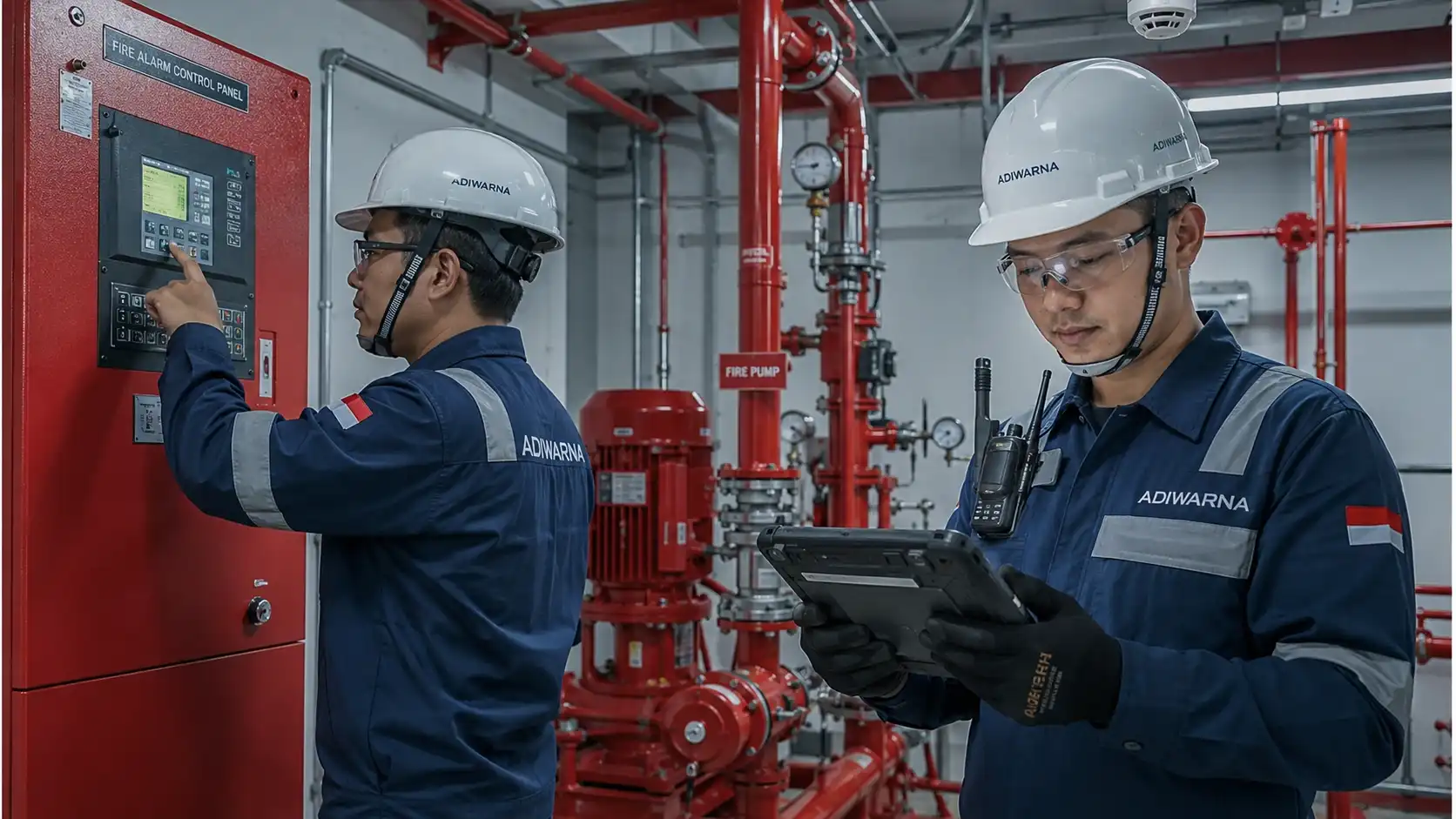

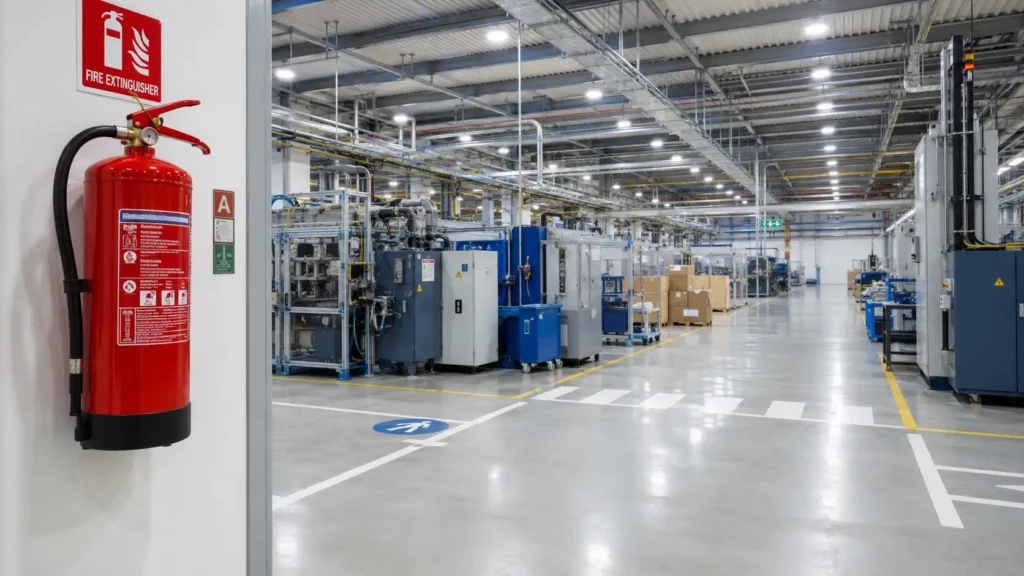
Fire extinguisher is an essential first-response fire protection device for business and industrial facilities. It helps facility teams control small fires before they become major incidents. Therefore, selection, placement, and maintenance must follow a professional approach.
In data centers, oil and gas facilities, and factories, small fires can create major impacts. Fire from electrical panels, machines, cables, or flammable materials can spread quickly. Therefore, every facility needs reliable early fire protection.
In addition, a portable extinguisher must not be installed only for compliance. Each unit must match the fire class, room characteristics, and operational risk.
PT Adiwarna Anugerah Abadi helps businesses select, install, and maintain fire protection systems. The Adiwarna team can adjust each solution to your industrial facility needs.
Fire extinguisher supply and installation service by PT Adiwarna Anugerah Abadi
Why Fire Extinguisher Is Important for Industrial Facilities
Fire extinguisher works as the first response when fire is still small. With the right device, trained personnel can control fire before larger systems activate. As a result, asset damage can be reduced faster.
First, this device is easy to access. Second, trained staff can operate it quickly. In addition, it helps improve response before the fire brigade arrives.
However, its effectiveness depends on the extinguishing agent. The wrong agent can worsen the situation. Therefore, facilities must understand fire classes and suitable extinguisher types.
NFPA 10 Standard for Portable Fire Extinguishers
Fire Classes You Need to Understand
Before choosing a fire extinguisher, facility teams must understand fire classes. Each class has a different fuel source. Therefore, each class needs the right extinguishing agent.
Common fire classes include:
- Class A: wood, paper, fabric, and ordinary solid materials.
- Class B: flammable liquids such as gasoline, diesel, and solvents.
- Class C: energized electrical equipment.
- Class D: combustible metals.
- Class K or F: cooking oil and fats.
In addition, some industrial areas have combined risks. For example, an electrical room may have electrical and cable material risks. Therefore, engineers should conduct a technical survey before selecting equipment.
Common Types of Fire Extinguisher
Each fire extinguisher uses a different extinguishing agent. Agent selection must follow room risk and protected asset type.
1. Dry Chemical Powder
Dry chemical powder is widely used because it is flexible. This agent suits Class A, B, and C fires. Therefore, factories and warehouses often use this type.
However, powder leaves residue. Residue can disturb machines, panels, and electronic devices. Therefore, this type is less ideal for data centers.
2. Carbon Dioxide or CO2
CO2 suits electrical fires and flammable liquid fires. This agent leaves no residue. In addition, CO2 does not conduct electricity.
Therefore, CO2 is often used in panel rooms and small server rooms. However, users must consider ventilation and human safety.
3. Foam Extinguisher
Foam works by covering the fuel surface. This agent is effective for certain flammable liquid fires. In addition, foam helps prevent reignition.
However, foam is not suitable for energized electrical equipment. Therefore, the application area must be selected carefully.
4. Water Mist
Water mist uses very fine water droplets. This agent can reduce heat quickly. In addition, it can reduce water impact compared with normal water systems.
However, engineers still need to evaluate the protected assets. Not every electronic room suits water-based agents.
5. Clean Agent Extinguisher
Clean agent extinguishers suit sensitive assets such as servers, panels, and electronic devices. This agent leaves no residue. In addition, it supports faster operational recovery.
Therefore, clean agent units are often selected for data centers, control rooms, and critical IT areas.
Clean agent fire suppression solution for critical assets
Important Standards for Fire Extinguisher Selection
Fire extinguisher selection and placement must follow technical standards. Standards help ensure the unit is accessible, safe, and ready to use.
Common references include:
- NFPA 10 for portable fire extinguishers.
- Relevant SNI standards for portable extinguishers.
- Occupational safety and building regulations.
- Company HSE requirements.
- Insurance and safety audit requirements.
In addition, standards must be applied according to site conditions. Engineers must assess layout, risk, access, and daily facility activity.
[EXTERNAL LINK: official standard for portable fire extinguishers and fire protection]
Fire Extinguisher for Data Centers, Oil & Gas, and Factories
Fire extinguisher selection for high-risk facilities must match each location. Data centers, oil and gas facilities, and factories cannot use the same approach.
Data Centers
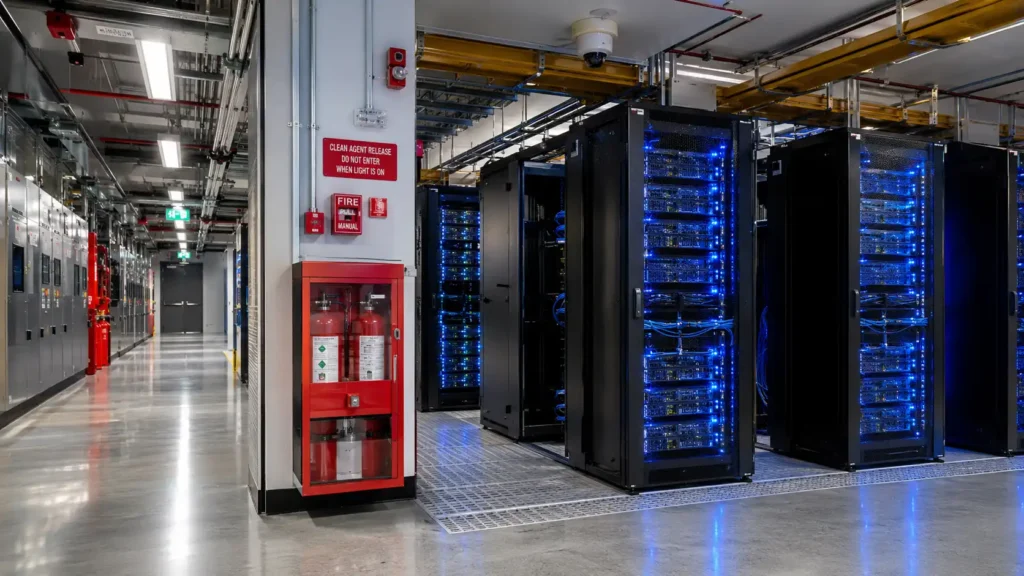
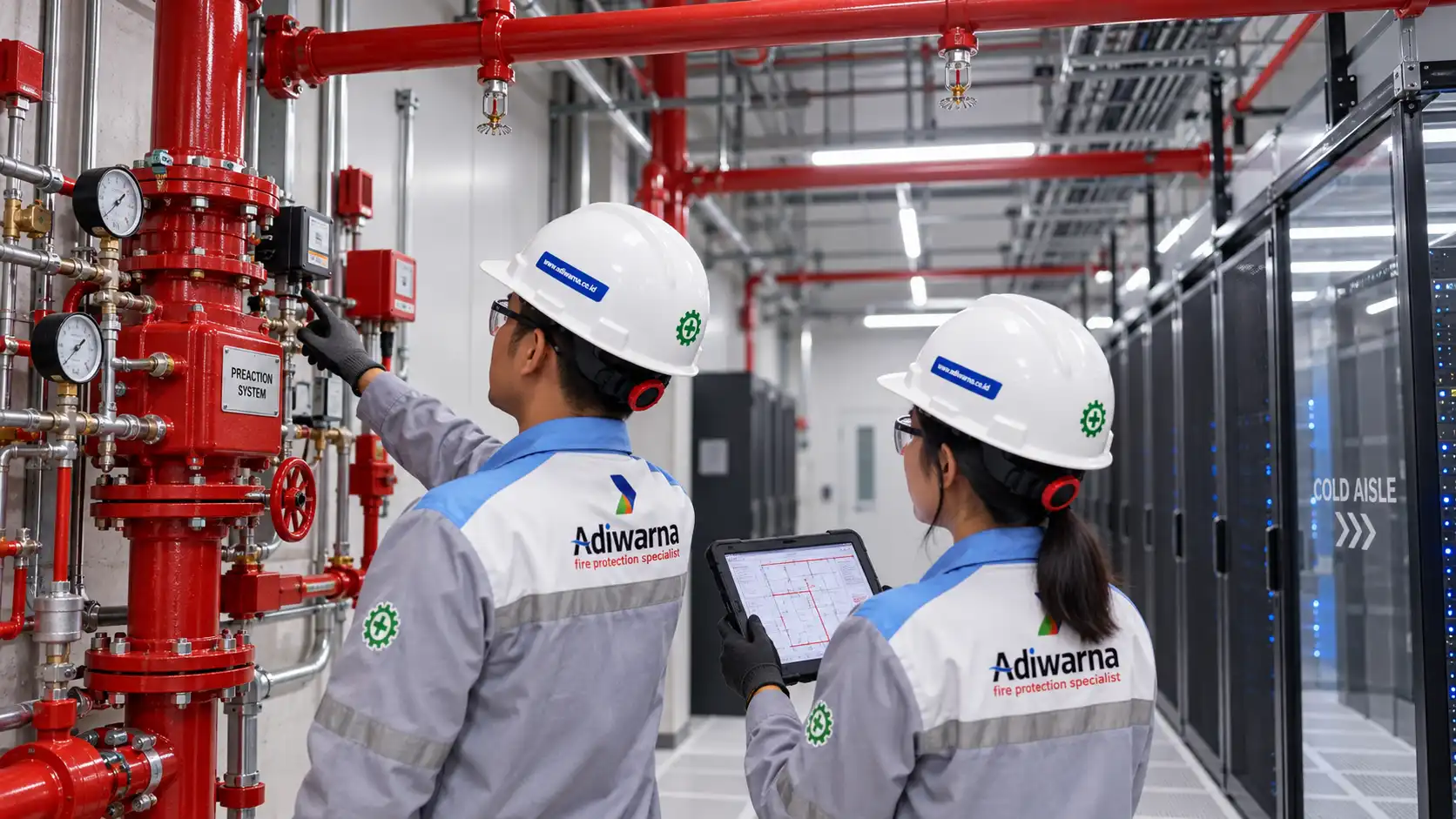
Data centers contain servers, UPS units, batteries, cables, and electrical panels. These assets are sensitive to residue and moisture. Therefore, clean agent and CO2 are often selected.
In addition, data centers still require early detection systems. Portable extinguishers must support the fire alarm system and gas suppression system.
Fire protection system for data centers
Oil & Gas Facilities
Oil and gas facilities have risks from flammable materials. Process areas, storage areas, and loading bays need special analysis. Therefore, device selection must follow fire class.
In addition, some areas need specific equipment specifications. Engineers must consider area classification, temperature, corrosion, and evacuation access.
Fire protection systems for oil and gas facilities
Factories
Factories face risks from machines, electrical panels, raw materials, and production activities. Therefore, fire extinguisher locations must be close to risk points.
However, units must not block evacuation routes. Placement must be visible, accessible, and supported by clear signage.
How to Determine Fire Extinguisher Quantity and Location
The number of units must not be decided randomly. Teams must calculate based on area size, risk level, and travel distance.
First, map every room function. Second, identify potential ignition sources. After that, determine the right type and capacity.
Key factors include:
- Protected area size.
- Fire class.
- Risk level.
- Staff access distance.
- Mounting height.
- Signage visibility.
- Evacuation route.
- Environmental condition.
- Audit requirement.
In addition, active production areas need extra attention. Large machines, partitions, and racks can block access.
Fire Extinguisher Inspection and Maintenance
Fire extinguisher units must be inspected regularly. Poorly maintained units can fail when needed. Therefore, inspection is a key part of a fire protection program.
Routine checks usually include:
- Unit position.
- Seal condition.
- Gauge pressure.
- Hose and nozzle condition.
- Safety pin condition.
- Expiry date.
- Cylinder condition.
- Inspection label.
- Obstruction-free access.
In addition, facilities should record every inspection result. These records support audits, replacement planning, and safety evaluation.
Common Fire Extinguisher Usage Mistakes
Many facilities have extinguishers but are not ready to use them. Problems often appear because training and maintenance are weak.
Common mistakes to avoid include:
- Choosing the wrong extinguishing agent.
- Placing units in hidden locations.
- Not installing signage.
- Allowing pressure to drop.
- Keeping expired units.
- Not training staff.
- Blocking access with stored items.
- Not creating an inspection schedule.
In addition, using an extinguisher without training can be dangerous. Staff must understand wind direction, safe distance, and proper operation.
PASS Method for Using a Fire Extinguisher
The PASS method helps users remember basic operating steps. However, this method still requires direct training.
PASS steps include:
- Pull: pull the safety pin.
- Aim: aim the nozzle at the base of the fire.
- Squeeze: squeeze the handle.
- Sweep: sweep the agent across the fire area.
In addition, users must keep a safe distance. If the fire grows, evacuate immediately and activate emergency procedures.
Integration with Other Fire Protection Systems
Fire extinguisher units do not stand alone in a fire safety strategy. They must become part of a wider protection system.
Industrial facilities should ideally have:
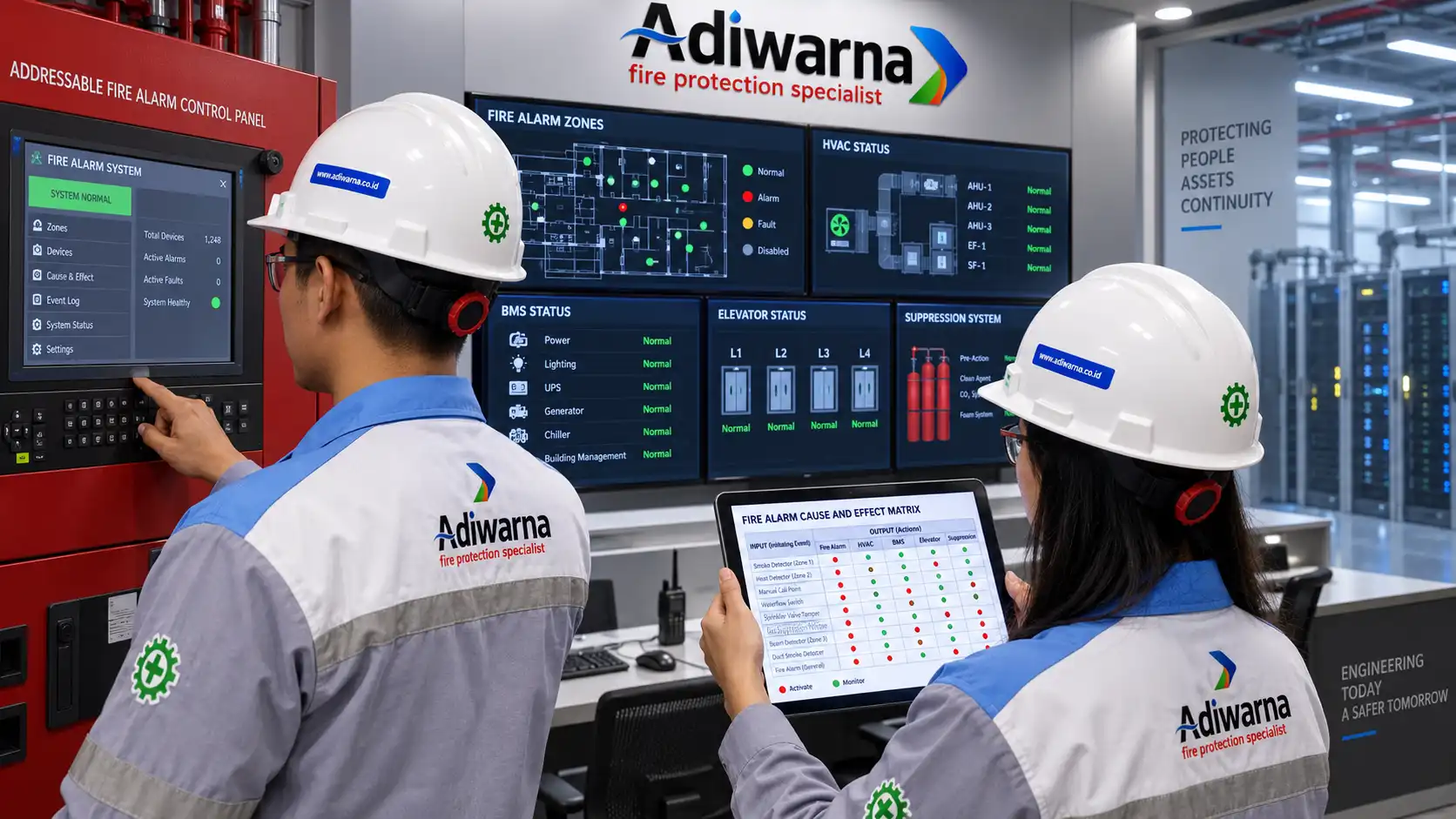
- Fire alarm system.
- Smoke detectors.
- Heat detectors.
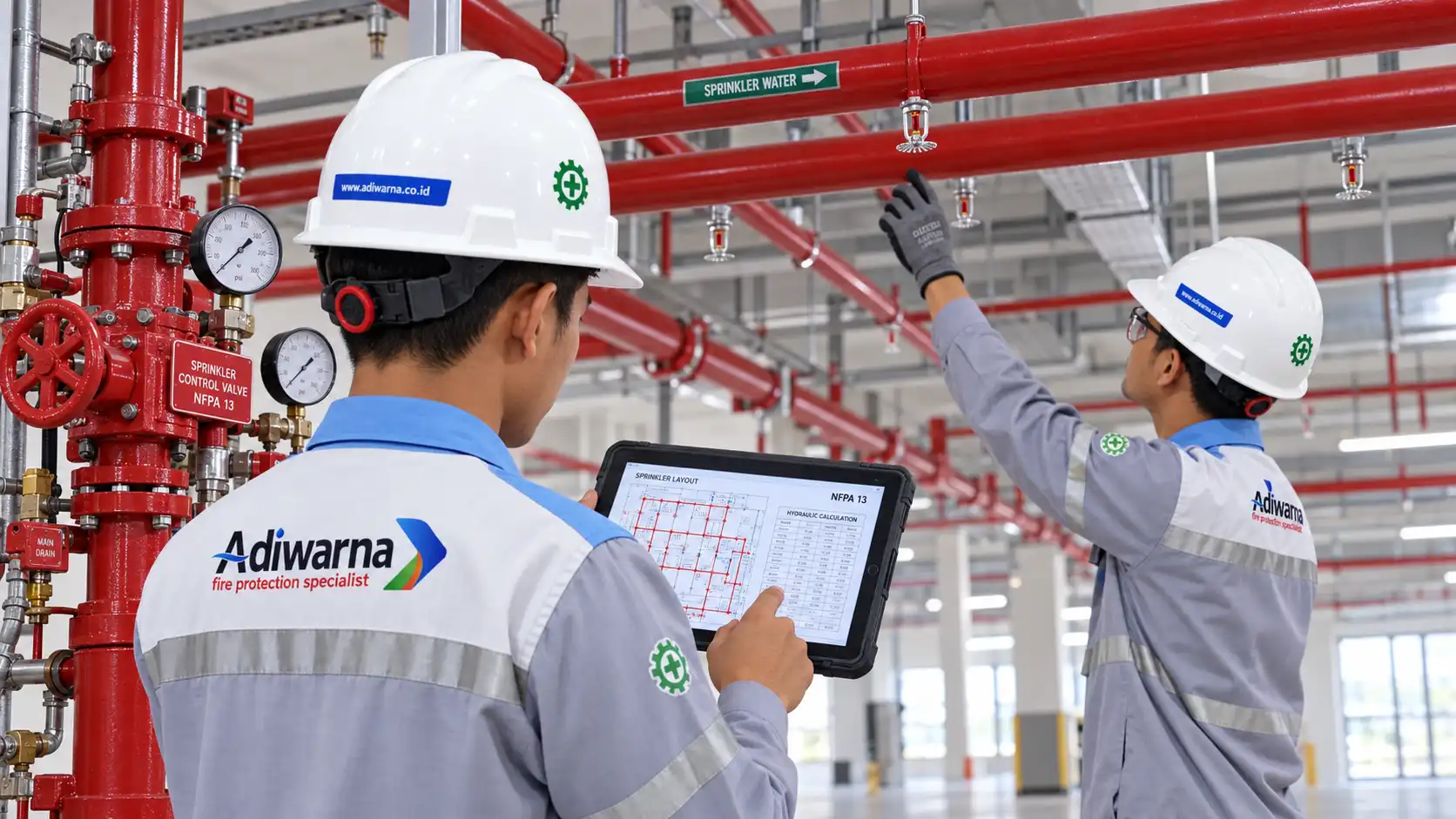
- Sprinkler system.
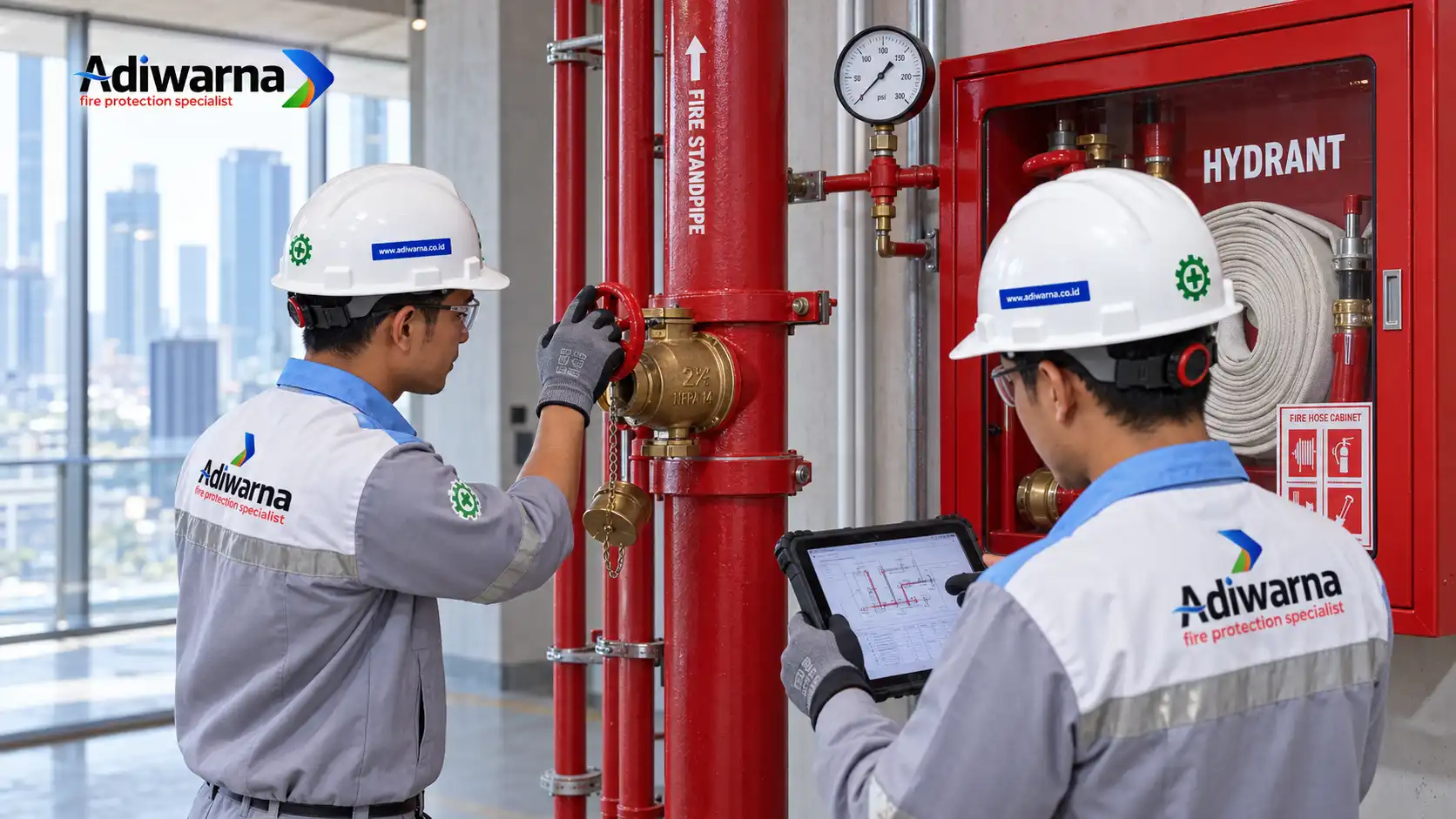
- Hydrant system.
- Fire suppression system.
- Emergency lighting.
- Evacuation signage.
- Fire safety training.
As a result, fire response becomes more structured. Staff can detect, warn, suppress, and evacuate more effectively.
Complete industrial fire protection system solution
Why Choose PT Adiwarna Anugerah Abadi?

Choosing the right provider is important. Fire extinguisher units must match risk, standards, and operational needs.
PT Adiwarna Anugerah Abadi helps clients provide professional fire protection solutions. The Adiwarna team understands data center, oil and gas, factory, and warehouse needs.
Key advantages of working with specialists include:
- More accurate risk surveys.
- Proper extinguishing agent selection.
- More effective unit placement.
- Cleaner documentation.
- Scheduled inspection support.
- Easier maintenance.
- Better audit readiness.
- Integration with other fire protection systems.
In addition, Adiwarna can support safety training programs. That way, equipment is available and teams are ready to use it.
Fire extinguisher and portable extinguisher consultation with Adiwarna
Tips Before Providing Fire Extinguisher Units in Your Facility
Before buying units, prepare technical facility data. This data helps the team define type, quantity, and capacity.
Prepare the following information:
- Building layout.
- Function of each area.
- Type of stored materials.
- Electrical panel locations.
- High-risk areas.
- Evacuation routes.
- Number of workers.
- Existing fire protection systems.
- Target standard or audit requirement.
- Facility operating schedule.
In addition, involve HSE, facility, and operations teams from the beginning. They understand daily conditions and real risk points.
Conclusion: Fire Extinguisher Must Be Ready for Early Protection
Fire extinguisher is an important element in early fire protection. It helps control small fires before they become major incidents.
However, extinguishers must be selected, placed, and maintained professionally. The extinguishing agent must match the fire class and facility risks.
In conclusion, PT Adiwarna Anugerah Abadi is ready to help your business provide reliable fire protection solutions. Consult your fire extinguisher, portable extinguisher, fire alarm, hydrant, sprinkler, or fire suppression system needs with Adiwarna’s specialist team.
Contact PT Adiwarna Anugerah Abadi for fire protection consultation