
How smoke detectors work is important for business owners, facility managers, and engineers to understand. These devices play a key role in early fire detection systems. Therefore, their selection and installation must not be done randomly.
In data centers, oil and gas facilities, and factories, a small fire can grow quickly. Smoke often appears before flames become visible. Therefore, smoke detectors help facilities respond to danger earlier.
In addition, smoke detectors can connect to a fire alarm system. The system warns occupants, operators, and emergency response teams. As a result, potential losses can be reduced from the beginning.
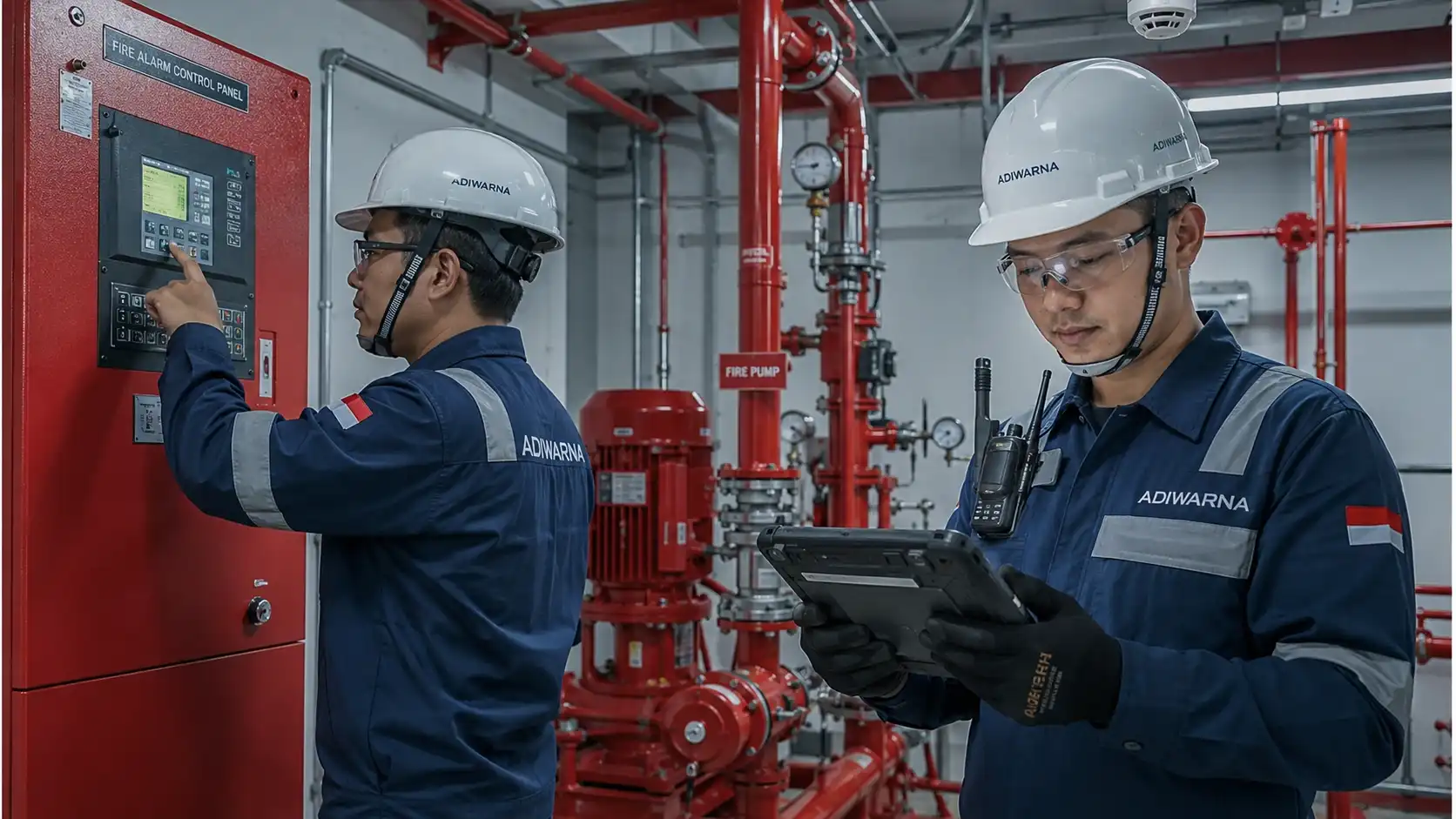
PT Adiwarna Anugerah Abadi helps businesses design reliable fire detection systems. The Adiwarna team adjusts each solution to facility risks, technical standards, and operational needs.
Fire alarm system installation service by PT Adiwarna Anugerah Abadi
Why Understanding How Smoke Detectors Work Is Important
How smoke detectors work matters because each area has different risk characteristics. A detector suitable for a server room may not suit a production area. Therefore, engineers must understand the detection principle.
First, smoke detectors identify early signs of fire. Second, they send signals to the alarm panel. In addition, the system can activate sound alarms, strobes, or other protection systems.
However, smoke detectors also have limitations. Dust, steam, airflow, and installation position can affect performance. Therefore, design must be based on technical analysis.
NFPA 72 National Fire Alarm and Signaling Code
How Smoke Detectors Work in a Fire Alarm System
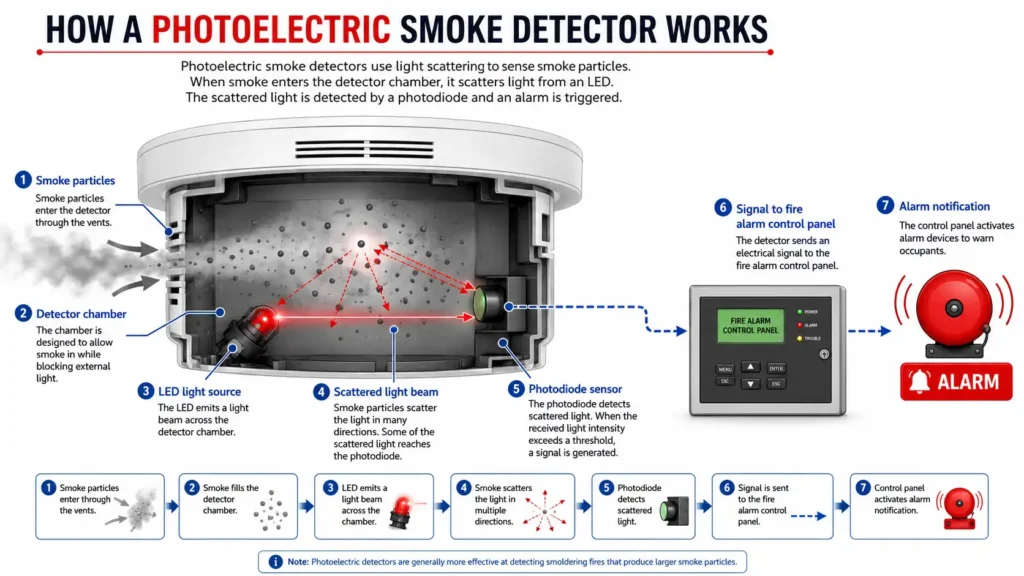
How smoke detectors work starts when smoke particles enter the detection chamber. The detector reads changes inside the chamber. After that, the detector sends a signal to the fire alarm control panel.
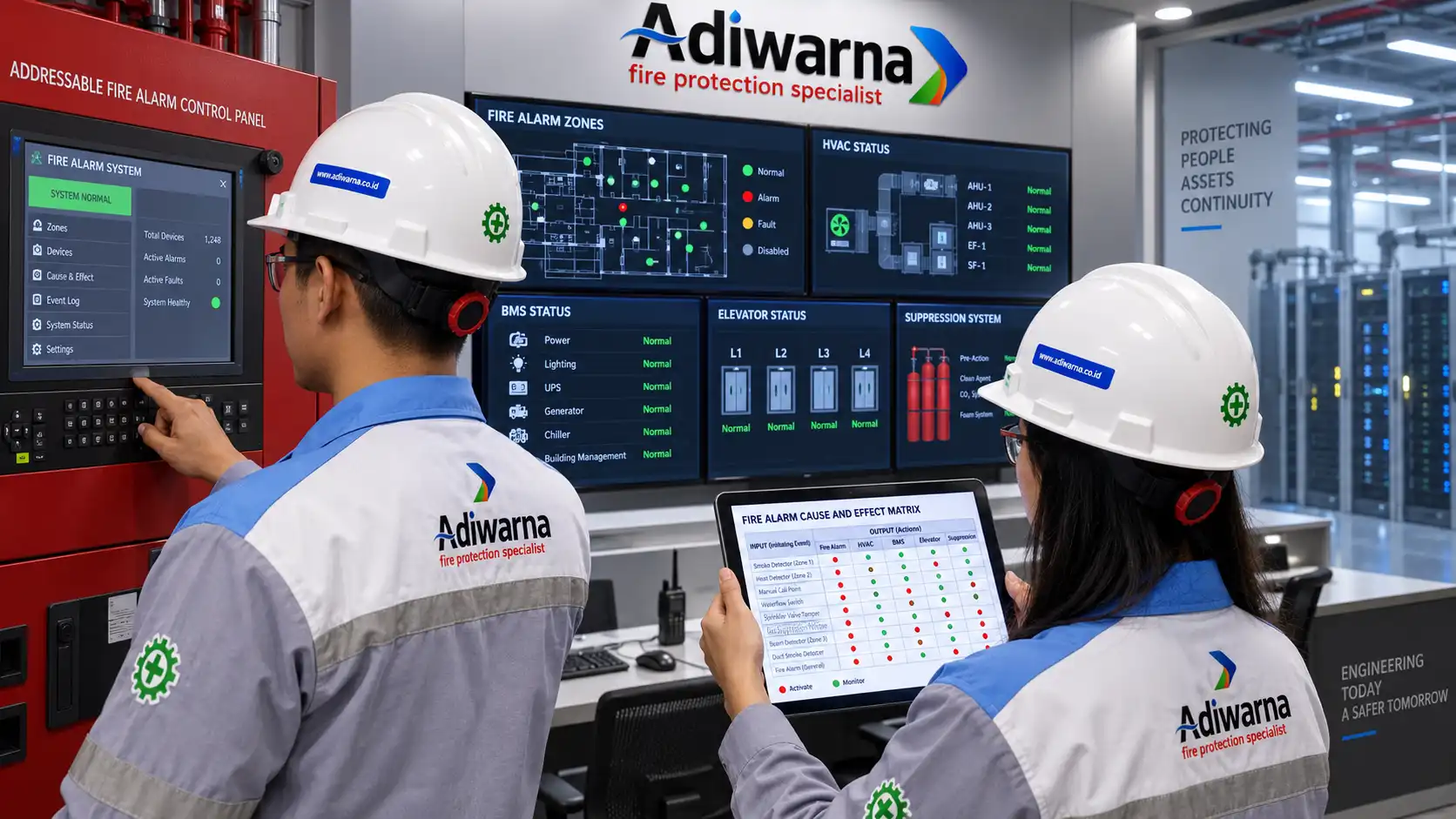
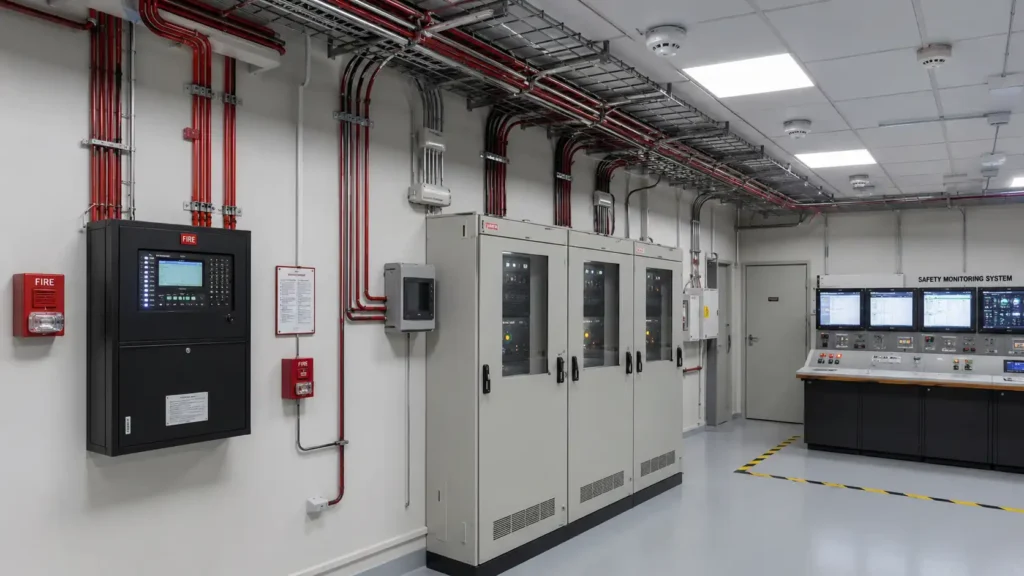
The panel then processes the signal. If the condition meets the alarm logic, the panel activates notifications. These notifications can include alarm bells, sounder strobes, annunciators, or signals to other systems.
In addition, the fire alarm system can connect with lifts, access control, sprinklers, or gas suppression systems. Therefore, smoke detectors become part of a complete fire protection ecosystem.
Fire detection system solutions for industrial facilities
Common Types of Smoke Detectors
Not all detectors work in the same way. Therefore, detector selection must follow room function and fire risk.
1. Photoelectric Smoke Detector
A photoelectric smoke detector uses light to detect smoke particles. Inside the detector, there is a light source and a light receiver. When smoke enters, the light scatters.
As a result, the receiver detects the light change. The detector then sends an alarm signal to the panel. This type works well for fires that produce dense smoke.
Photoelectric detectors are often used in offices, server rooms, control rooms, and general areas. However, dusty areas need a specific evaluation.
2. Ionization Smoke Detector
An ionization smoke detector uses a small ionization chamber. The detector reads electrical current changes caused by smoke particles. When smoke enters, the current changes and the detector sends a signal.
This type is more sensitive to fast flaming fires with smaller particles. However, its use must follow regulations and technical needs. Many modern facilities choose other options.
In addition, engineers must consider the environment. Detector selection must not depend only on sensitivity.
3. Aspirating Smoke Detector
An aspirating smoke detector draws air samples through small pipes. The detection unit then analyzes smoke particles with high sensitivity. This system suits highly critical areas.
Data centers, server rooms, archive rooms, and control rooms often use this system. It can detect smoke at a very early stage. Therefore, response time can be faster.
However, the sampling pipe design must be accurate. Engineers need to calculate pipe routes, sampling points, and airflow.
How Smoke Detectors Work in High-Risk Industrial Areas
How smoke detectors work in industrial areas is strongly affected by the environment. Data centers, factories, and oil and gas facilities have different operating conditions. Therefore, detection design must be adjusted.
Data Centers
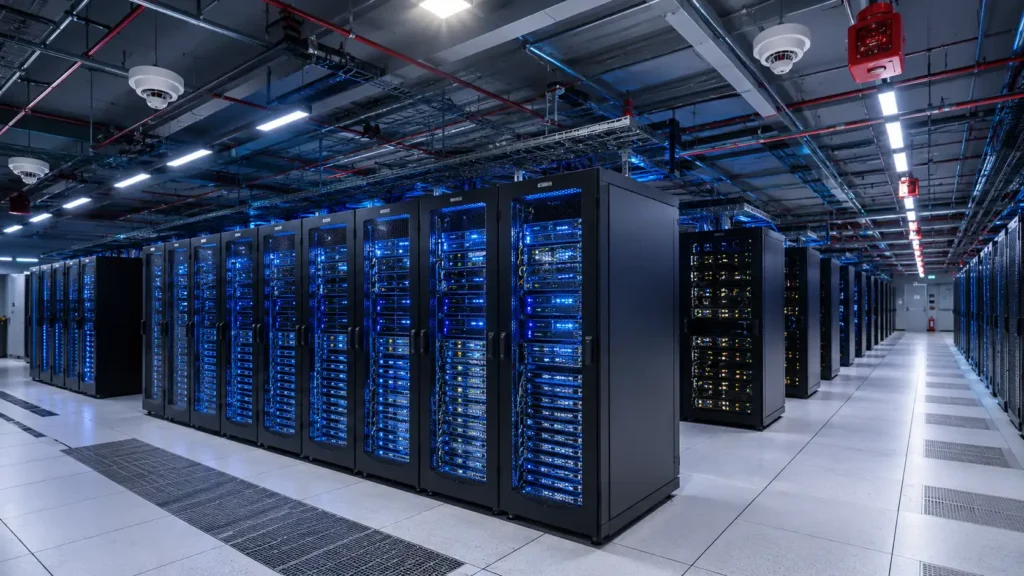
Data centers need fast and precise detection. Small smoke from cables, UPS units, or panels can indicate an early problem. Therefore, detectors must be sensitive and stable.
In addition, airflow from cooling systems can affect smoke movement. Engineers must consider cold aisles, hot aisles, raised floors, and return air paths.
Fire protection system for data centers
Oil & Gas Facilities
Oil and gas facilities carry risks from flammable materials. However, not every area suits standard smoke detectors. Some areas require flame detectors, gas detectors, or explosion-proof devices.
Therefore, how smoke detectors work must be understood together with area classification. Engineers need to assess gas potential, temperature, humidity, and corrosion risk.
Fire protection systems for oil and gas facilities
Factories and Warehouses
Factories often have dust, steam, heat, and vibration. These conditions can trigger false alarms if the detector is not selected correctly. Therefore, detector type must match the environment.
Warehouses also need special attention. High racks and airflow can change smoke movement patterns. As a result, detector layout must be designed carefully.
How Smoke Detectors Work and Factors That Affect Accuracy
How smoke detectors work can be disrupted by many factors. Therefore, installation must follow standards and site surveys.
Factors that affect accuracy include:
- Ceiling height.
- HVAC airflow.
- Dust and production particles.
- Water vapor or process steam.
- Detector position.
- Distance between detectors.
- Obstacles such as ducting and cable trays.
- Maintenance condition.
- Possible fire type.
In addition, detectors that are rarely cleaned can lose sensitivity. Therefore, facilities need a routine inspection schedule.
Supporting Components for Smoke Detectors
Smoke detectors do not work alone. The system needs supporting components so alarms can function effectively.
Important components usually include:
- Fire alarm control panel.
- Smoke detector.
- Heat detector.
- Manual call point.
- Alarm bell.
- Sounder strobe.
- Input module.
- Output module.
- Annunciator panel.
- Backup battery.
- Fire-resistant cable.
- Monitoring system.
In addition, the system needs technical documentation. Documentation supports inspection, testing, troubleshooting, and safety audits.
Common Mistakes in How Smoke Detectors Work Selection
Many fire alarm issues come from poor detector selection. Therefore, engineers must avoid a random installation approach.
Common mistakes to avoid include:
- Installing smoke detectors in highly dusty areas.
- Ignoring airflow from HVAC systems.
- Placing detectors too close to diffusers.
- Not calculating spacing between detectors.
- Skipping regular testing.
- Not cleaning detectors routinely.
- Not preparing as-built drawings.
- Not training facility personnel.
In addition, false alarms can reduce occupant compliance. When alarms often trigger incorrectly, people tend to ignore real alarms.
Technical Standards for Smoke Detectors
Smoke detector selection must follow relevant standards. Standards help ensure the system works safely and measurably.
Common references include:
- NFPA 72 for fire alarm and signaling systems.
- Relevant SNI standards for fire detection and alarm systems.
- Building regulations.
- Company HSE requirements.
- Insurance and safety audit requirements.
However, standards must be applied according to site conditions. Engineers must read the actual risk, not only follow the initial layout drawing.
Official standard for fire detection and alarm systems
Tips for Choosing Smoke Detectors for Industrial Facilities
Before choosing a detector, conduct a technical survey. The survey helps define detector type, location, and system integration.
Use the following guide:
- Map each room function.
- Identify fire risk sources.
- Check dust, steam, and temperature.
- Analyze airflow.
- Define sensitivity needs.
- Check alarm integration needs.
- Prepare cable routes.
- Plan testing and maintenance.
In addition, involve HSE, facility, IT, and operations teams. They understand daily facility conditions directly.
Why Choose PT Adiwarna Anugerah Abadi?
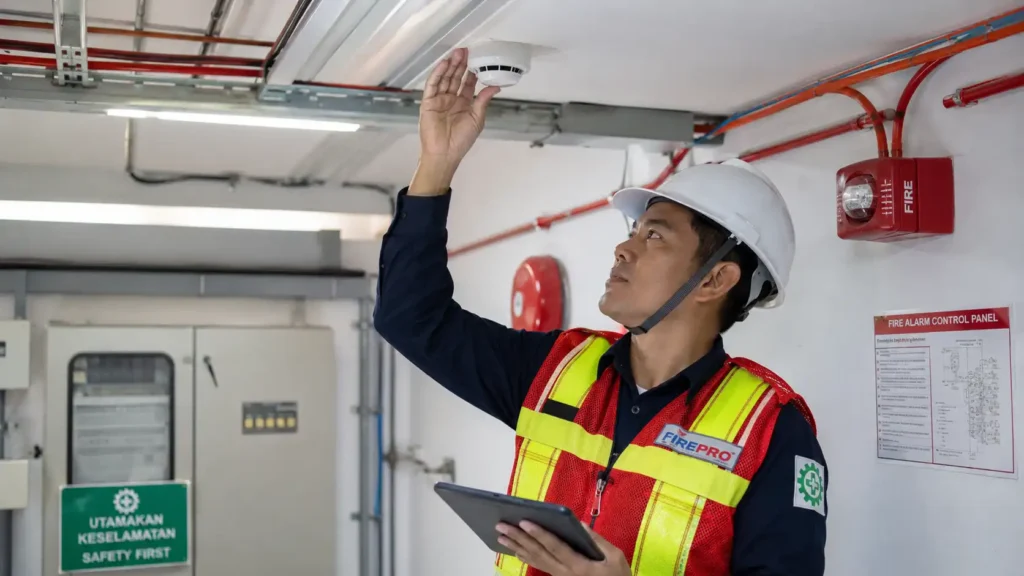
Understanding how smoke detectors work helps businesses make better decisions. However, implementation still requires technical experience.
PT Adiwarna Anugerah Abadi helps clients design fire alarm systems for industrial facilities. The Adiwarna team understands the needs of data centers, oil and gas facilities, factories, and warehouses.
Key advantages of working with specialists include:
- Risk-based design.
- Accurate detector selection.
- Cleaner installation.
- Safer system integration.
- More measurable testing.
- More complete documentation.
- Easier maintenance.
- Better audit readiness.
In addition, Adiwarna can support long-term system development. This keeps fire protection relevant as facilities grow.
Smoke detector and fire alarm system consultation with Adiwarna
Conclusion: How Smoke Detectors Work Determines Detection Speed
How smoke detectors work plays a major role in successful early fire detection. The right detector can provide warnings before fire grows larger.
However, detector performance depends heavily on design, location, room type, and maintenance. Therefore, industrial facilities need a professional approach.
In conclusion, PT Adiwarna Anugerah Abadi is ready to help your business choose and install reliable fire detection systems. Consult your smoke detector, fire alarm system, and industrial fire protection needs with Adiwarna’s specialist team.
Contact PT Adiwarna Anugerah Abadi for fire alarm system consultation