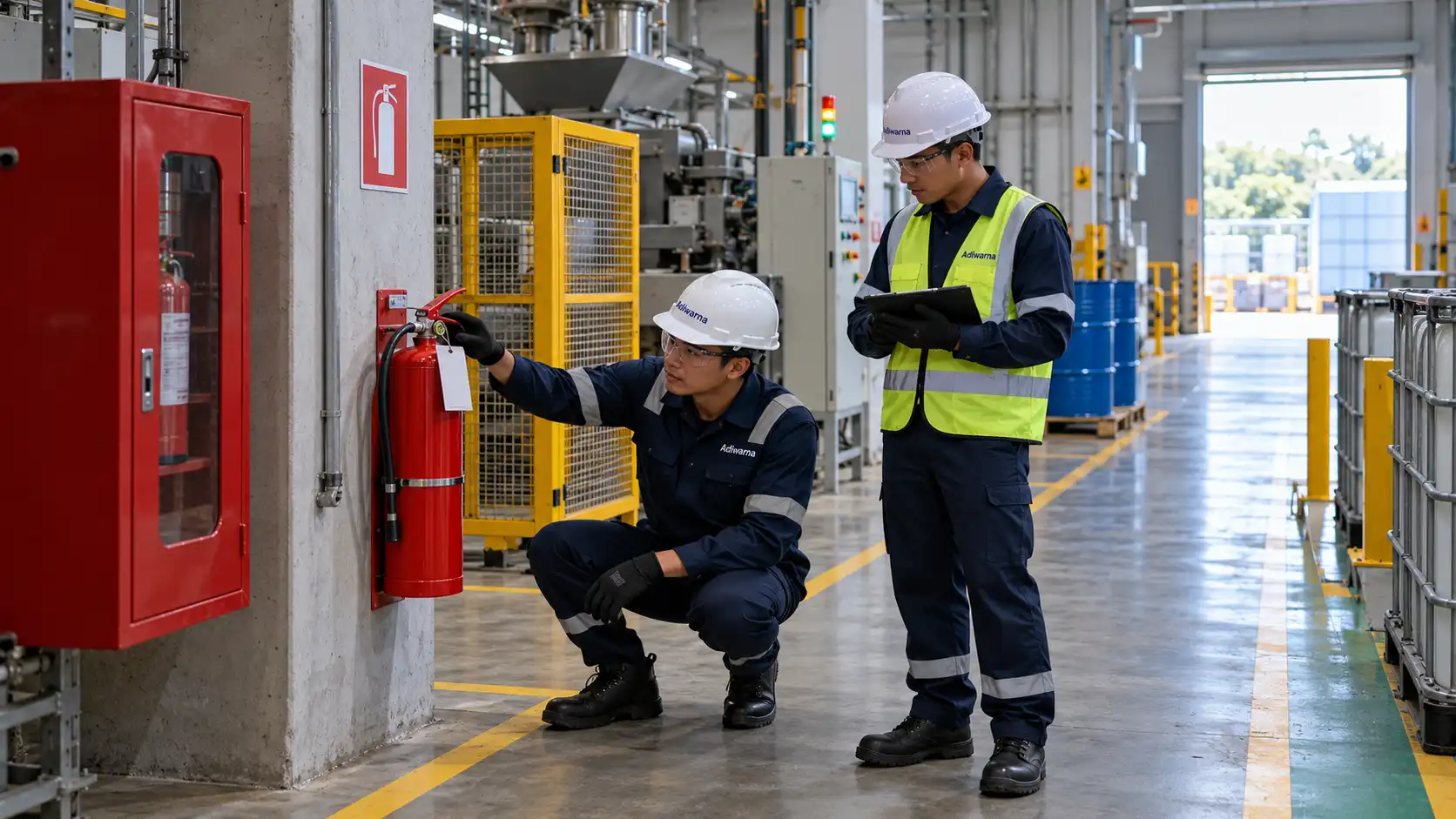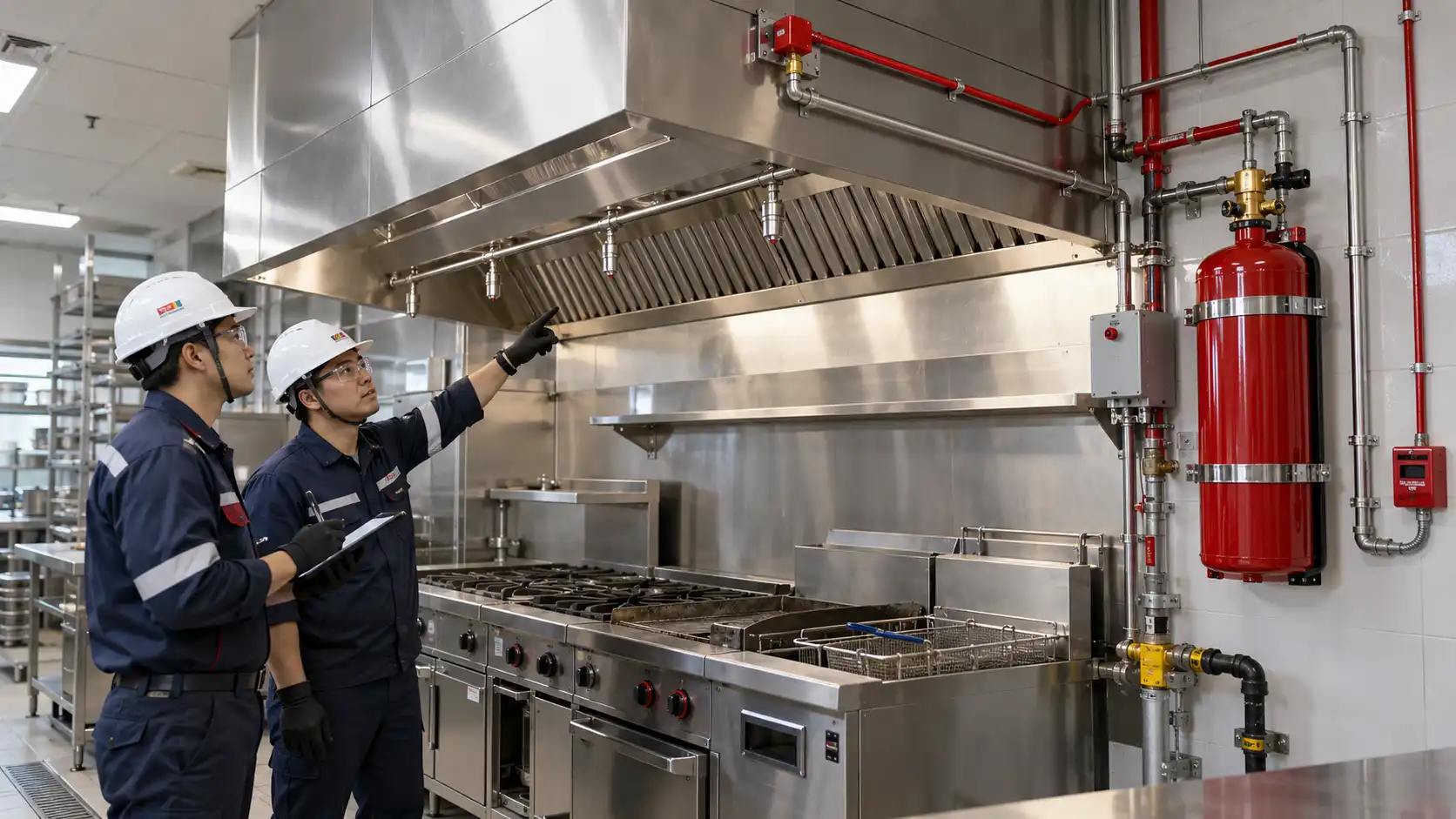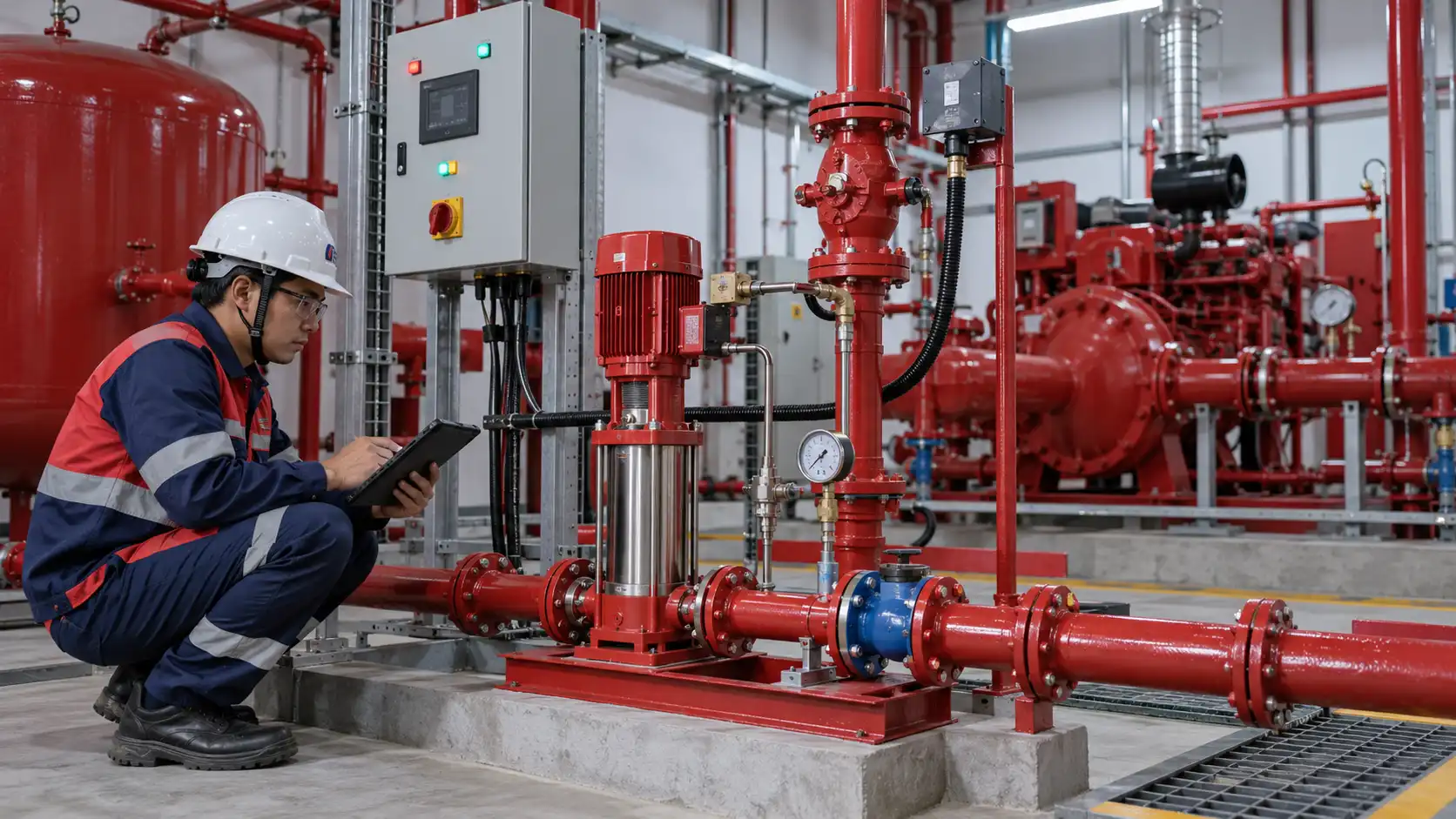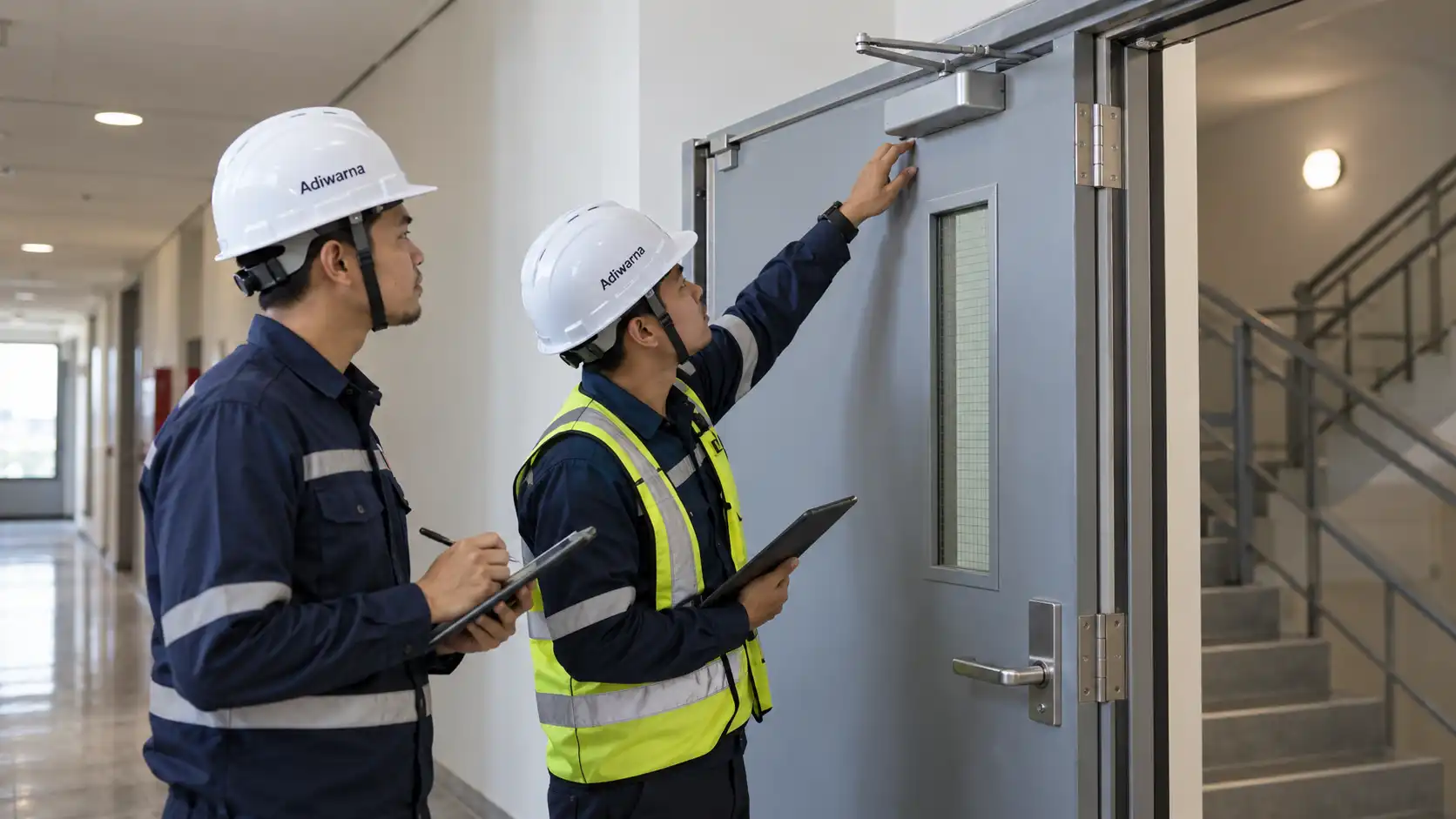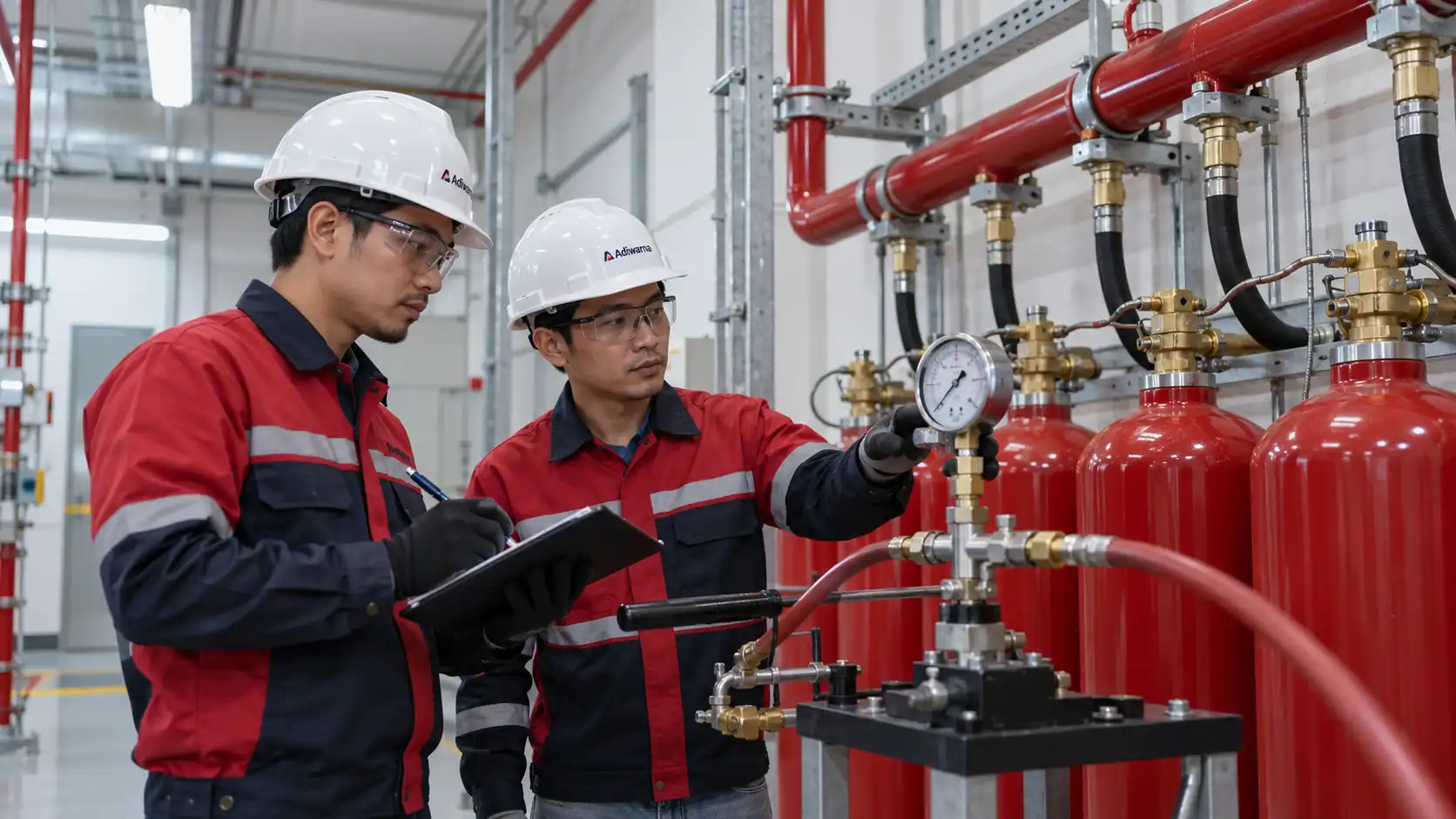


Inert gas is an effective fire suppression solution for protecting critical assets without leaving residue. This system is highly relevant for data centers, control rooms, electrical rooms, archive rooms, and high-risk industrial facilities.
Fire in critical areas does not only damage buildings. It can also stop operations, destroy data, and cause major financial losses. Therefore, the suppression system must work quickly and safely.
In addition, some areas are not suitable for water-based suppression. Data centers, server rooms, and control rooms need a more precise approach.
PT Adiwarna Anugerah Abadi helps businesses design, install, and maintain gas-based fire suppression systems. The Adiwarna team adjusts each solution to risk levels, technical standards, and facility operations.
Gas suppression system installation service by PT Adiwarna Anugerah Abadi
Why Inert Gas Is Important for Fire Protection
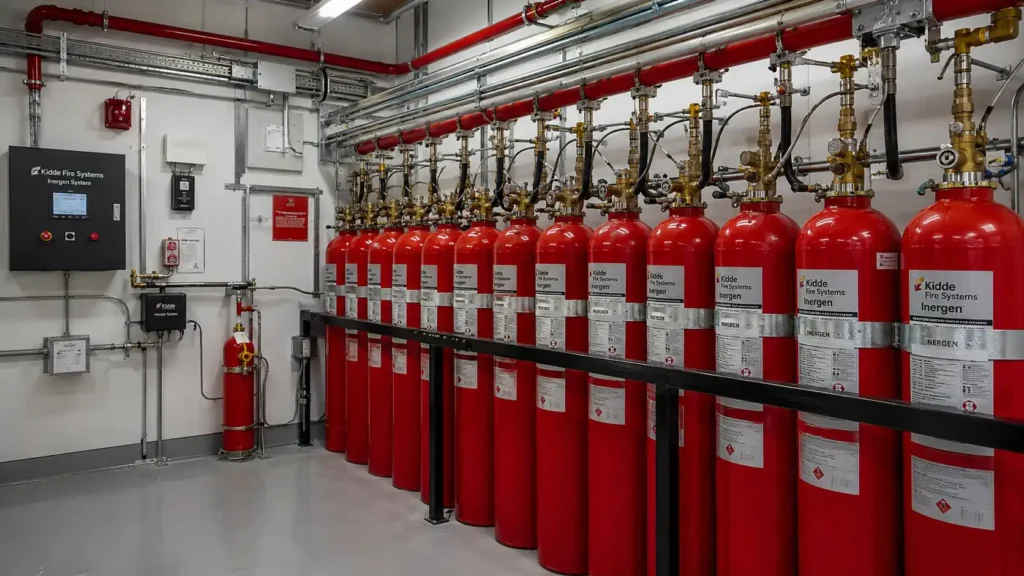
Inert gas works by reducing the oxygen level inside the protected room. As a result, fire does not get enough oxygen to keep burning. However, the system must remain safe for people within specific design limits.
First, this system leaves no residue. Second, it does not conduct electricity. In addition, it can protect electronic equipment and high-value assets.
As a result, businesses can reduce downtime after a fire incident. The room can be inspected and restored without complex chemical residue cleaning.
NFPA 2001 Standard on Clean Agent Fire Extinguishing Systems
How an Inert Gas System Works
An inert gas system stores gas in high-pressure cylinders. When the fire alarm system detects fire, the control panel processes the signal. After that, the system releases gas according to the design scenario.
The gas then flows through the pipe network to the nozzles. The nozzles distribute gas evenly into the protected room. Therefore, room volume calculation is very important.
This system also requires a room integrity test. This test confirms that the room can hold the gas concentration for a certain period. If the room has many leaks, system performance will decrease.
Room integrity test service for fire suppression systems
Areas Suitable for Inert Gas Systems
Not every area needs the same fire suppression system. Therefore, engineers must evaluate room function, asset type, fire risk, and operating pattern.
Data Centers and Server Rooms
Data centers contain servers, UPS units, batteries, cables, and network equipment. These devices are sensitive to water and residue. Therefore, inert gas is a highly relevant option.
In addition, data centers require fast fire suppression. The system must connect with smoke detectors, aspirating smoke detectors, alarm strobes, and control panels.
Fire suppression solutions for data centers
Control Rooms and Electrical Rooms
Control rooms contain panels, PLCs, SCADA systems, and monitoring devices. If these devices fail, production can stop completely.
Therefore, an inert gas system helps protect assets without damaging electrical components. It also supports faster operational recovery.
Oil & Gas Facilities
Oil and gas facilities have high risks from flammable materials. Certain areas need special analysis before selecting a suppression medium.
However, inert gas can be suitable for control rooms, electrical rooms, and selected enclosed areas. Engineers still need to consider area classification and human safety needs.
Factories and Critical Machine Rooms
Factories often have panel rooms, MCC rooms, local server rooms, and machine control rooms. These areas require fast protection with minimal secondary damage.
In addition, water can increase damage to electrical panels. Therefore, gas suppression systems often become a safer choice.
Main Components of an Inert Gas System
An inert gas system consists of several technical components. All components must work within one coordinated protection scenario.
Common main components include:
- Gas storage cylinders.
- Cylinder valves.
- Manifold.
- Discharge pipes.
- Nozzles.
- Fire alarm control panel.
- Smoke detectors.
- Manual release station.
- Abort switch.
- Alarm bell and sounder strobe.
- Pressure switch.
- Warning signs.
- Control module.
- Room integrity test equipment.
In addition, the system needs a specific hydraulic design. This design ensures the gas discharges within the correct time and concentration.
Important Standards for Inert Gas Systems
Inert gas systems must follow relevant technical standards. Standards help ensure the system is safe, effective, and testable.
Common references include:
- NFPA 2001 for clean agent fire extinguishing systems.
- ISO 14520 for gaseous fire-extinguishing systems.
- Relevant SNI fire protection standards.
- Applicable building regulations.
- Company HSE requirements.
- Insurance and safety audit requirements.
However, standards alone are not enough. Engineers must translate the standards into actual field conditions.
ISO 14520 gaseous fire-extinguishing systems
Common Mistakes in Inert Gas Design
Inert gas systems often fail to perform optimally because of design mistakes. Many projects only focus on cylinders and nozzles. In reality, performance depends on many factors.
Common mistakes to avoid include:
- Not calculating room volume accurately.
- Ignoring leakage through doors and ceilings.
- Skipping the room integrity test.
- Selecting the wrong number of cylinders.
- Placing nozzles incorrectly.
- Not integrating the system with fire alarms.
- Ignoring the pre-discharge alarm.
- Not installing clear warning signs.
- Not training facility operators.
In addition, room layout changes are often ignored. Yet, partition or ceiling changes can alter the required design.
Inert Gas System Planning Stages
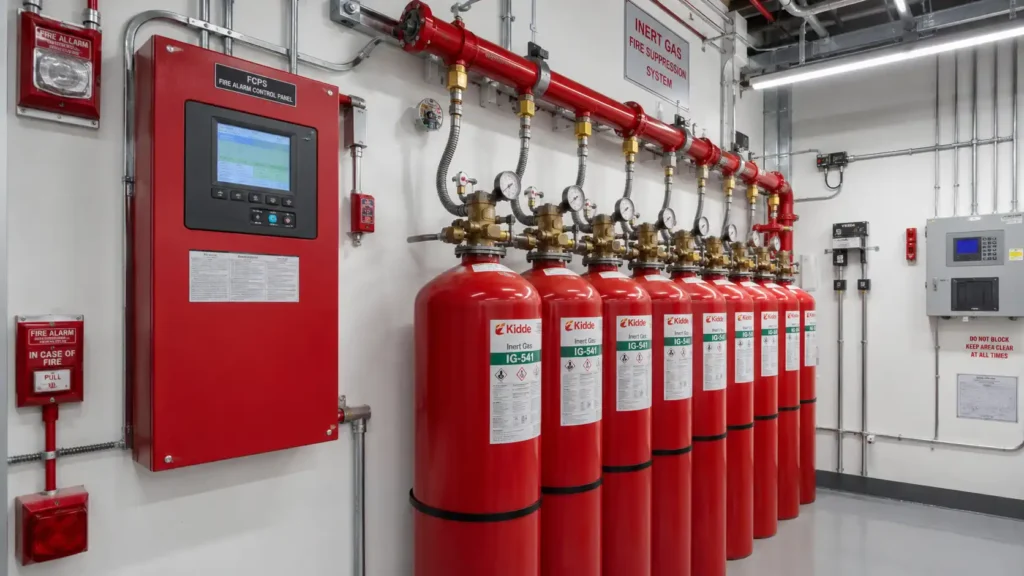
Good planning makes the system safer and more effective. Therefore, every project should begin with a detailed technical survey.
1. Room Survey
First, the team checks the room area, height, volume, and function. They also inspect ceilings, raised floors, doors, ducting, and cable routes.
In addition, the team reviews ventilation conditions. HVAC systems can affect gas distribution during discharge.
2. Fire Risk Identification
Next, engineers identify fire risk sources. Electrical panels, batteries, cables, servers, and control equipment have different fire characteristics.
Therefore, engineers need to select the right detection and suppression approach. Early detection is essential before fire grows larger.
3. Gas Concentration Calculation
After that, engineers calculate the design concentration. This calculation considers room volume, gas type, hazard class, and safety factor.
In addition, engineers must ensure the concentration remains effective during the holding time. Room leakage can reduce concentration too quickly.
4. Pipe and Nozzle Design
Then, engineers define pipe routes and nozzle positions. Gas distribution must be even across the protected room.
Therefore, nozzle layout must not be random. Obstacles such as racks, ducting, and cable trays must be considered.
5. Integration with Fire Alarm System
An inert gas system must connect with the fire alarm system. This integration controls detection, early warning, delay time, manual release, and discharge.
In addition, the abort switch can provide extra control when conditions are not yet safe. Every scenario must be tested during commissioning.
6. Testing and Commissioning
After installation, the team performs system testing. Testing includes alarm sequence, panel logic, manual release, abort switch, and pressure switch checks.
In addition, a room integrity test must be performed to assess room tightness. Test results need proper documentation for audits and maintenance.
Common Types of Inert Gas
Some systems use nitrogen, argon, or mixed inert gases. Each option has different technical characteristics.
Nitrogen-Based System
A nitrogen-based system is widely used because nitrogen is commonly available. Nitrogen also leaves no residue and does not conduct electricity.
However, the design must still follow standards. Engineers must calculate room volume, concentration, and cylinder requirements correctly.
Argon-Based System
Argon is also a stable inert gas. It can be used for certain areas that require clean fire protection.
In addition, argon has different distribution characteristics. Therefore, engineers must perform a specific design calculation.
Mixed Inert Gas System
Some systems use a mixture of nitrogen, argon, and other gases. The goal is to achieve stable suppression performance.
However, gas selection must not depend only on availability. Engineers must match it with risk, room condition, standards, and human safety.
Business Benefits of Inert Gas
Using inert gas offers many benefits for critical facilities. These benefits are important for businesses that cannot afford long downtime.
Main benefits include:
- Leaves no residue.
- Safe for electronic devices.
- Does not conduct electricity.
- Suitable for enclosed rooms.
- Supports fast fire suppression.
- Reduces downtime risk.
- Supports safety audit readiness.
- Protects high-value assets.
In addition, this system helps maintain business continuity. After an incident, teams can evaluate the room without complex cleanup.
Why Choose PT Adiwarna Anugerah Abadi?
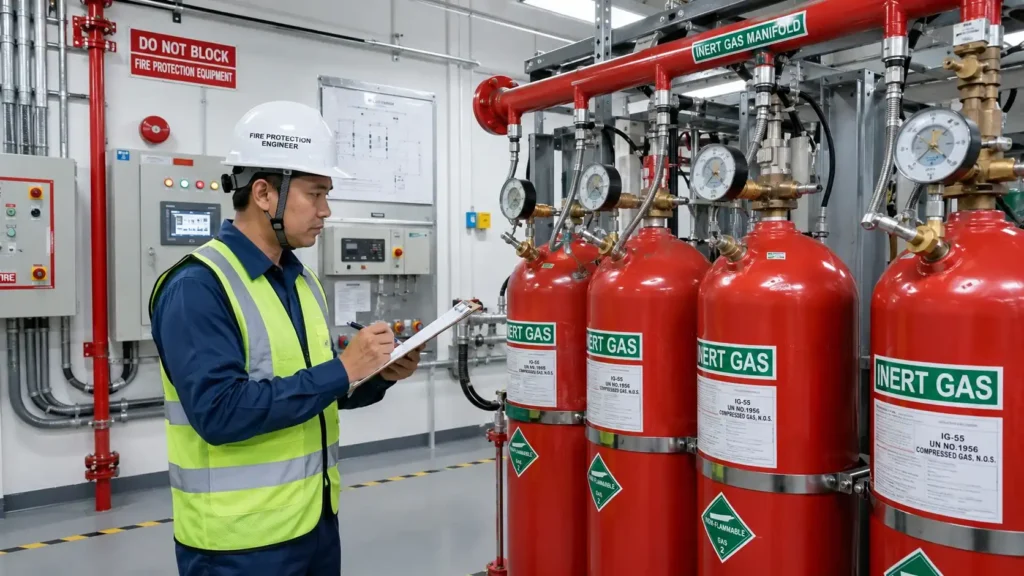
Choosing the right contractor strongly affects the final result. An inert gas system requires precise design, installation, integration, testing, and maintenance.
PT Adiwarna Anugerah Abadi helps clients build fire suppression systems that match industrial needs. The team understands technical, safety, and operational aspects.
Key advantages of working with specialists include:
- Risk-based design.
- Accurate room volume calculation.
- Proper gas selection.
- Clean pipe and nozzle installation.
- Safe fire alarm integration.
- Documented testing.
- Easier maintenance.
- Better audit readiness.
In addition, Adiwarna can support long-term system development. This keeps fire protection relevant as facilities grow.
Inert gas fire suppression consultation with Adiwarna
Tips Before Installing an Inert Gas System
Before starting the project, prepare technical data for the protected room. This data speeds up design and reduces revisions.
Prepare the following information:
- Latest room layout.
- Room volume.
- Room function.
- Type of protected assets.
- HVAC condition.
- Raised floor or additional ceiling.
- Cable routes and cable trays.
- Existing fire alarm system.
- Target standard or audit requirement.
- Facility operating schedule.
In addition, involve HSE, facility, IT, and operations teams from the beginning. They understand daily needs and field limitations.
Conclusion: Inert Gas Protects Critical Assets Cleanly and Reliably
Inert gas is the right fire protection solution for critical areas. This system helps suppress fire without residue, without electrical conductivity, and with lower recovery impact.
However, this system must be professionally designed. The design must consider room volume, gas concentration, alarm integration, room leakage, and technical standards.
In conclusion, PT Adiwarna Anugerah Abadi is ready to help your business design a safe and reliable fire suppression system. Consult your fire protection needs for data centers, oil and gas facilities, factories, panel rooms, or critical facilities with Adiwarna’s specialist team.
Contact PT Adiwarna Anugerah Abadi for fire suppression consultation