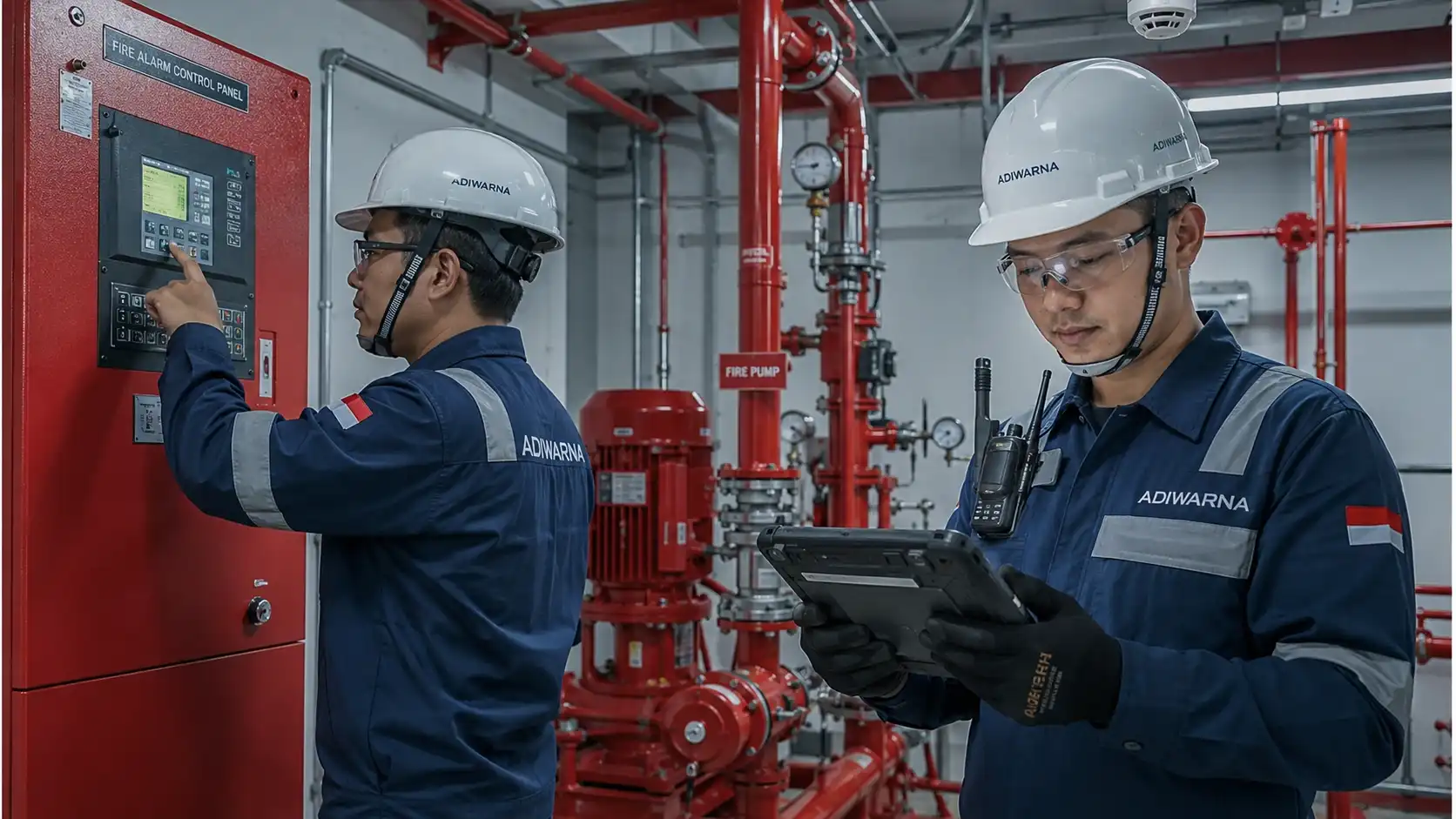

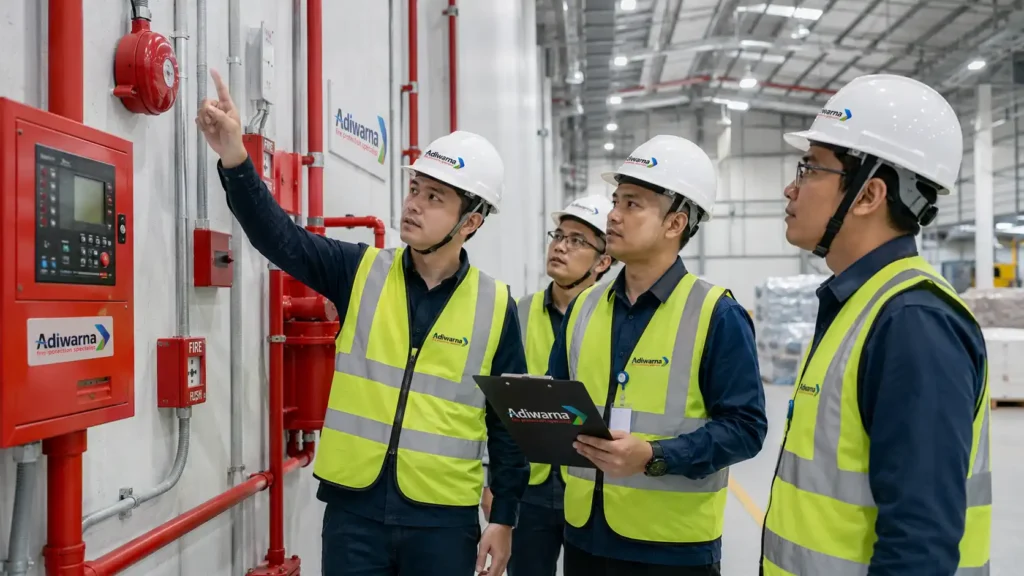
Fire protection contractor plays an important role in protecting industrial facilities from fire risks. Data centers, oil and gas facilities, and factories need systems designed with precision. Therefore, contractor selection must not be based on price alone.
Fire can stop operations within a short time. In addition, a fire incident can damage assets, data, machines, and business reputation. Therefore, companies need reliable fire protection systems.
However, fire protection is not only about equipment installation. The system must include design, procurement, installation, testing, commissioning, documentation, and maintenance.
PT Adiwarna Anugerah Abadi provides professional fire protection solutions. The Adiwarna team helps businesses build systems that match risks, standards, and operational needs.
Fire protection contractor services by PT Adiwarna Anugerah Abadi
Why Fire Protection Contractor Is Important
Fire protection contractor helps ensure that fire safety systems perform according to design. A poorly designed system can fail during an emergency. As a result, losses can become much greater.
First, the right contractor understands facility risks. Second, the contractor can choose suitable systems. In addition, a professional contractor can integrate many systems into one ecosystem.
Industrial fire protection systems may include fire alarms, sprinklers, hydrants, fire pumps, gas suppression, and fire extinguishers. Therefore, the contractor must understand mechanical, electrical, hydraulic, and safety aspects.
NFPA standards for fire protection systems
Fire Protection Contractor Challenges in High-Risk Industries
Every industry has different challenges. Therefore, a fire protection contractor must adjust the approach to each facility’s characteristics.
Data Centers

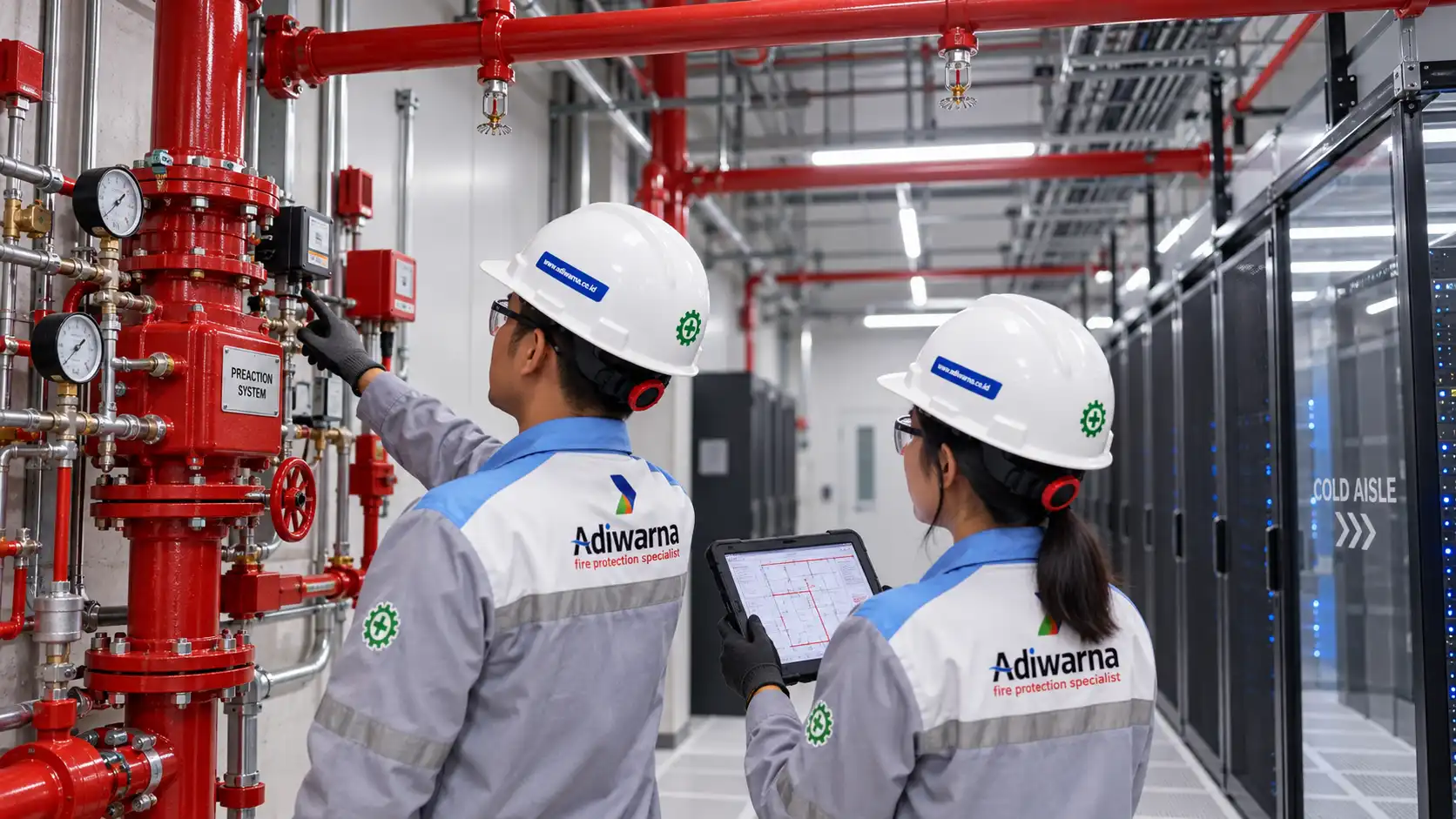
Data centers contain servers, UPS units, batteries, electrical panels, cables, and cooling systems. These assets have high value. In addition, downtime can create major losses.
Therefore, data centers require early detection and clean suppression systems. Fire alarm systems, aspirating smoke detectors, and clean agent suppression often become key solutions.
Fire protection solutions for data centers
Oil & Gas Facilities
Oil and gas facilities have risks from flammable materials. Process areas, storage tanks, loading bays, and control rooms need special protection. Therefore, design must be based on risk analysis.
In addition, some areas require explosion-proof devices. A fire protection contractor must understand area classification, corrosion, temperature, and applicable safety standards.
Fire protection systems for oil and gas facilities
Factories and Warehouses
Factories face risks from machines, electrical panels, raw materials, and production processes. Warehouses face risks from stored materials, packaging, and high racks.
Therefore, contractors must assess layout, access, evacuation routes, and possible fire spread. Design must not rely only on the initial building layout.
Scope of Work for a Fire Protection Contractor
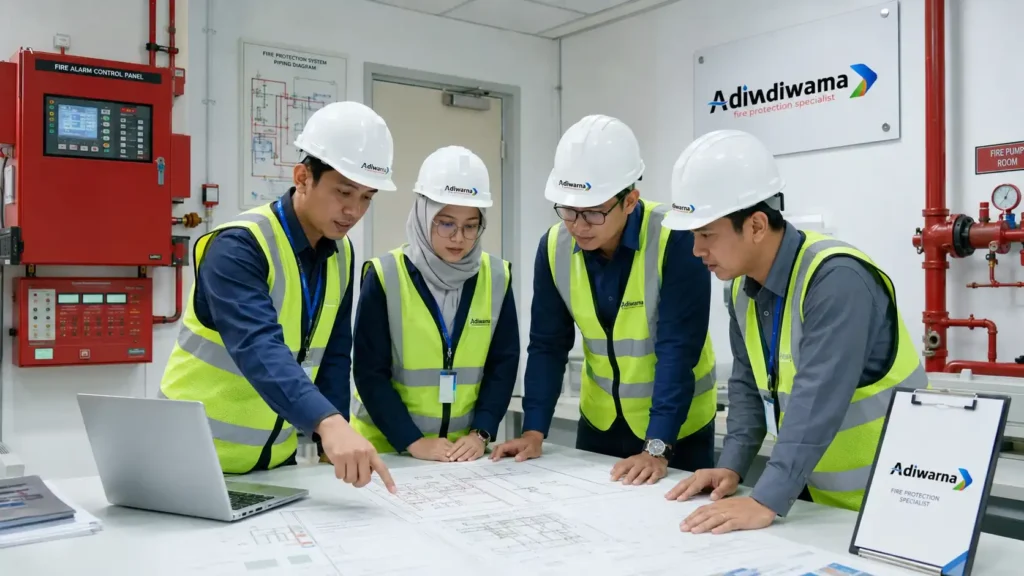
A professional fire protection contractor does not only install equipment. The contractor must provide complete solutions from the first survey to system handover.
The scope of work usually includes:
- Site survey.
- Fire risk analysis.
- Fire protection system design.
- Technical calculations.
- Material procurement.
- System installation.
- System integration.
- Testing and commissioning.
- Documentation preparation.
- Operator training.
- Periodic maintenance.
In addition, the contractor must provide practical recommendations. The recommendations should match operations, budget, and audit targets.
Important Standards for a Fire Protection Contractor
Fire protection contractor work must refer to relevant technical standards. Standards help ensure the system is safe, measurable, and testable.
Common references include:
- NFPA 10 for portable fire extinguishers.
- NFPA 13 for sprinkler systems.
- NFPA 14 for standpipe and hose systems.
- NFPA 20 for fire pumps.
- NFPA 72 for fire alarm and signaling.
- NFPA 2001 for clean agent fire extinguishing systems.
- Relevant SNI fire protection standards.
- Occupational safety and building regulations.
However, standards alone are not enough if they are not applied correctly. Engineers must read actual field conditions. In addition, every facility may have different operational needs.
NFPA fire protection codes and standards
How to Choose the Right Fire Protection Contractor
A fire protection contractor should have strong technical capability and field experience. Business owners need to evaluate vendors objectively before starting a project.
Use the following guide when selecting a contractor:
- Check experience in similar industries.
- Review the project portfolio.
- Ensure the team understands technical standards.
- Evaluate design and installation capability.
- Review the quality of materials used.
- Confirm testing and commissioning support.
- Request complete technical documentation.
- Ensure maintenance service is available.
- Review project communication response.
In addition, choose a contractor that can explain solutions clearly. A good contractor does not only sell products. They help clients understand risks and technical priorities.
Systems Commonly Handled by Fire Protection Contractors
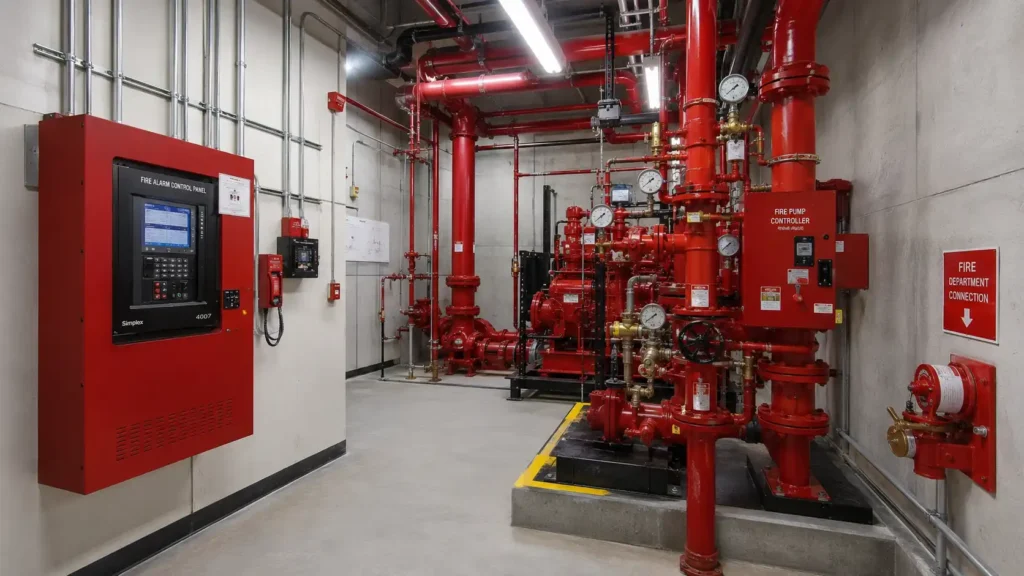
Industrial facilities need connected systems. Therefore, contractors must understand various fire protection systems.
Fire Alarm System
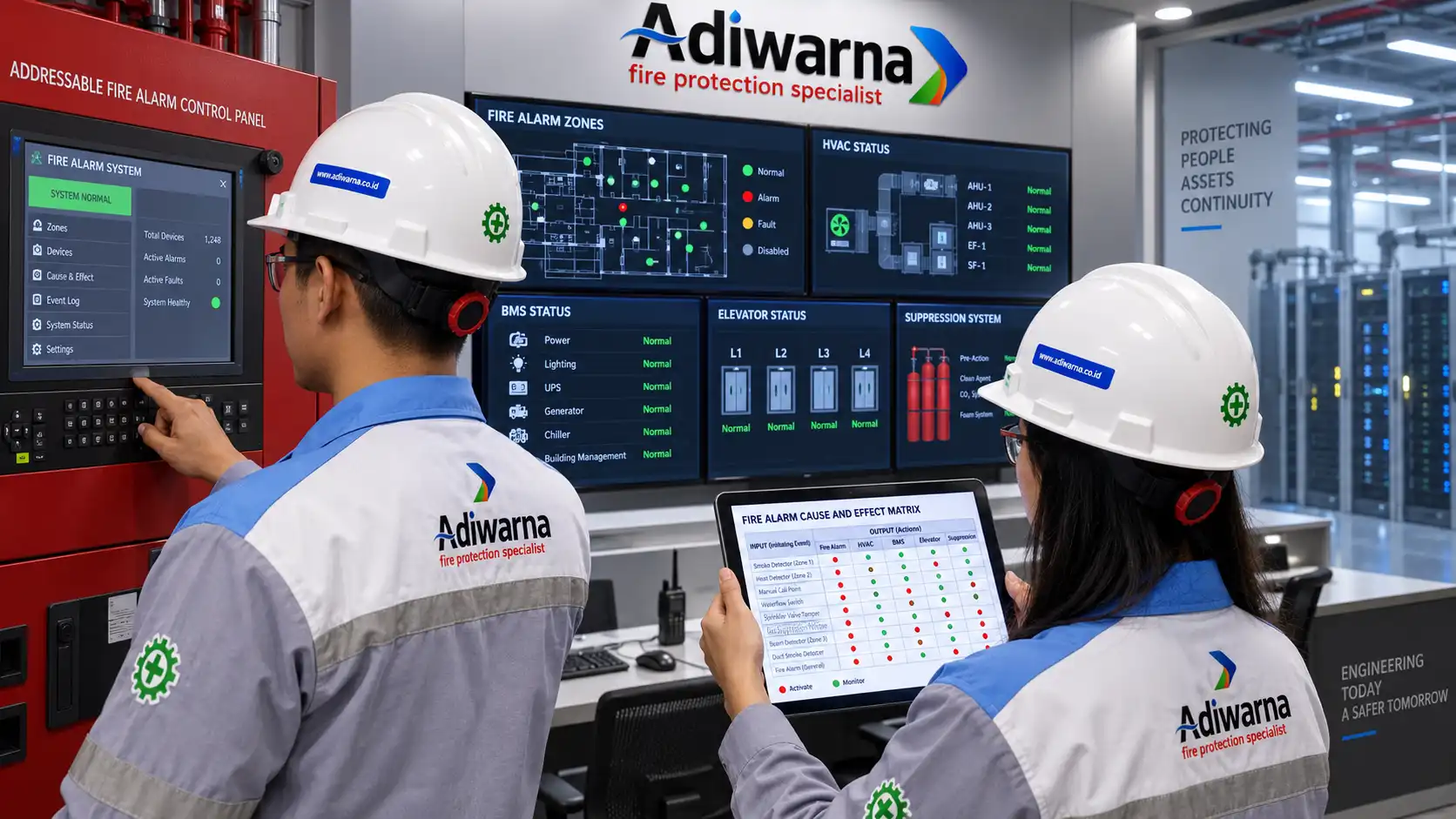
A fire alarm system provides early warning. It uses smoke detectors, heat detectors, manual call points, sounder strobes, and control panels.
In addition, the system can connect with lifts, access control, gas suppression, and building management systems. Proper integration speeds up emergency response.
Fire alarm system installation service
Sprinkler System
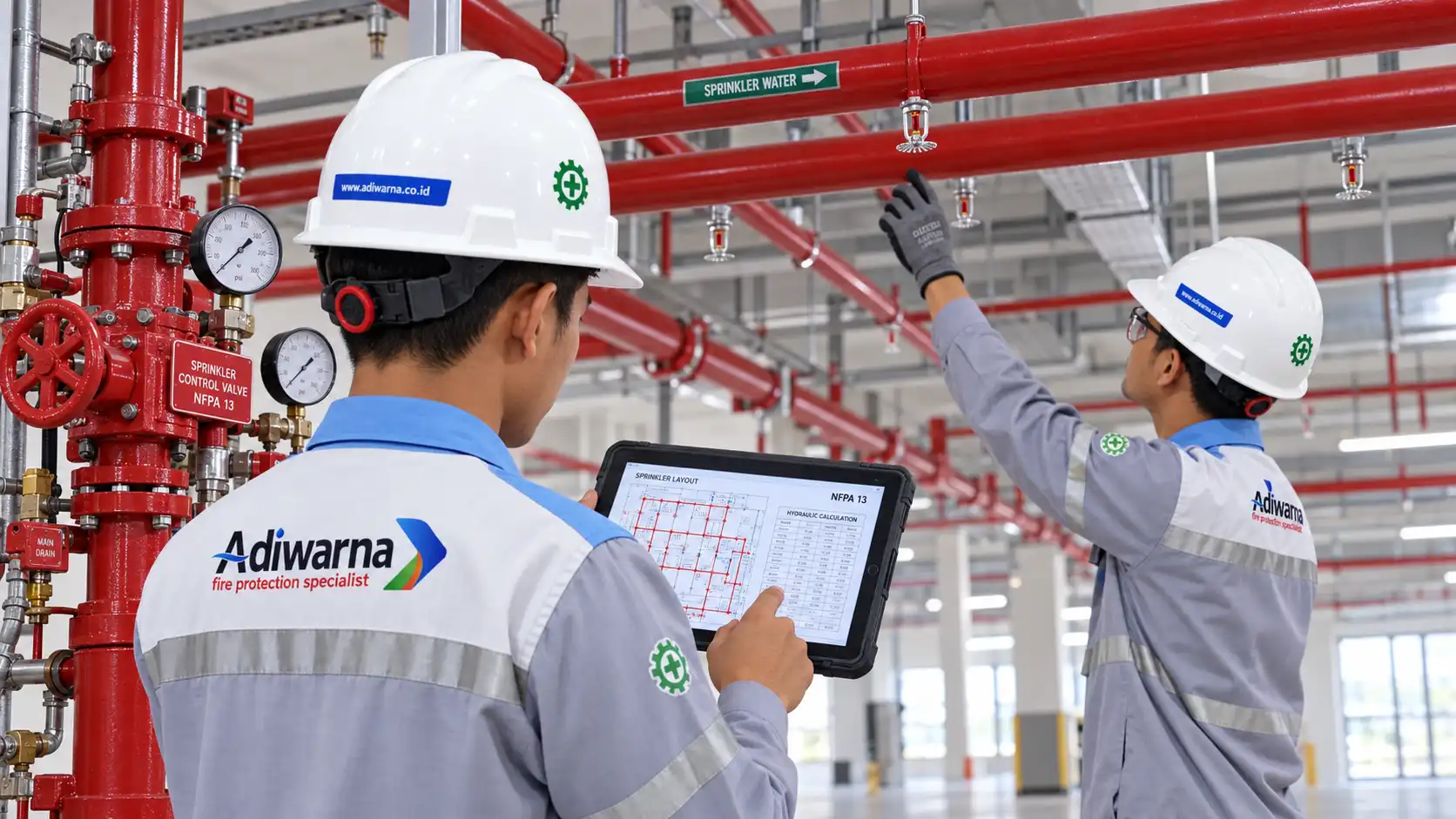
A sprinkler system suppresses fire automatically using water. This system requires pressure, flow rate, protection area, and fire pump capacity calculations.
Therefore, sprinkler installation needs proper hydraulic design. Design errors can reduce water distribution performance.
Sprinkler system installation service
Hydrant System
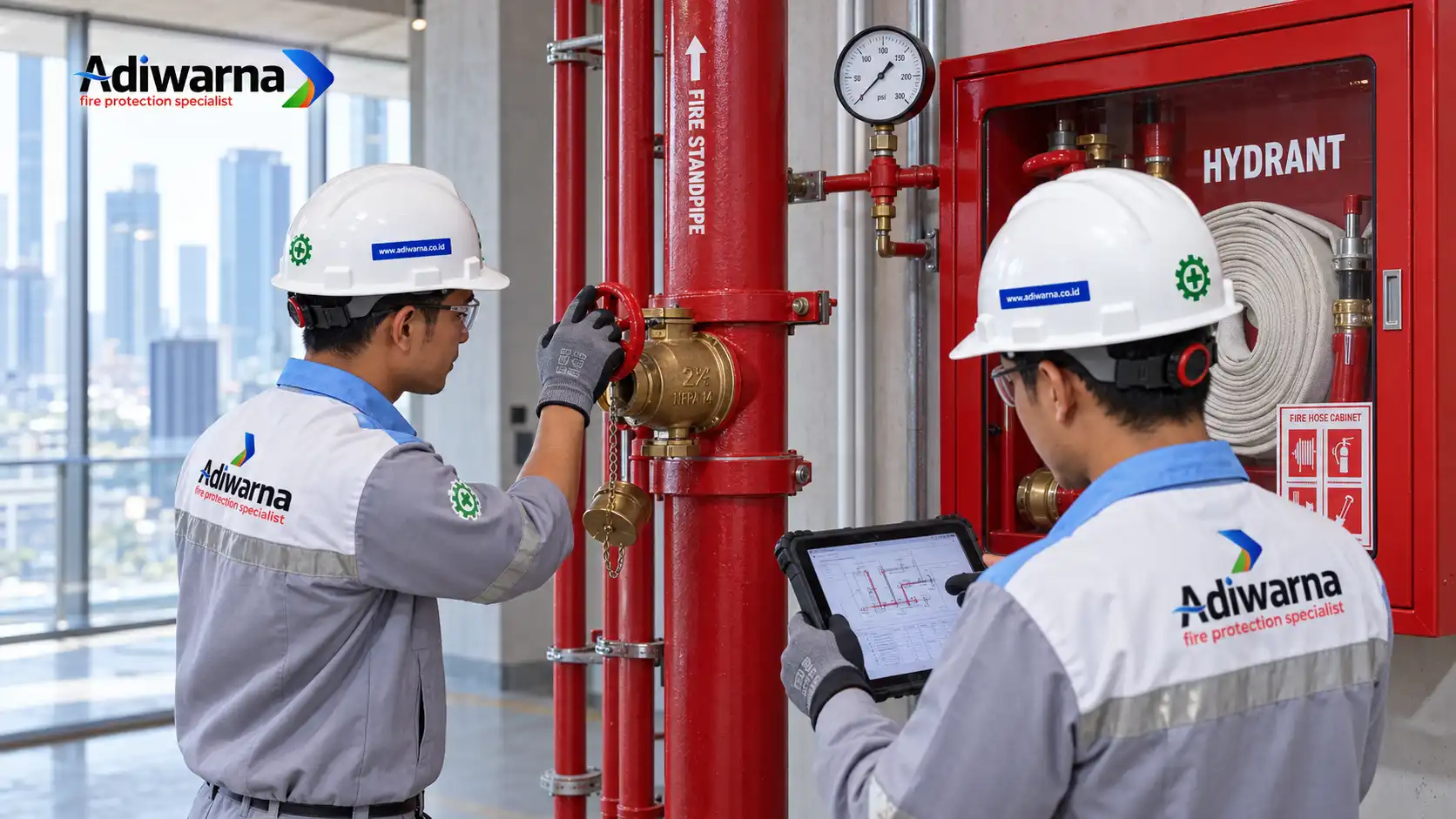
A hydrant system supports manual firefighting by firefighters or emergency response teams. This system requires piping networks, hydrant pillars, hose reels, fire pumps, and water tanks.
In addition, hydrant locations must be easy to access. The route to each hydrant must not be blocked by equipment or stored goods.
Hydrant system installation service
Fire Suppression System
A fire suppression system suits critical areas such as data centers, server rooms, control rooms, and panel rooms. The system can use clean agent or inert gas.
In addition, it must integrate with the fire alarm system. Integration controls detection, delay, warning, manual release, abort switch, and discharge.
Fire suppression system installation service
Fire Extinguisher and Portable Extinguishers
A fire extinguisher provides early protection when fire is still small. Contractors need to determine type, capacity, location, signage, and inspection schedule.
However, the extinguisher must match the fire class. The wrong agent can increase risk, especially in electrical and electronic areas.
Fire extinguisher supply and maintenance
Common Mistakes When Choosing a Contractor
Many companies choose contractors based only on the lowest proposal. Yet, fire protection directly affects safety and business continuity.
Common mistakes to avoid include:
- Not checking contractor experience.
- Not requesting technical design.
- Ignoring the standards used.
- Not reviewing material specifications.
- Not requesting testing results.
- Not preparing as-built documentation.
- Not planning maintenance.
- Not involving the HSE team from the beginning.
In addition, projects often face problems because of weak communication. Contractors must coordinate with owners, facility teams, HSE, MEP, and operations teams.
Benefits of Using a Professional Contractor
Using a professional fire protection contractor provides many benefits. These benefits start from the design stage and continue into operations.
Key benefits include:
- Fire risks are mapped more clearly.
- Design matches actual needs.
- Materials are better controlled.
- Installation is cleaner.
- System integration is safer.
- Testing is more measurable.
- Documentation is more complete.
- Maintenance is easier.
- Safety audit readiness improves.
As a result, businesses get more reliable systems. Facility teams can also manage daily inspection and maintenance more easily.
Why Choose PT Adiwarna Anugerah Abadi?
PT Adiwarna Anugerah Abadi helps clients build professional fire protection systems. The Adiwarna team understands the needs of data centers, oil and gas facilities, factories, warehouses, and commercial facilities.
In addition, Adiwarna can support projects from consultation to implementation. This approach helps clients get more integrated solutions.
Adiwarna’s key advantages include:
- Experienced fire protection team.
- Facility-based solutions.
- Clear technical recommendations.
- Clean system installation.
- Testing and commissioning support.
- More structured project documentation.
- Maintenance and inspection services.
- Focus on safety and reliability.
With this approach, businesses can choose fire protection systems that match facility risks. In addition, facilities become more prepared for audits and emergency conditions.
Fire protection contractor consultation with Adiwarna
Tips Before Starting a Fire Protection Project
Before choosing a contractor, prepare facility technical data. This data helps the contractor create a more accurate design.
Prepare the following information:
- Latest building layout.
- Function of each area.
- Type of stored materials.
- Electrical panel locations.
- Production capacity.
- High-risk areas.
- Existing fire protection systems.
- Evacuation routes.
- Target standard or audit requirement.
- Facility operating schedule.
In addition, involve HSE, facility, engineering, and operations teams from the beginning. They understand daily risks and field needs directly.
Conclusion: Fire Protection Contractor Determines System Reliability
Fire protection contractor quality determines fire safety reliability in industrial facilities. A good system must be designed, installed, tested, and maintained professionally.
However, every facility has different risks. Therefore, the solution must rely on surveys, technical standards, and operational needs.
In conclusion, PT Adiwarna Anugerah Abadi is ready to help your business build reliable fire protection systems. Consult your fire alarm, sprinkler, hydrant, fire suppression, fire extinguisher, and maintenance needs with Adiwarna’s specialist team.
Contact PT Adiwarna Anugerah Abadi for fire protection consultation