
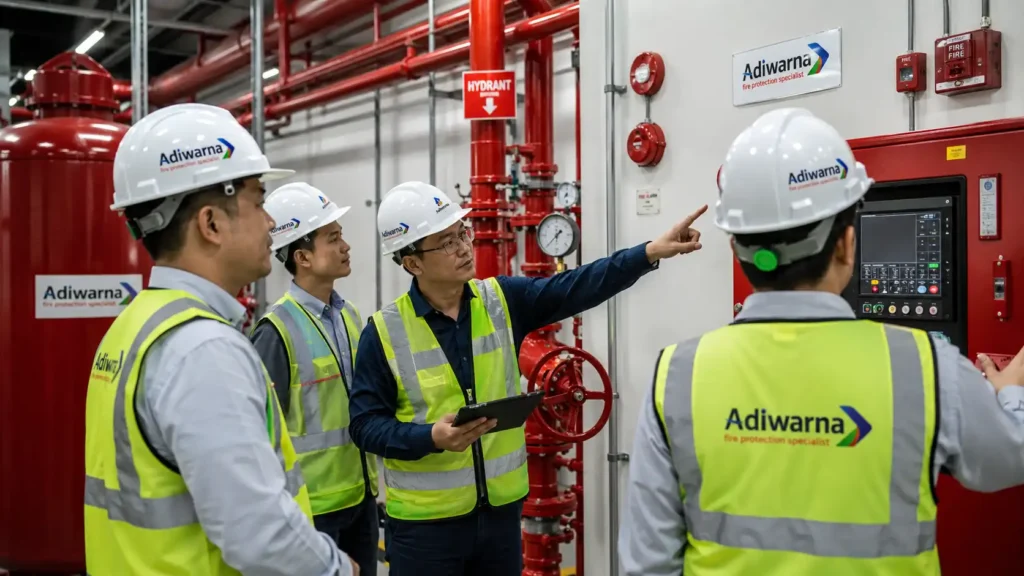
Hydrant contractor plays a major role in maintaining fire suppression readiness in industrial facilities. A hydrant system must provide sufficient water pressure and flow during emergencies. Therefore, its design and installation must be handled by a team with strong technical understanding.
In data centers, oil and gas facilities, factories, warehouses, and large commercial buildings, fire can grow very quickly. In addition, industrial areas often contain machines, electrical panels, raw materials, and combustible materials.
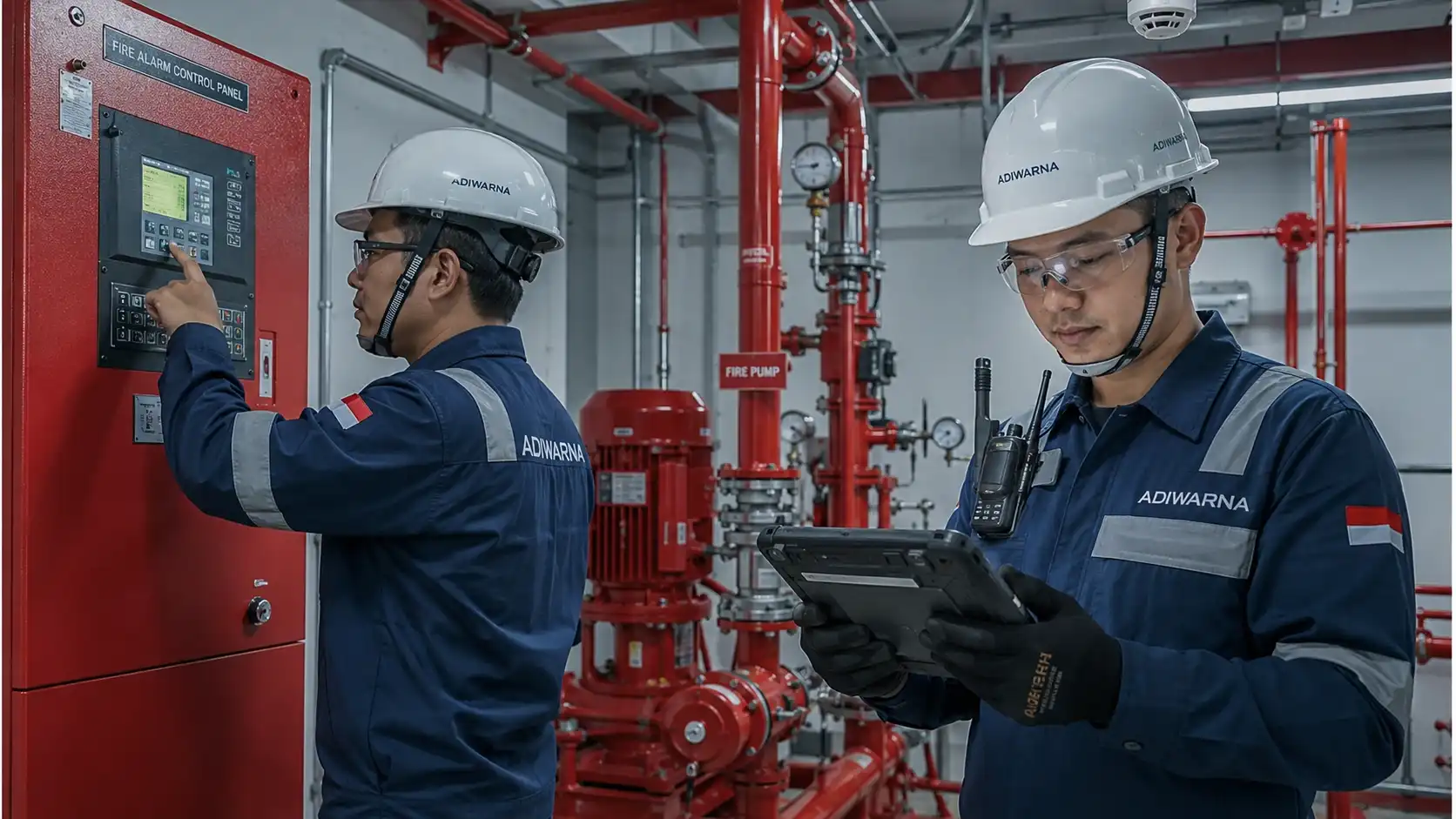
However, a hydrant system is not only red piping and hydrant pillars. It includes fire pumps, water tanks, pipe networks, valves, hose reels, hydrant boxes, and monitoring devices.
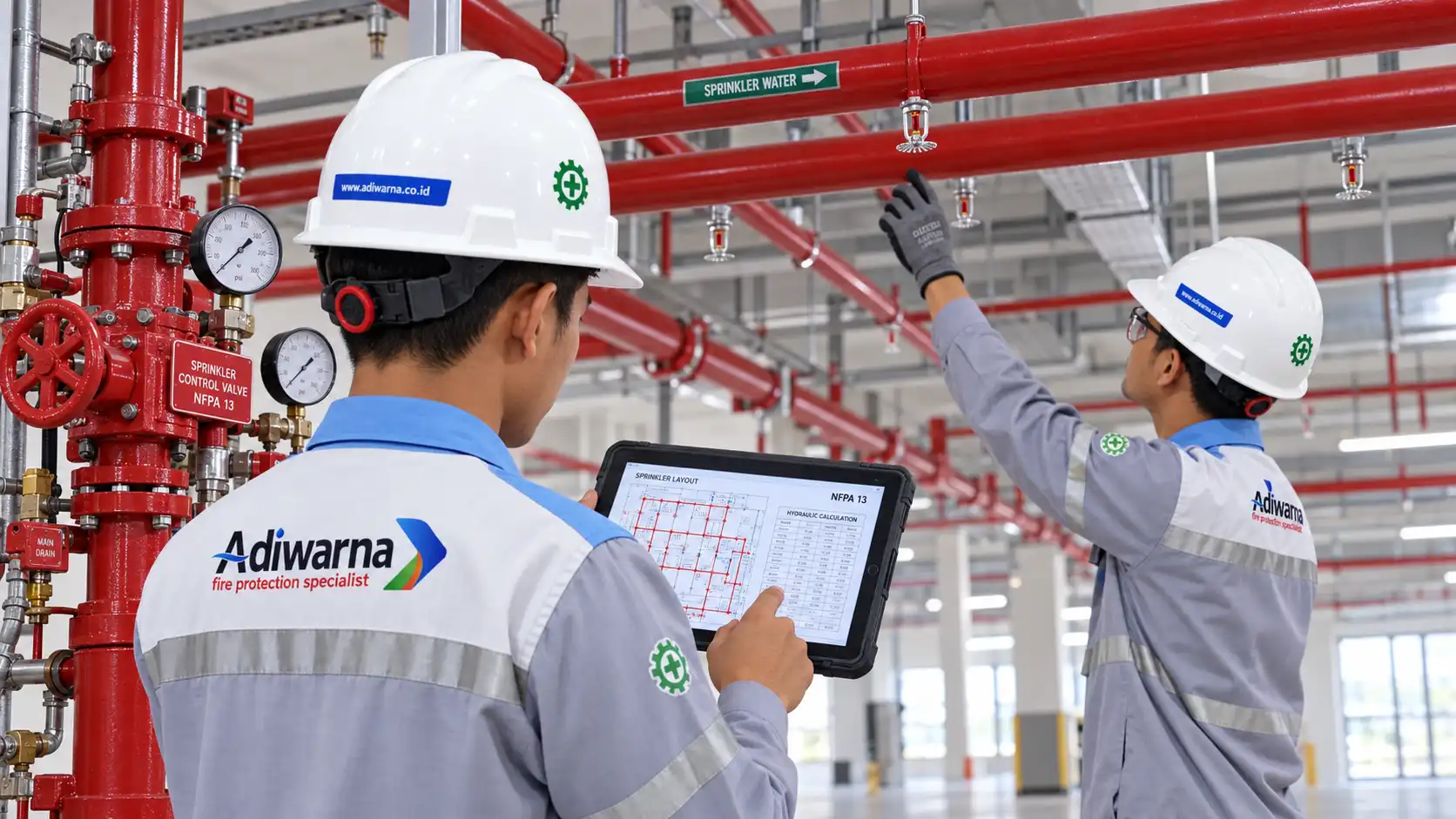
PT Adiwarna Anugerah Abadi helps businesses design, install, test, and maintain hydrant systems. The Adiwarna team adjusts each solution to facility risks, technical standards, and operational needs.
Hydrant contractor service by PT Adiwarna Anugerah Abadi
Why Hydrant Contractor Is Important for Industry
Hydrant contractor helps ensure that the hydrant system is ready during a fire emergency. A poorly designed system may fail to supply water. As a result, firefighting response becomes delayed and risky.
First, the contractor understands water pressure and flow requirements. Second, the contractor can determine pipe routes and hydrant positions. In addition, a professional contractor can integrate hydrants with fire pumps and other fire protection systems.
In industrial facilities, hydrant systems support manual firefighting by fire brigades, emergency response teams, and internal safety personnel. Therefore, access, pressure, and system reliability are very important.
NFPA 14 Standard for the Installation of Standpipe and Hose Systems
Main Components of a Hydrant System

A hydrant system consists of many technical components. Therefore, a hydrant contractor must understand each component in detail.
Common main components include:
- Water tank.
- Electric fire pump.
- Diesel fire pump.
- Jockey pump.
- Pump controller.
- Hydrant pillar.
- Hydrant box.
- Fire hose.
- Nozzle.
- Landing valve.
- Gate valve.
- Check valve.
- Pressure gauge.
- Distribution pipe.
- Siamese connection.
- Test line and drain line.
In addition, the system needs a clear layout. A good layout helps facility teams inspect, test, and maintain the system more easily.
Common Types of Hydrant Systems
Every building has different needs. Therefore, system selection must follow risk level, area size, and firefighting access.
1. Indoor Hydrant
An indoor hydrant is usually installed inside a building. This system helps personnel fight fire from inside the building area.
In addition, indoor hydrants often include hose reels, landing valves, and hydrant boxes. The equipment must be visible and must not block evacuation routes.
2. Outdoor Hydrant
An outdoor hydrant is installed outside the building. This system helps firefighters access water from strategic points.
Therefore, outdoor hydrants must consider fire truck access. The area around the hydrant must not be blocked by parking, materials, or production equipment.
3. Hydrant Pillar

A hydrant pillar acts as an outdoor water access point. This component must be strong, accessible, and protected from physical damage.
In addition, the pillar must connect to a pipe network with sufficient pressure. If pressure drops, firefighting operations can be disrupted.
4. Hose Reel System
A hose reel supports early fire response by internal personnel. This system is more practical for small fires or early-stage incidents.
However, users still need training. Personnel must understand safe distance, spray direction, and evacuation procedures.
Important Standards for Hydrant Contractor
Hydrant contractor work must follow relevant technical standards. Standards help ensure the system is safe, reliable, and testable.
Common references include:
- NFPA 14 for standpipe and hose systems.
- NFPA 20 for fire pump installation.
- NFPA 24 for private fire service mains.
- Relevant SNI standards for hydrant and fire protection systems.
- Occupational safety and building regulations.
- Company HSE requirements.
- Insurance and safety audit requirements.
However, standards are not enough if they are not applied to site conditions. Engineers must assess layout, risk, water source, pressure, and firefighting access.
NFPA 20 Standard for the Installation of Stationary Pumps for Fire Protection
How to Choose the Right Hydrant Contractor
A hydrant contractor must have technical experience and field understanding. Business owners need to evaluate vendors objectively before starting the project.
Use the following guide:
- Check experience in industrial projects.
- Review hydrant installation portfolios.
- Ensure the team understands pressure calculations.
- Ensure the design follows standards.
- Review pipe, valve, and pump quality.
- Request technical drawings and shop drawings.
- Confirm testing and commissioning support.
- Request as-built drawings.
- Ensure maintenance service is available.
- Evaluate project communication response.
In addition, choose a contractor that can explain risks clearly. A good contractor does not only offer a price. They also provide technical solutions.
Hydrant System for Data Centers
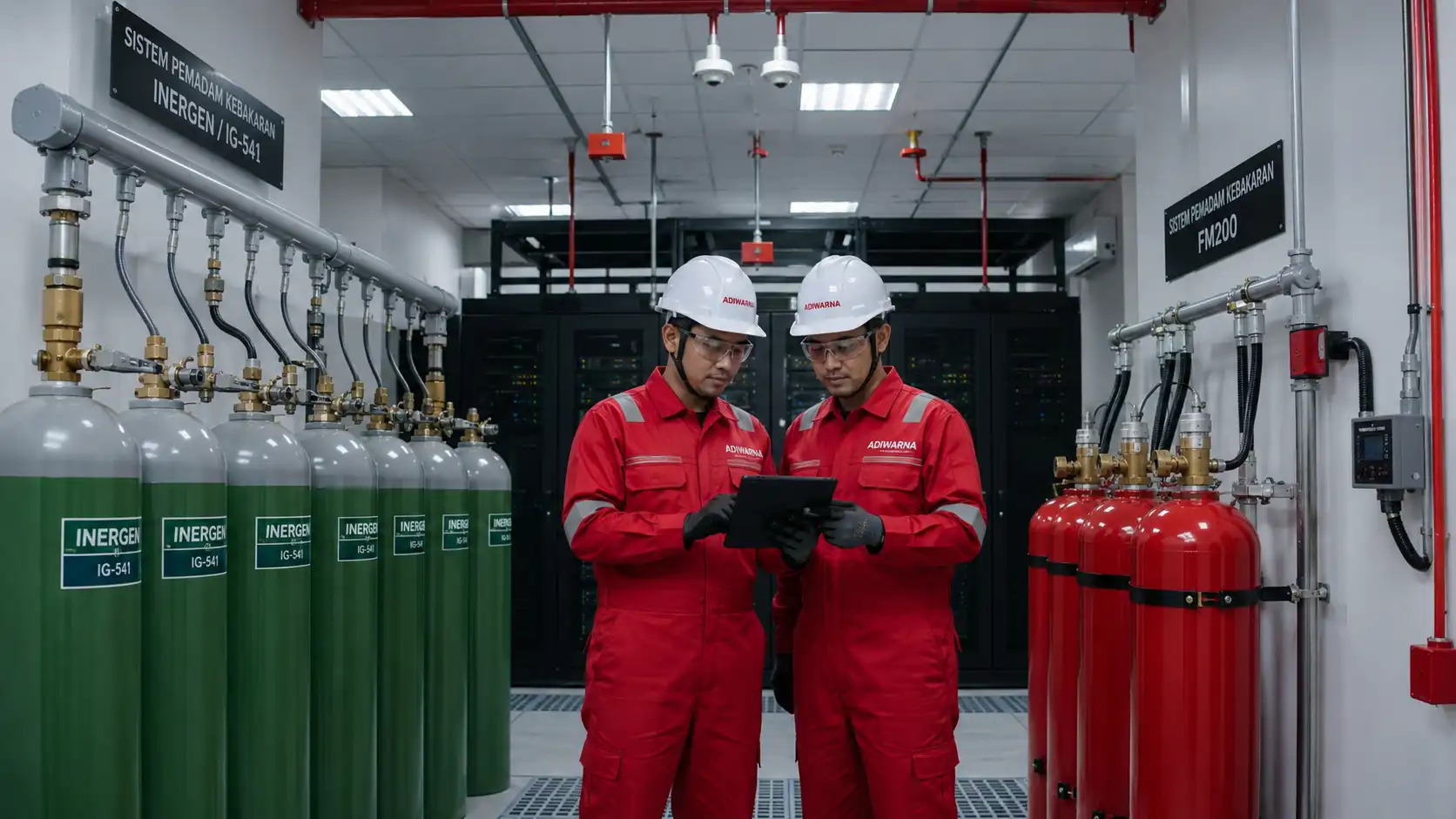
Data centers require careful fire protection. Server areas usually use clean agent or inert gas. However, hydrant systems remain important for building protection and supporting areas.
Therefore, a hydrant contractor must understand the limits of water use in critical areas. Hydrants can support corridors, mechanical rooms, loading docks, and outdoor areas.
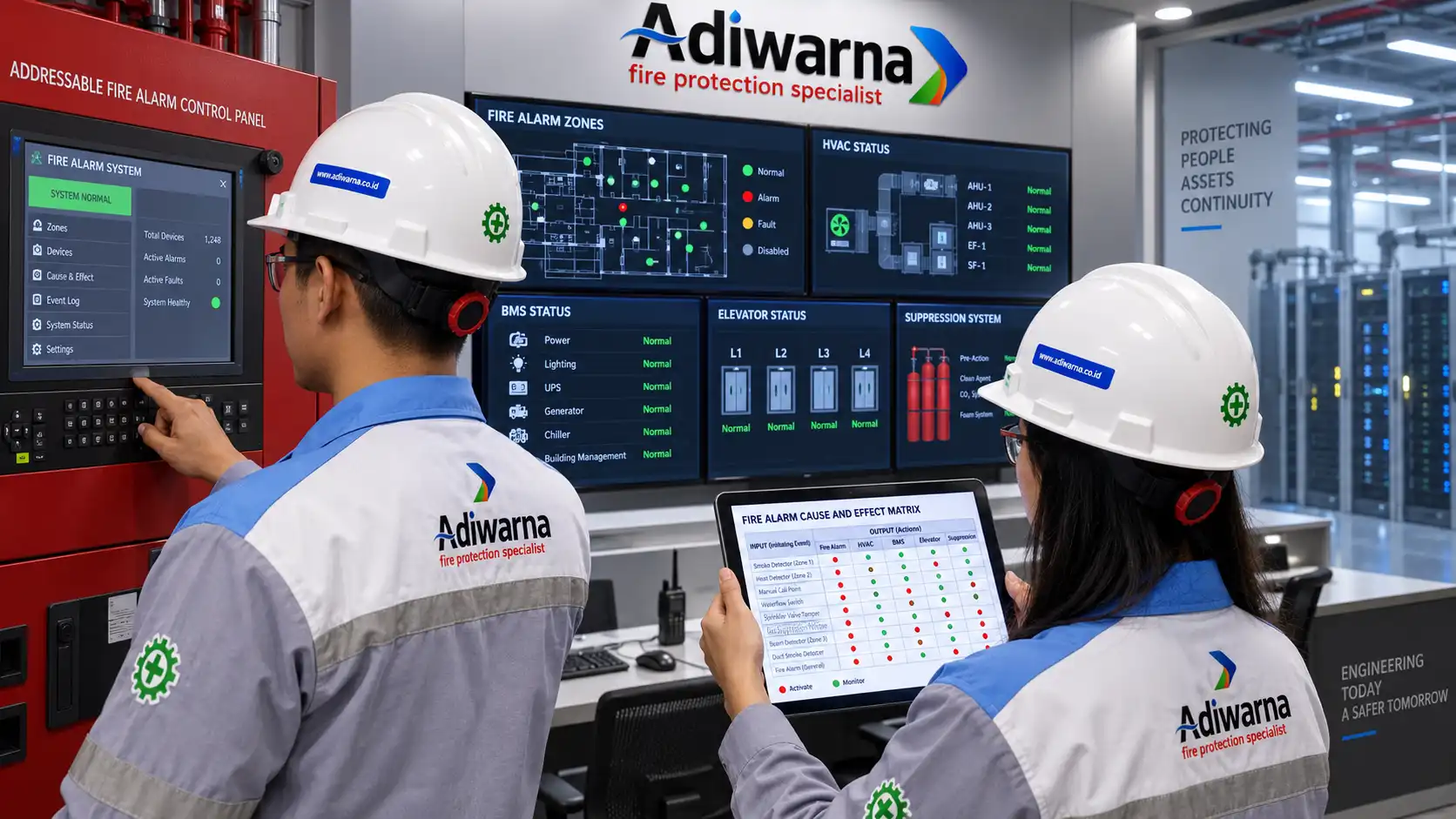
In addition, the hydrant system must coordinate with fire alarms, suppression systems, and evacuation procedures. This integration helps emergency response run more smoothly.
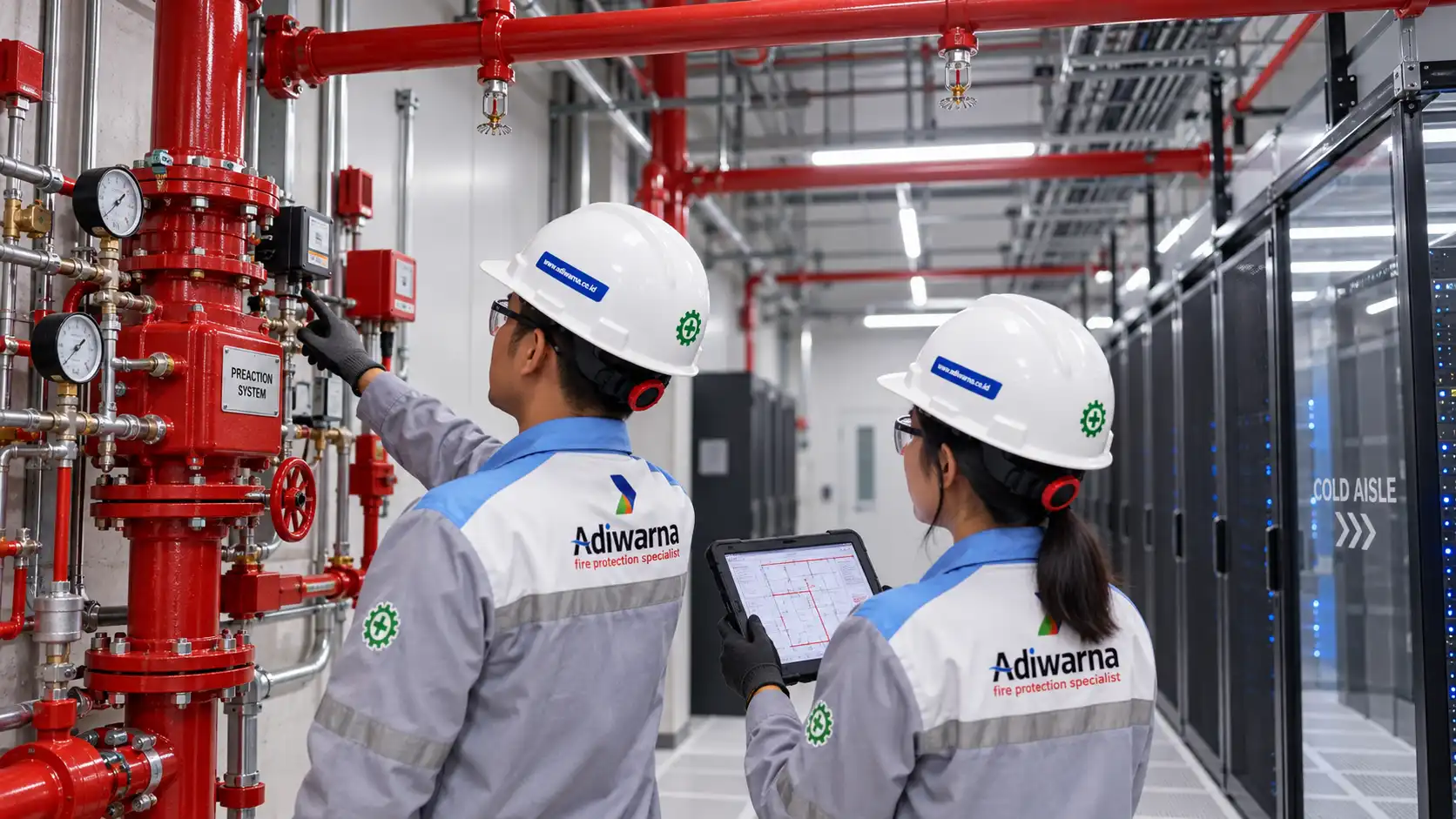
Fire protection solutions for data centers
Hydrant System for Oil & Gas Facilities
Oil and gas facilities have high risks from flammable materials. Process areas, storage tanks, loading bays, and utility areas need strong firefighting systems.
Therefore, a hydrant contractor must consider high flow demand, firefighting access, and material durability. Corrosion, temperature, and area classification also need analysis.
Besides hydrants, oil and gas facilities often need foam systems, deluge systems, fire alarms, and gas detectors. All systems must be designed as one fire protection ecosystem.
Fire protection systems for oil and gas facilities
Hydrant System for Factories and Warehouses
Factories face risks from production machines, electrical panels, raw materials, and human activity. Warehouses face risks from stored goods, cartons, plastics, and high racks.
Therefore, hydrant systems must be placed near strategic areas. However, their positions must not block logistics routes or evacuation routes.
In addition, a hydrant contractor must calculate hose reach. This ensures personnel can reach protected areas effectively.
Hydrant Contractor Work Stages
A good hydrant project must follow technical stages. These stages help ensure the system is ready for use.
1. Site Survey
First, the team surveys the facility. They check building layout, water sources, risk areas, pipe routes, and firefighting access.
In addition, the team reviews existing systems if available. This data becomes the basis for design and work estimation.
2. Technical Calculation
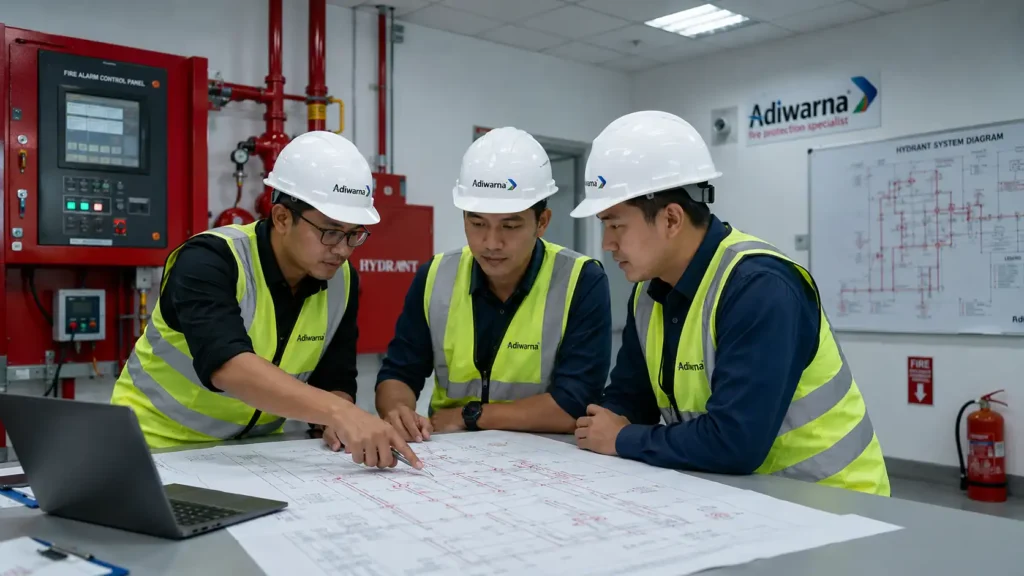
Next, engineers calculate pressure, flow rate, water tank capacity, and fire pump requirements. This calculation determines system performance.
If the calculation is wrong, water may not reach the farthest point. Therefore, this stage is very important.
3. System Layout Design
After that, the team determines hydrant pillar positions, hydrant boxes, pipe routes, valves, and pump room layout. The layout must support firefighting operations.
In addition, the design must consider maintenance access. Valves and gauges must be easy to inspect.
4. Pipe and Component Installation
Then, the team installs pipes, valves, hydrant boxes, pillars, pumps, and supporting components. Installation must be neat and follow specifications.
In addition, work must follow safety procedures. Active factories need coordination so production is not disrupted.
5. Testing and Commissioning
After installation, the team performs testing. Tests include pressure tests, flow tests, pump tests, valve tests, and leak inspections.
As a result, the owner receives proof that the system works according to design. Testing documentation is also important for audits.
Common Mistakes in Hydrant Projects
Many hydrant systems look complete but are not ready to use. Problems often occur because of poor design and weak maintenance.
Common mistakes to avoid include:
- Not calculating pressure accurately.
- Water tank capacity is too small.
- Fire pump does not match demand.
- Pipes do not follow specifications.
- Hydrant pillars are difficult to access.
- Hydrant boxes are blocked by goods.
- Flow tests are not performed.
- As-built drawings are not prepared.
- Routine maintenance is ignored.
- Internal personnel are not trained.
In addition, hydrant systems are often ignored after handover. Yet, the system must be tested and maintained regularly.
Benefits of Using a Professional Hydrant Contractor
Using a professional hydrant contractor gives major benefits to businesses. These benefits start from design and continue into operations.
Key benefits include:
- The system matches facility risks better.
- Pressure and flow are more measurable.
- Materials are better controlled.
- Installation is cleaner.
- Fire pump capacity is more accurate.
- Testing is well documented.
- Maintenance becomes easier.
- Safety audit readiness improves.
In addition, facility teams can manage the system with more confidence. They have technical data, as-built drawings, and clear inspection schedules.
Why Choose PT Adiwarna Anugerah Abadi?
PT Adiwarna Anugerah Abadi helps clients build reliable hydrant systems. The Adiwarna team understands high-risk industries such as data centers, oil and gas facilities, factories, and warehouses.
In addition, Adiwarna can support projects from survey to maintenance. This approach helps clients get a more integrated system.
Adiwarna’s key advantages include:
- Experienced technical team.
- Facility risk-based design.
- Pressure and flow calculations.
- Clean pipe installation.
- Integration with fire pumps and alarms.
- Measurable testing and commissioning.
- More complete project documentation.
- Inspection and maintenance support.
With this approach, facilities become more prepared for emergency conditions. In addition, the system becomes easier to audit and maintain.
Hydrant contractor consultation with Adiwarna
Tips Before Starting a Hydrant Contractor Project
Before starting the project, prepare facility technical data. This data helps a hydrant contractor create a more accurate design.
Prepare the following information:
- Latest building layout.
- Function of each area.
- High-risk areas.
- Available water source.
- Water tank capacity.
- Existing fire pump condition.
- Existing pipe routes.
- Evacuation routes.
- Fire truck access.
- Target standard or audit requirement.
In addition, involve HSE, facility, engineering, and operations teams from the beginning. They understand daily risks and field needs.
Conclusion: Hydrant Contractor Determines Fire Suppression Reliability
Hydrant contractor determines the quality of water-based fire suppression systems in industrial facilities. A good system must be designed, installed, tested, and maintained professionally.
However, every facility has different risks. Therefore, the solution must rely on surveys, technical calculations, standards, and operational needs.
In conclusion, PT Adiwarna Anugerah Abadi is ready to help your business build a reliable hydrant system. Consult your hydrant system, fire pump, fire alarm, sprinkler, fire suppression, and maintenance needs with Adiwarna’s specialist team.
Contact PT Adiwarna Anugerah Abadi for hydrant system consultation