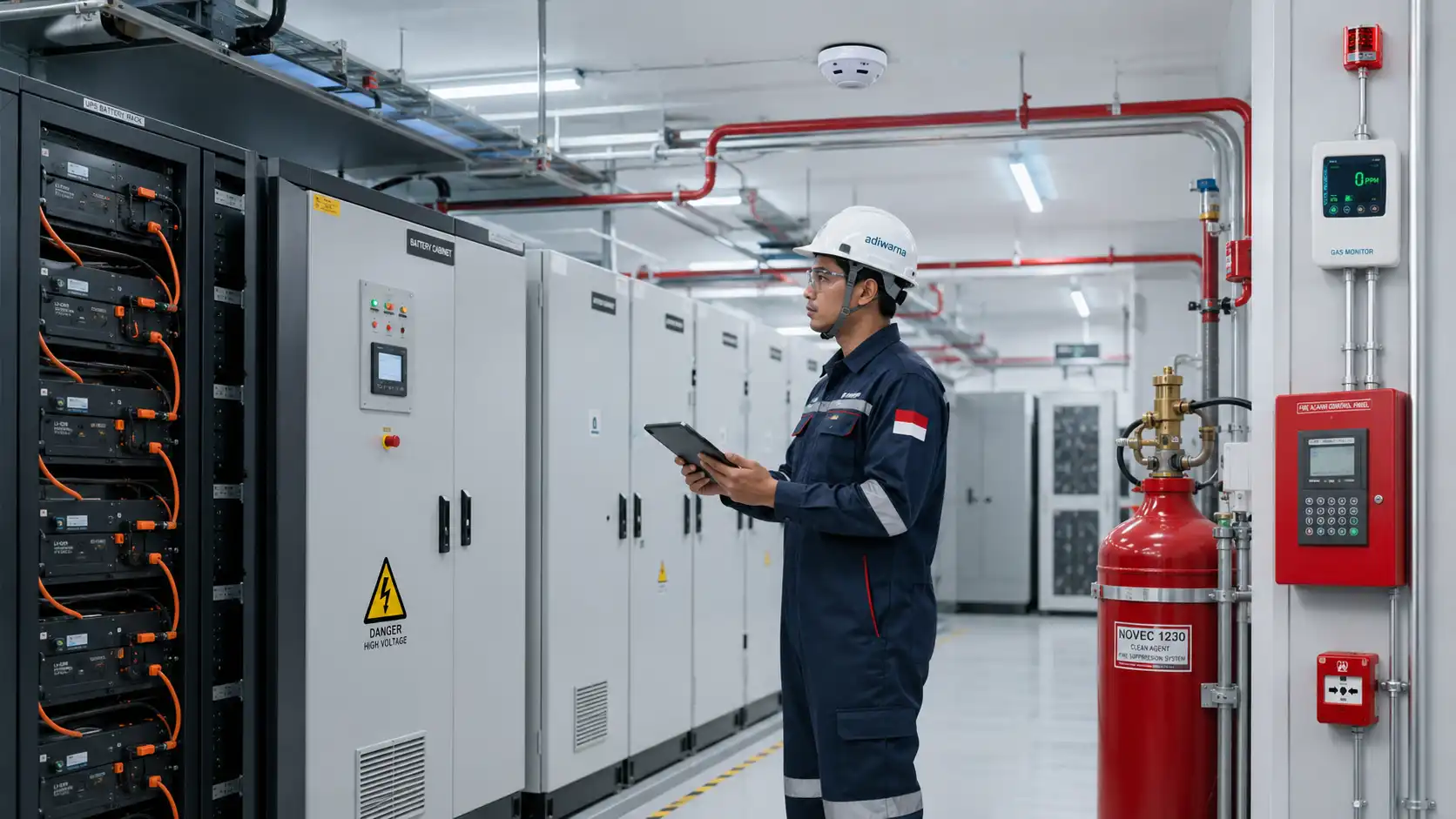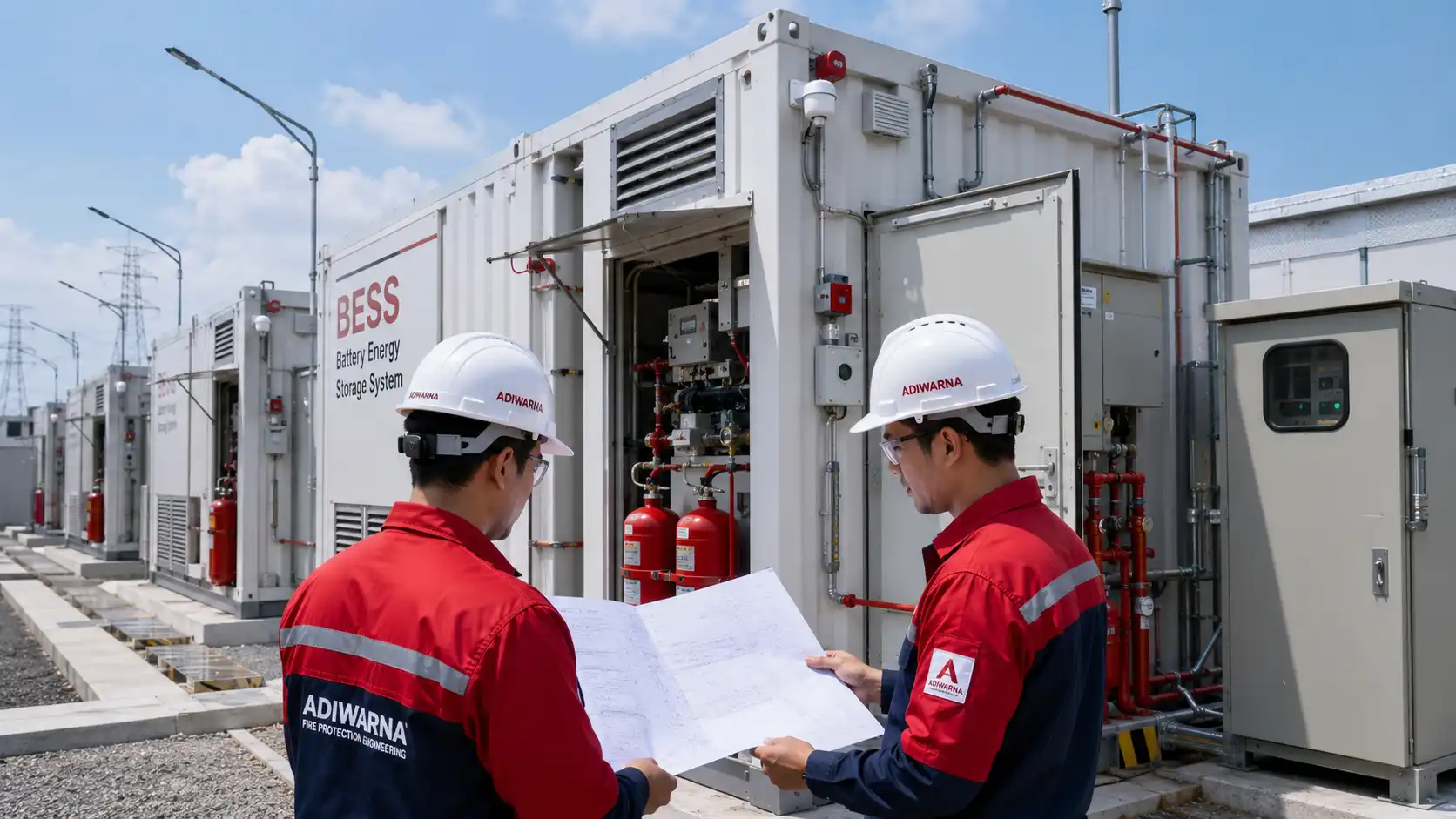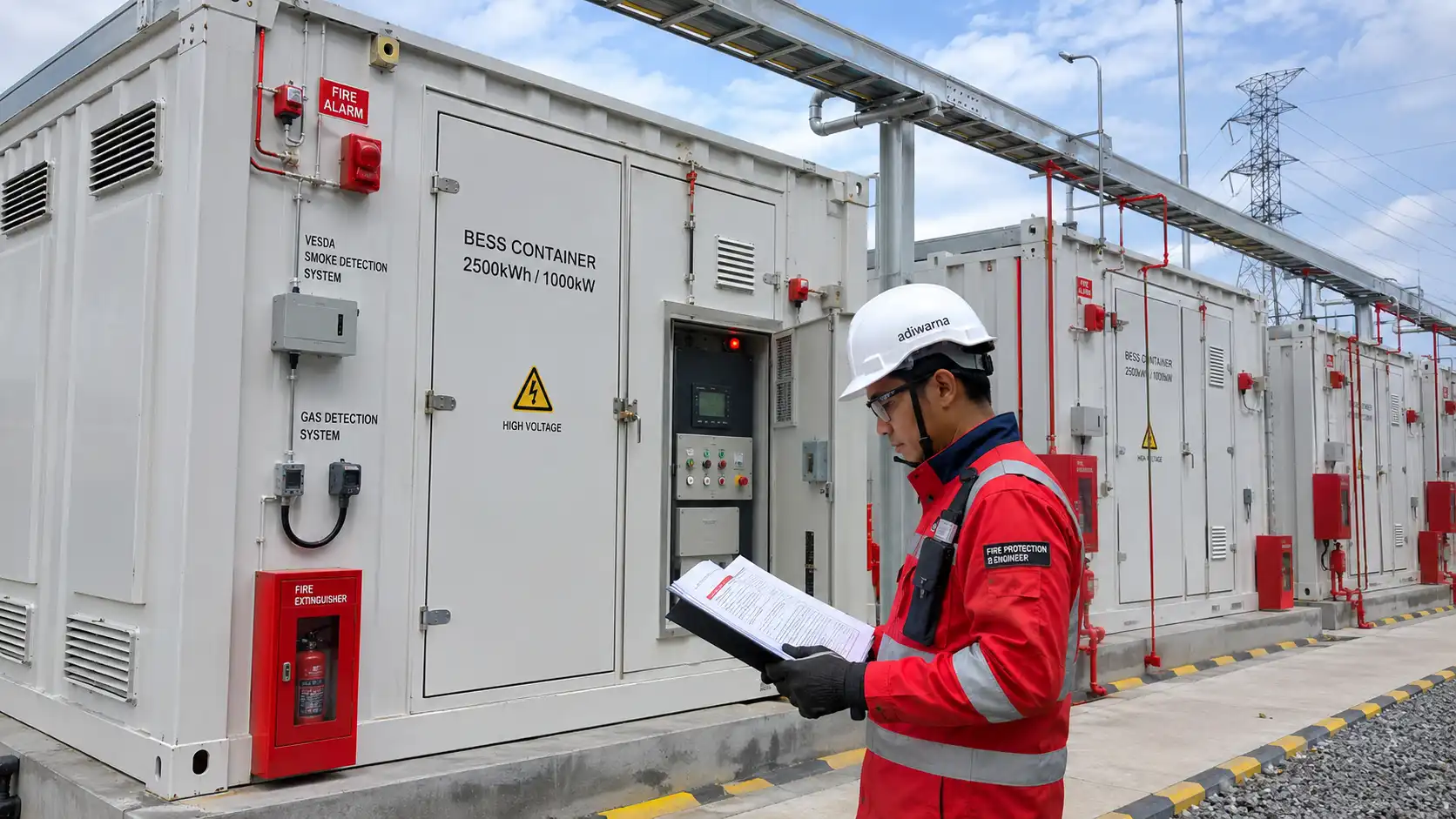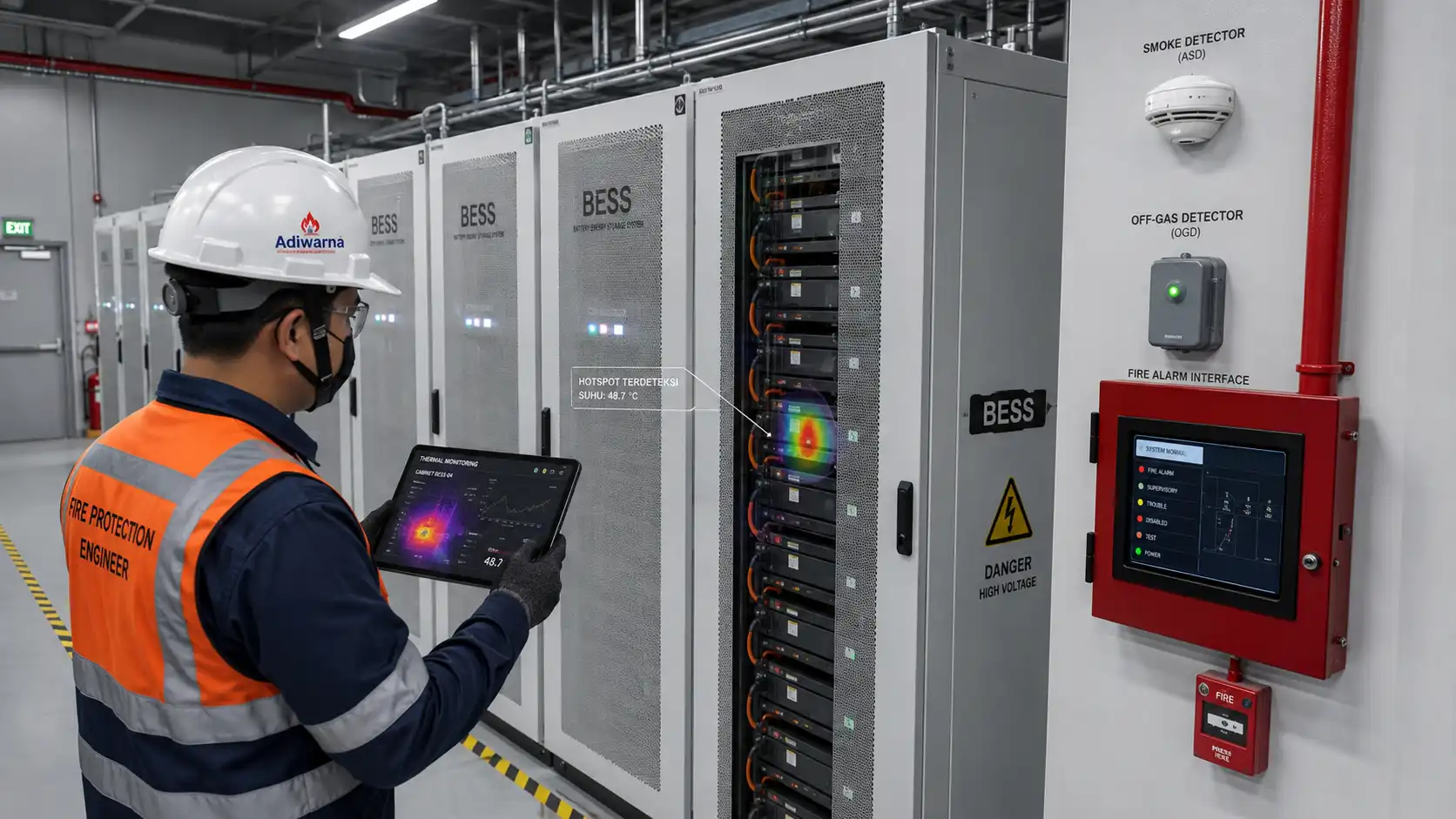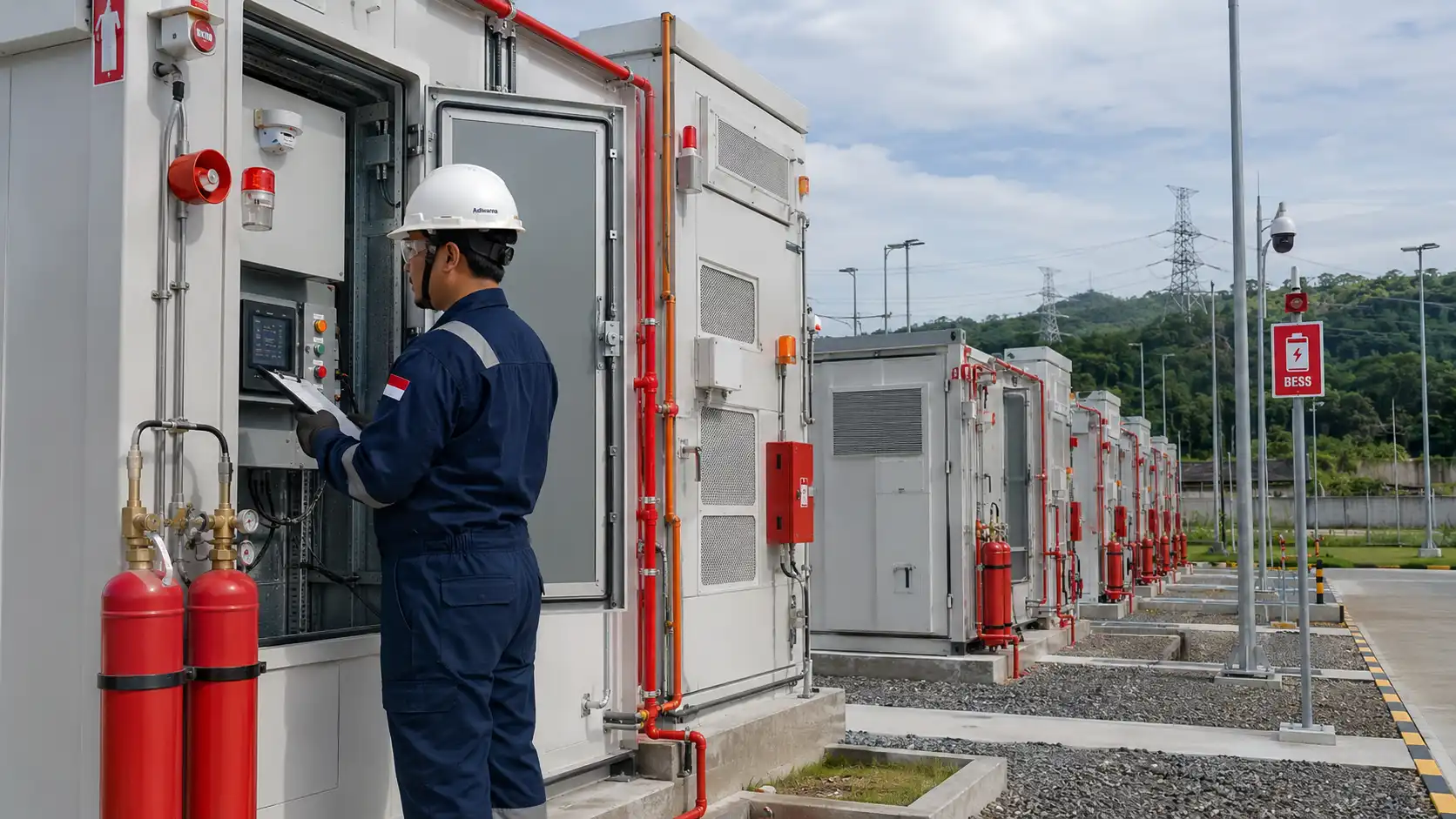

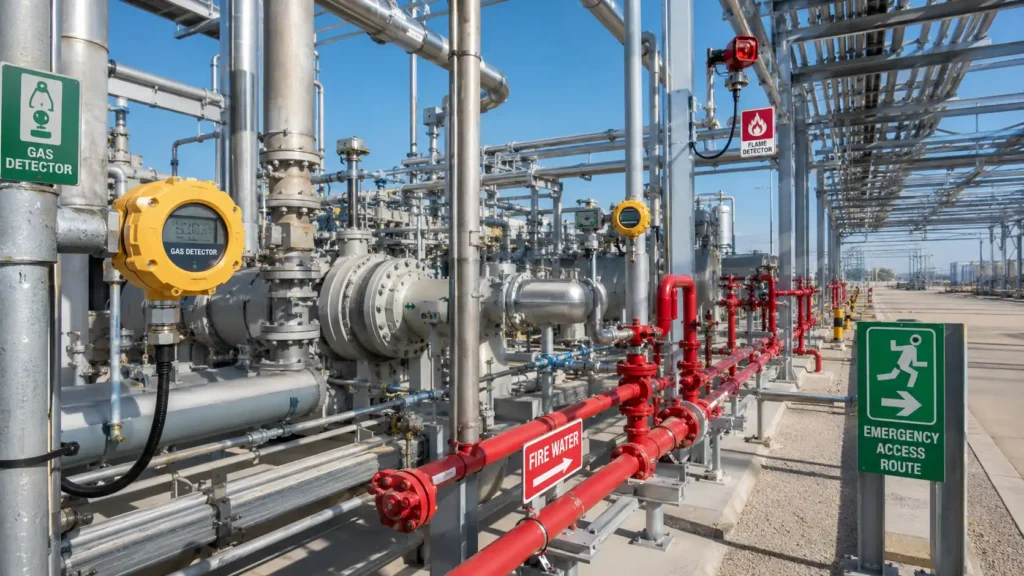
Gas detector is a safety device used to detect the presence of combustible gases, toxic gases, or hazardous atmospheric conditions before they create fire, explosion, or worker exposure risks. Therefore, this device is highly important for industrial facilities such as oil & gas, petrochemical plants, chemical plants, power plants, wastewater treatment facilities, generator rooms, battery rooms, chemical warehouses, and confined spaces.
In addition, gas leaks are often not directly visible. Therefore, a detection system is required so operators can receive early warnings before gas concentration reaches a dangerous level.
With proper implementation, a gas detection device can be connected to a fire alarm system, fire and gas detection system, emergency shutdown system, ventilation system, or control room monitoring system. As a result, responses to hazardous conditions become faster, more measurable, and safer.
For industrial fire protection and safety needs, PT Adiwarna Anugerah Abadi provides solutions through its Fire Protection Contractor service, which includes consultation, design, procurement, installation, testing, commissioning, service, and maintenance for high-risk facilities.
Why Is a Gas Detector Important for Industry?
Gas detector is important because many hazardous gases have no visible color, while some types of gas also do not have an odor that can be easily recognized. Therefore, workers cannot always detect danger using human senses alone.
In addition, combustible gas leaks can create an explosive atmosphere when the concentration reaches the flammable limit range. Thus, early detection becomes an important step to prevent fire and explosion.
On the other hand, toxic gases such as H₂S, CO, Cl₂, NH₃, or certain VOCs can endanger workers even at relatively low concentrations. Therefore, monitoring systems must be able to provide alarms before exposure becomes critical.
In oil and gas facilities, gas detection is often part of a fire and gas protection strategy. Adiwarna also explains the importance of integrating gas detectors, flame detectors, hydrants, foam systems, deluge systems, and fire alarms in its Oil and Gas Fire Protection System article.
Main Function of a Gas Detector
The main function of a gas detection device is to monitor gas concentration in a specific area. Then, the system provides an alarm when gas concentration exceeds the predefined limit.
In addition, this device helps operators take action before conditions become more dangerous. For example, the system can trigger local alarms, send notifications to the control room, activate ventilation, or initiate shutdown.
In high-risk facilities, gas detection also supports operational decision-making. Therefore, sensor data can be used for area condition evaluation, evacuation procedures, and risk analysis.
Thus, the detection system does not only function as an alarm. Instead, it becomes part of a process safety strategy and worker protection system.
Types of Gas That Need to Be Detected
Every facility has different gas risks. Therefore, sensor selection must begin with hazard identification in the work area.
Common gases that need monitoring include:
- Methane.
- Propane.
- Butane.
- Hydrogen.
- Carbon monoxide.
- Hydrogen sulfide.
- Ammonia.
- Chlorine.
- Oxygen deficiency.
- Oxygen enrichment.
- Volatile organic compounds.
- Solvent vapor.
- Refrigerant gas.
- Hydrocarbon vapor.
In addition to gas type, engineers also need to understand the physical properties of each gas. This is because gases lighter than air can accumulate in upper areas, while heavier gases can collect in lower areas.
Common Types of Gas Detector

Gas detector is available in several technologies and configurations. Therefore, selection must consider gas type, installation location, environmental conditions, and integration requirements.
Common types include:
- Fixed gas detector.
- Portable gas detector.
- Combustible gas detector.
- Toxic gas detector.
- Oxygen detector.
- Multi-gas detector.
- Open path gas detector.
- Point gas detector.
- Wireless gas detector.
- Explosion-proof gas detector.
In addition, each type has a different function. Fixed detectors are usually installed permanently, while portable detectors are used by workers when entering certain work areas.
Gas Detector for Oil & Gas and High-Risk Areas
Gas detector is very important for oil & gas because these facilities have potential leaks of combustible and toxic gases. Therefore, areas such as process units, compressor stations, loading bays, tank farms, pump areas, pipe racks, and wellhead facilities require reliable monitoring.
In addition, a gas detection system can be connected to a fire and gas controller. With this integration, the system can activate alarms, beacons, sirens, ventilation fans, deluge systems, or emergency shutdown according to the designed scenario.
In high-risk areas, the design should not place sensors randomly. Instead, engineers must consider potential leak sources, wind direction, ventilation, gas density, area classification, and maintenance access.
With proper design, facilities can receive early warnings before a leak develops into a major incident. Therefore, gas detection systems become an important part of fire and explosion prevention strategies.
Gas Detector in a Fire and Gas Detection System
Gas detector is usually part of a fire and gas detection system. This system combines gas detection, fire detection, alarms, shutdown, and control room monitoring.
First, the sensor detects gas concentration in a hazardous area. Then, the signal is sent to the controller to be compared with the alarm set point.
After that, the controller processes alarm status based on predefined logic. For example, the system can distinguish low-level alarm, high-level alarm, fault, inhibit, or detector offline status.
In addition, a fire and gas system can receive input from flame detectors, smoke detectors, heat detectors, manual call points, and emergency push buttons. As a result, operators have more complete information for decision-making.
Fixed Gas Detector
A fixed detector is permanently installed at a specific point. Therefore, this device is suitable for areas with continuous or recurring gas leak potential.
Usually, fixed detectors are used in process areas, battery rooms, generator rooms, compressor areas, pump rooms, loading stations, and tank farms. In addition, these devices can be directly connected to a panel or controller.
The main advantage of a fixed detector is continuous monitoring. With this system, hazardous areas remain monitored even when no worker is present at the location.
However, fixed detector placement must be calculated correctly. If the sensor is installed too far from the leak source or obstructed by airflow, the system may detect danger too late.
Portable Gas Detector
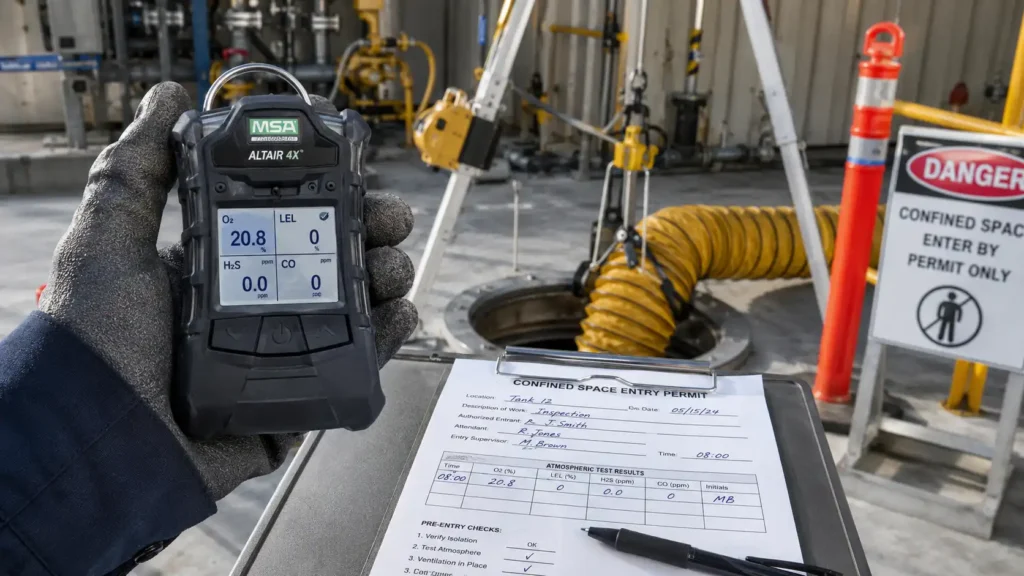
A portable detector is used by workers as personal safety equipment. Therefore, this device is important for inspection, maintenance, confined space entry, shutdown, turnaround, and hot work activities.
In addition, portable detectors are usually able to read several gases at once. For example, a multi-gas device can measure LEL, O₂, H₂S, and CO in one unit.
With this device, workers can understand atmospheric conditions before and during work. Therefore, portable detectors are often part of the permit-to-work system and confined space entry procedure.
Because the device is directly used by workers, calibration and bump testing must be performed consistently. As a result, readings remain accurate when the device is needed in critical conditions.
Combustible Gas Detector
A combustible detector is used to detect flammable gases. Usually, readings are displayed as a percentage of LEL, or lower explosive limit.
If gas concentration approaches a dangerous limit, the system will provide an alarm. Then, operators can stop work, increase ventilation, or isolate the leak source.
Combustible sensors are commonly used for methane, propane, butane, hydrogen, and hydrocarbon vapor. However, each gas has different characteristics, so the sensor must be selected correctly.
Therefore, calibration and target gas selection must match field requirements. If the calibration gas is not appropriate, readings may become less representative.
Toxic Gas Detector
A toxic detector is used to monitor poisonous gases. Therefore, this device is very important for areas with potential H₂S, CO, NH₃, Cl₂, SO₂, or certain VOC exposure.
Unlike combustible gases, toxic gases can endanger workers at low concentrations. Therefore, alarm set points must refer to applicable exposure limits and company safety procedures.
In addition, sensor selection must consider cross sensitivity. This is because some sensors may respond to other gases, so readings need to be evaluated carefully.
With the right selection, the system can help reduce worker exposure risks. As a result, evacuation procedures and emergency response can be carried out more quickly.
Oxygen Detector
An oxygen detector is used to monitor oxygen levels in an area. Therefore, this device is important in confined spaces, inerting rooms, nitrogen rooms, CO₂ rooms, and areas with oxygen deficiency risks.
Oxygen deficiency can occur when another gas displaces normal air. In addition, oxygen enrichment can increase fire risk because materials become easier to ignite.
With oxygen monitoring, workers can determine whether the atmosphere is safe to enter. Therefore, oxygen measurement becomes an important part of confined space entry procedures.
If oxygen levels are outside the safe range, work must be stopped. Then, the area must be ventilated or controlled before workers re-enter.
Open Path Gas Detector
An open path detector uses a light beam between a transmitter and a receiver to detect gas along a specific path. Therefore, this technology is suitable for open areas or areas requiring wide coverage.
In addition, open path detectors are often used in oil & gas facilities, LNG facilities, tank farms, jetties, and loading areas. With a long detection path, this device can indicate gas leakage across a broader area.
However, open path design must consider alignment, obstruction, distance, vibration, weather, and optical contamination. Therefore, commissioning and maintenance must be carried out carefully.
If alignment is disturbed, the system can experience a fault. Therefore, periodic inspection remains necessary even after permanent installation.
Integration with Fire Alarm System
Gas detection devices can be integrated with the fire alarm system so alarms can be displayed and distributed clearly. Usually, integration is performed through relays, addressable modules, input modules, or dedicated controllers.
After the signal is received, the panel can display the alarm location. Then, sounders, strobes, beacons, sirens, or annunciators can activate according to the configuration.
In addition, the system can send signals to the BMS, control room, or emergency response system. Thus, hazard information is not only available locally but also at the monitoring center.
With this integration, operators can respond faster and more accurately. Therefore, alarm logic and signal mapping must be tested during commissioning.
Integration with Emergency Shutdown and Ventilation
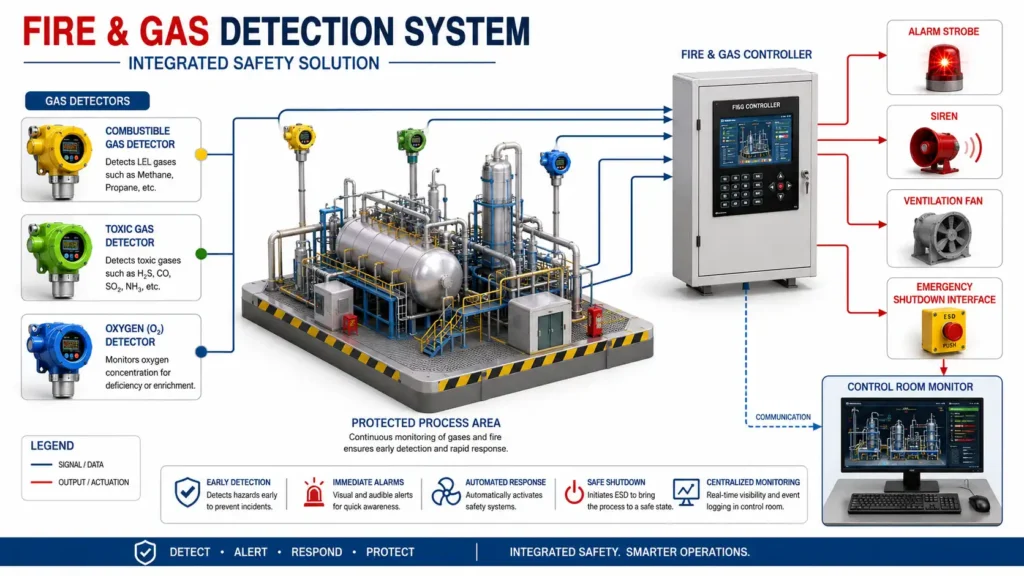
In high-risk facilities, gas signals can be used to activate automatic actions. For example, a high-level alarm can trigger emergency shutdown, close valves, stop equipment, or activate ventilation.
However, automatic logic must be designed carefully. Therefore, the cause and effect matrix must be prepared together with engineering, operations, HSE, and owner teams.
In addition, voting logic can be used to reduce false trips. For example, some applications use 1oo2, 2oo3, or a combination of alarm levels according to risk requirements.
With this approach, the system does not only provide alarms. Instead, it can help reduce the possibility of gas leaks developing into fire, explosion, or worker exposure incidents.
Technical Standards and References
Gas detection system design must follow relevant standards, regulations, and technical guidelines. Therefore, specifications should not be based only on device brand or price.
Common references include:
- NFPA 72 for fire alarm and signaling.
- IEC 60079 for potentially explosive atmospheres.
- IEC 61511 for safety instrumented systems.
- Manufacturer installation manuals.
- Company HSE requirements.
- Insurance requirements.
- Project cause and effect matrix.
- Area classification drawings.
- Local authority regulations.
- Confined space entry procedures.
In addition, sensors must be selected based on gas characteristics and actual field conditions. Thus, the design can better match real facility risks.
Important Factors in Sensor Placement
Sensor placement is one of the most important factors in system success. If the location is wrong, the device may fail to detect leaks quickly.
Factors that must be considered include:
- Potential leak sources.
- Wind direction.
- Natural and mechanical ventilation.
- Gas density.
- Installation height.
- Obstruction.
- Temperature and humidity.
- Vibration.
- Dust and contamination.
- Area classification.
- Maintenance access.
- Evacuation routes.
- Corrosion risk.
- Hot work activity.
In addition, sensors for light gases should be placed where gas can rise. Conversely, sensors for heavy gases should be installed where gas is likely to collect at lower levels.
Testing, Calibration, and Commissioning

Testing and calibration are required so sensor readings remain accurate. Therefore, the system should not only be installed and powered on.
Important activities include:
- Visual inspection.
- Loop test.
- Bump test.
- Zero calibration.
- Span calibration.
- Alarm set point test.
- Fault simulation.
- Controller communication test.
- Relay output test.
- ESD integration test.
- Ventilation activation test.
- Alarm beacon and siren test.
- Documentation review.
In addition, calibration schedules must follow manufacturer recommendations and company HSE policies. In this way, device performance can be maintained throughout its operating life.
If calibration results drift outside acceptable limits, the sensor must be repaired or replaced. This is because inaccurate readings can cause delayed alarms or frequent false alarms.
Gas Detection System Maintenance
Maintenance must be performed periodically to keep the system reliable. Therefore, inspection must include device condition, wiring, panel status, alarm output, and integration function.
Common checks include sensor cleanliness, housing condition, power status, fault status, response time, event log, alarm history, and cable condition. In addition, technicians need to check whether new obstructions have appeared around the sensor.
In outdoor areas, devices can be exposed to dust, rain, heat, chemical vapor, and corrosion. Therefore, enclosures, cable glands, filters, and protective covers must be inspected carefully.
With proper maintenance, the system can become more reliable during emergencies. Conversely, a system that is rarely tested can create a false sense of safety.
Common Mistakes in Gas Detection Projects
Many problems occur because the system is designed without adequate risk analysis. Therefore, design must begin with hazard identification, not with a general sensor quantity.
Common mistakes include:
- Choosing the wrong sensor type.
- Not understanding the target gas.
- Installing sensors too high or too low.
- Ignoring wind direction and ventilation.
- Placing sensors too far from leak sources.
- Ignoring obstruction.
- Ignoring area classification.
- Having unclear alarm set points.
- Not performing calibration.
- Not preparing a cause and effect matrix.
- Not testing ESD integration.
- Providing no maintenance access.
- Having incomplete commissioning documentation.
By avoiding these mistakes, the system can provide more accurate alarms. In addition, facilities can improve readiness for abnormal conditions.
Benefits of a Gas Detection System for Companies
A gas detection system provides major benefits for companies. First, the system helps provide early warning before hazards develop.
In addition, the system supports worker protection from hazardous gas exposure. As a result, workplace accident risks can be reduced.
Furthermore, the system helps protect assets and production processes. If leaks are detected earlier, the company can take action before major damage occurs.
Finally, a well-documented system can support HSE audits, insurance reviews, and compliance inspections. Therefore, investment in a gas detection system provides both safety value and operational value.
Why Choose PT Adiwarna Anugerah Abadi?
PT Adiwarna Anugerah Abadi can help companies design gas detection systems as part of integrated industrial fire protection. In addition, Adiwarna understands the needs of high-risk facilities such as oil & gas, petrochemical plants, power plants, data centers, factories, and industrial plants.
With the right engineering approach, each sensor can be selected based on gas type, risk area, environmental condition, alarm logic, and integration requirements. Therefore, the system is not only installed but also tested and maintained so it is ready when needed.
For broader projects, Adiwarna also provides Fire Suppression System solutions and EPC Fire Protection services so engineering, procurement, construction, testing, and commissioning needs can be managed more effectively.
If your company needs gas detection system design, installation, testing, commissioning, service, or maintenance, consult your project needs through the Adiwarna Contact Page.
Conclusion
Gas detector is an important device for detecting combustible gases, toxic gases, and hazardous atmospheric conditions before they cause major incidents. Therefore, this device is highly relevant for oil & gas, petrochemical plants, chemical plants, power plants, confined spaces, battery rooms, chemical warehouses, and other high-risk facilities.
However, system reliability is not determined by the device alone. Instead, performance depends on sensor selection, installation location, alarm set point, panel integration, calibration, testing, commissioning, and maintenance.
With proper planning, a gas detection system can help protect workers, assets, production processes, and company reputation. Therefore, PT Adiwarna Anugerah Abadi is ready to help your company build a professional, integrated, and risk-based industrial fire protection and safety system.