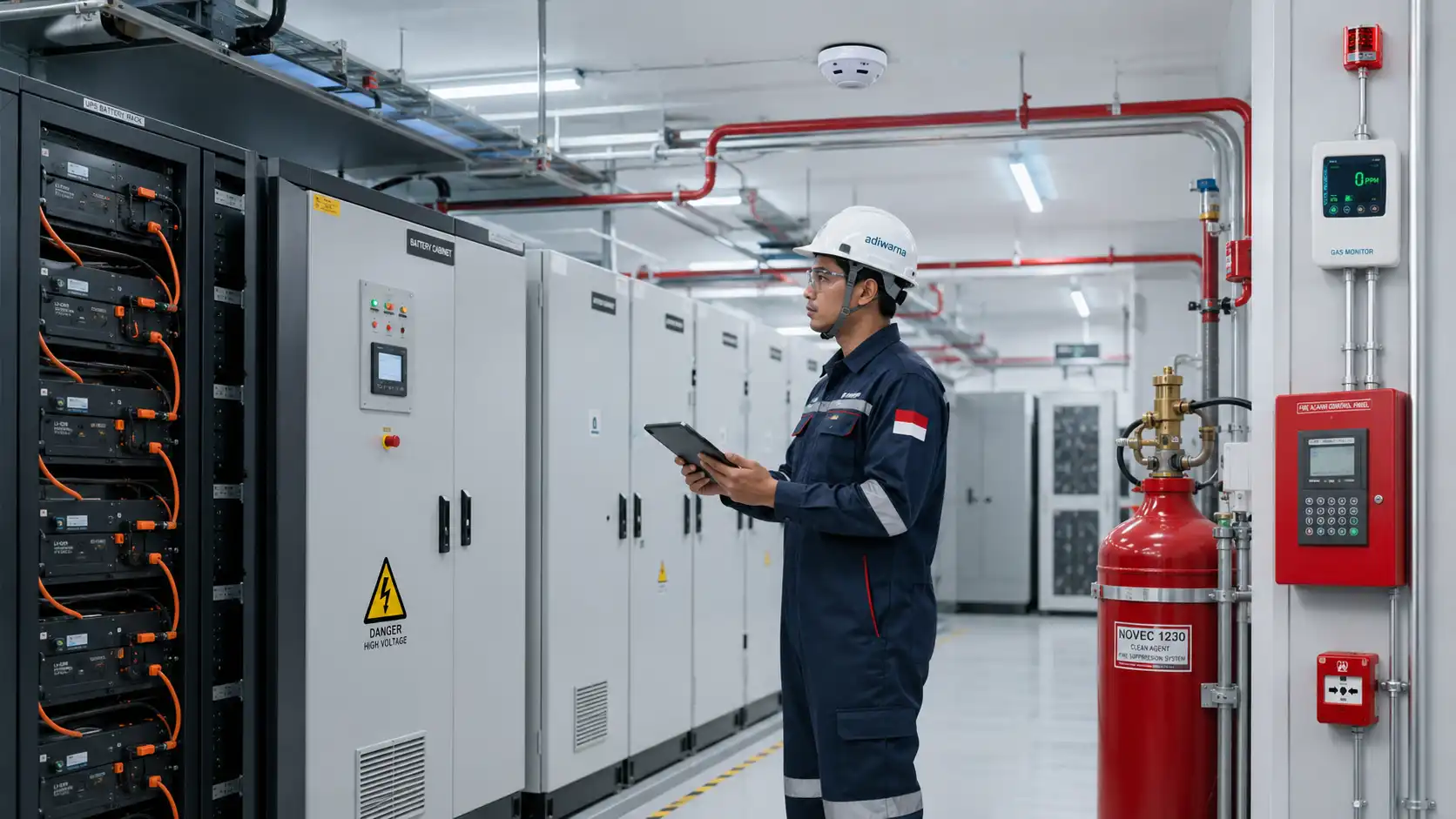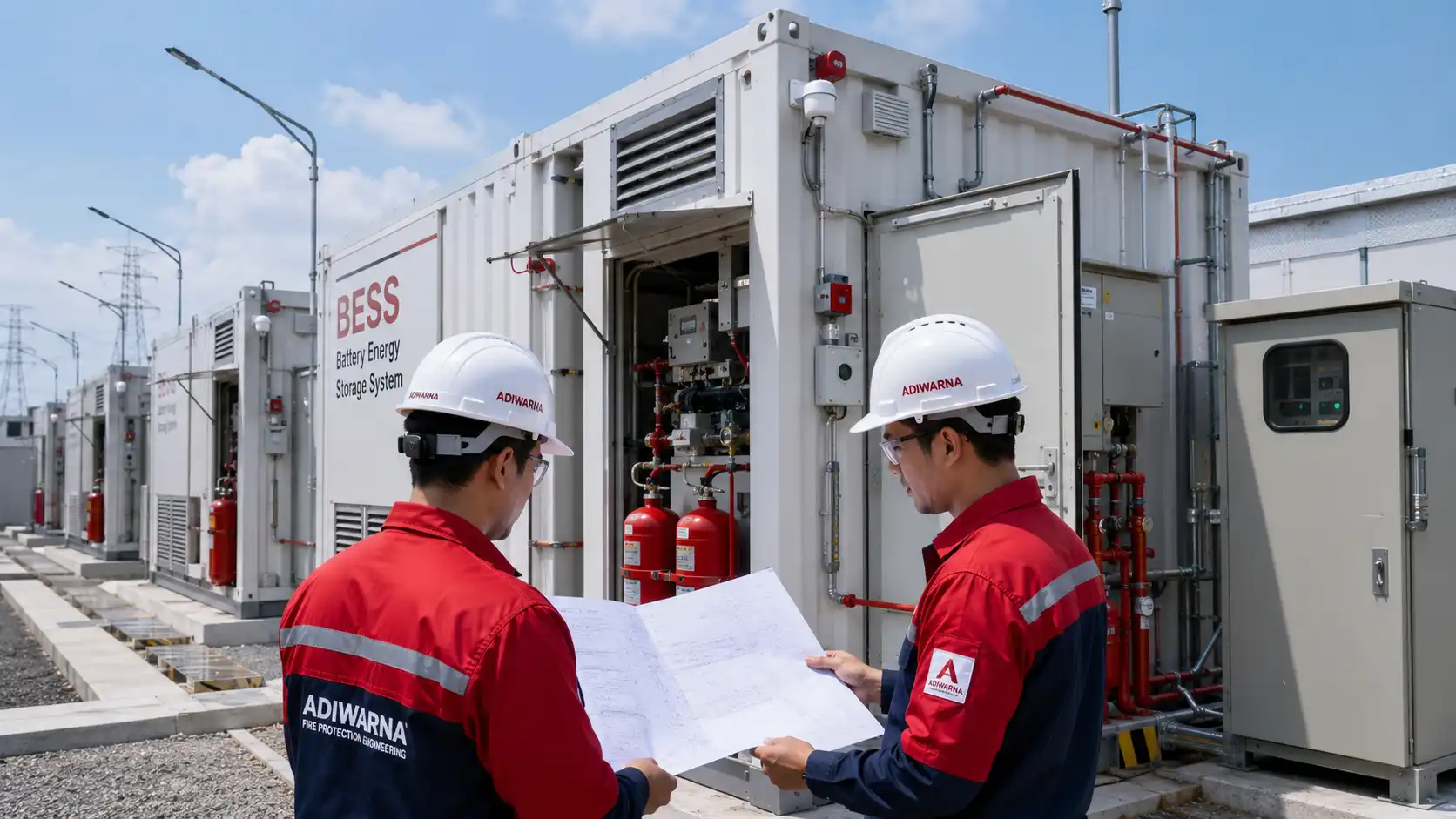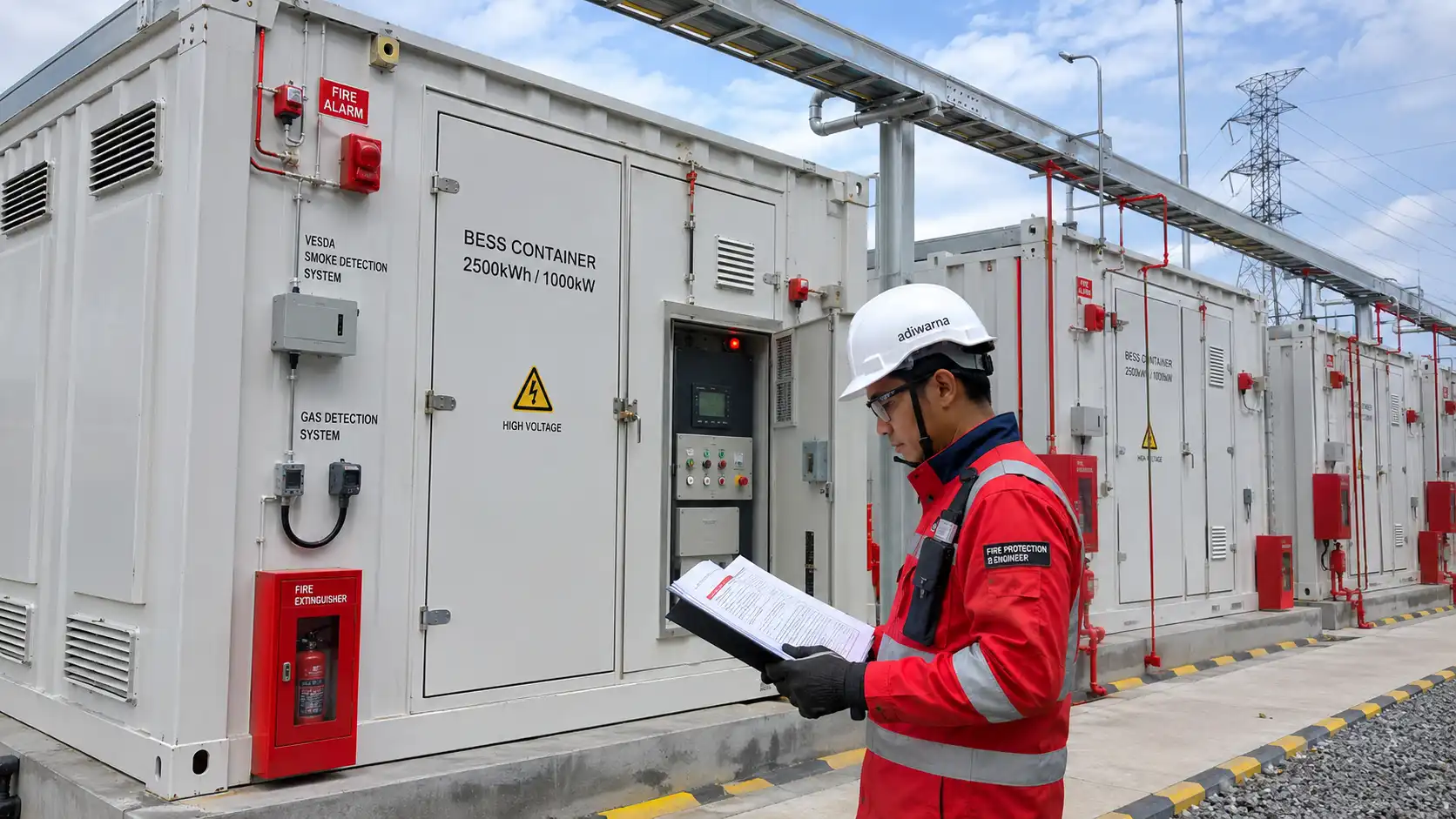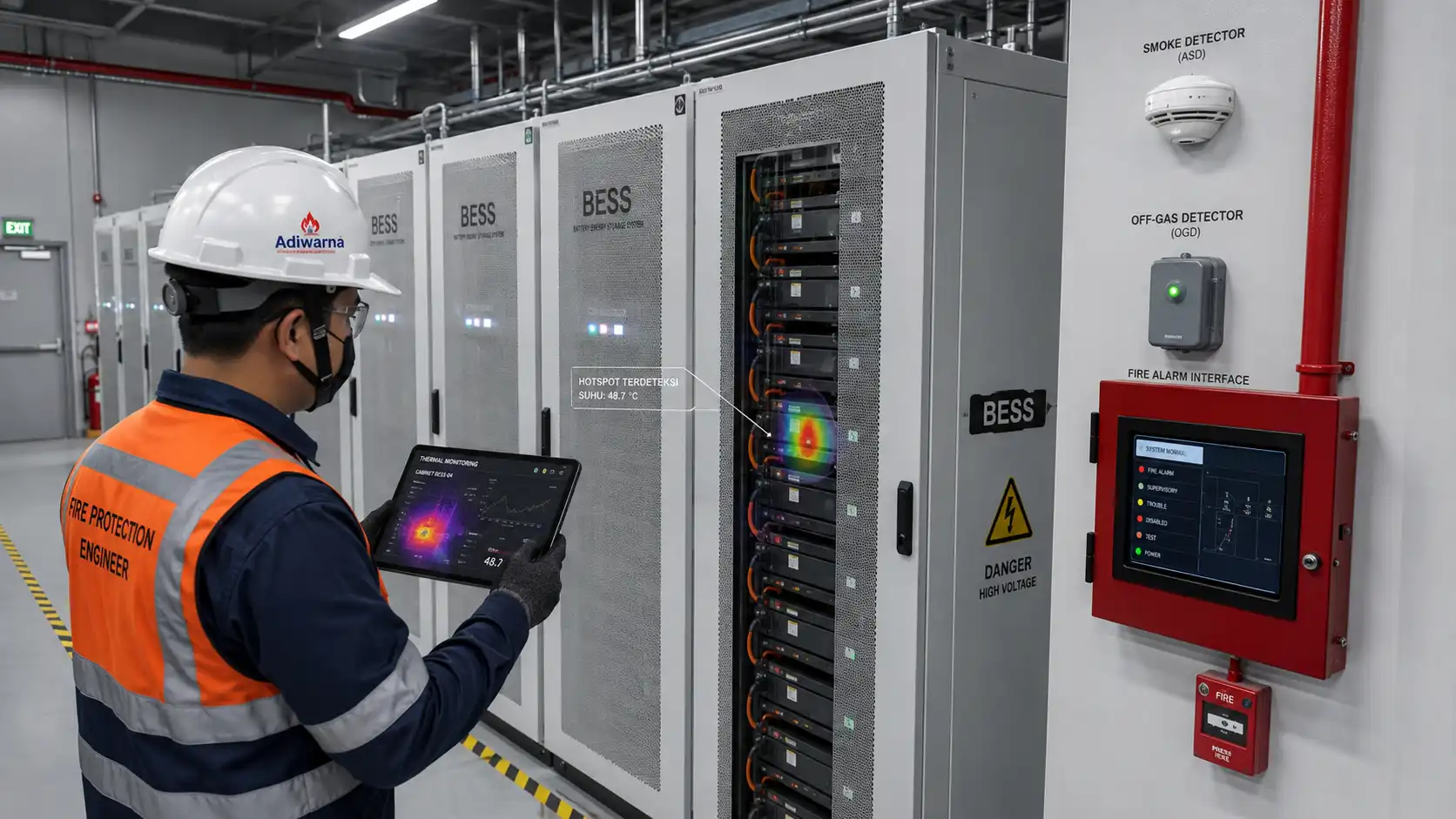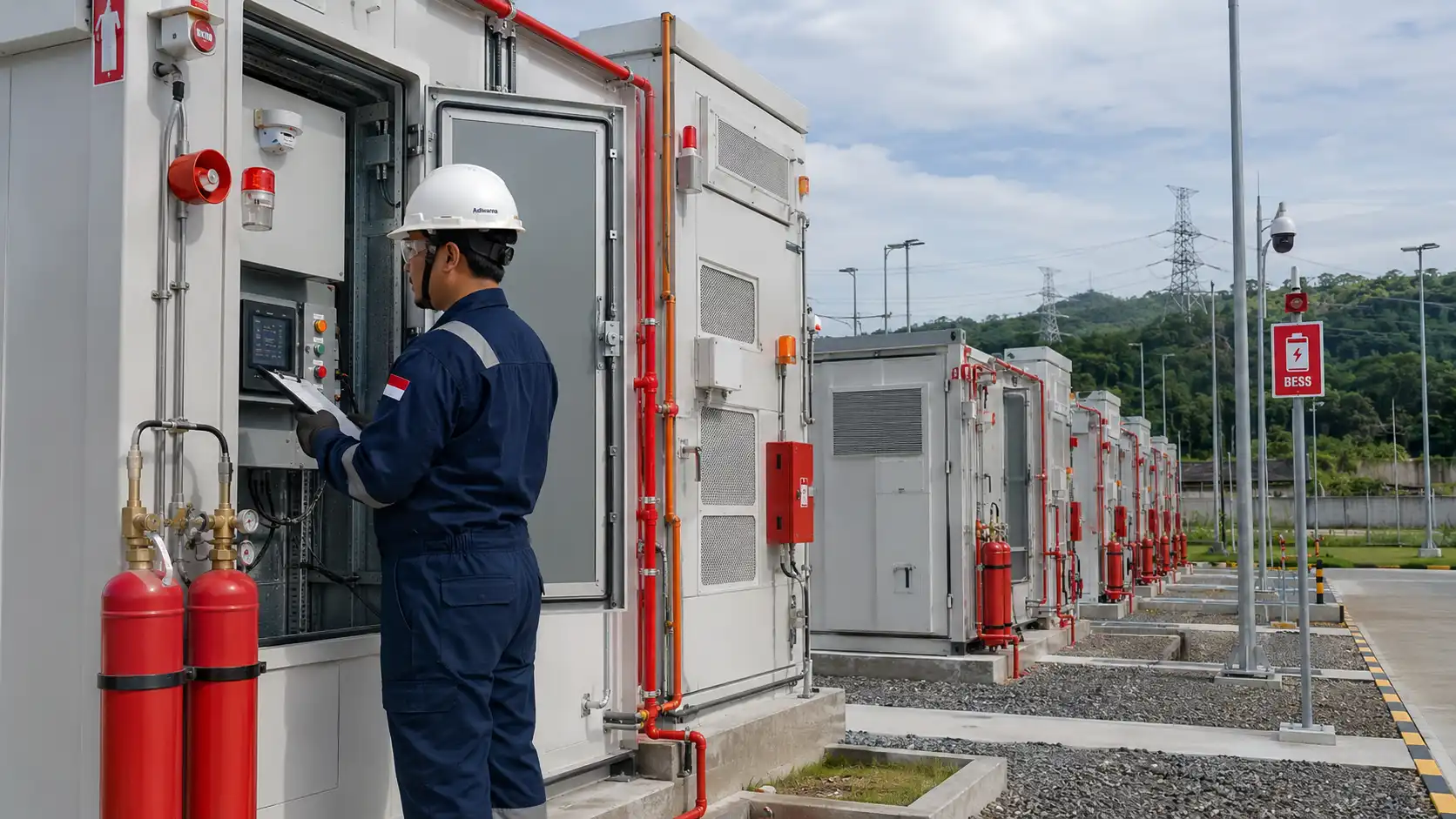

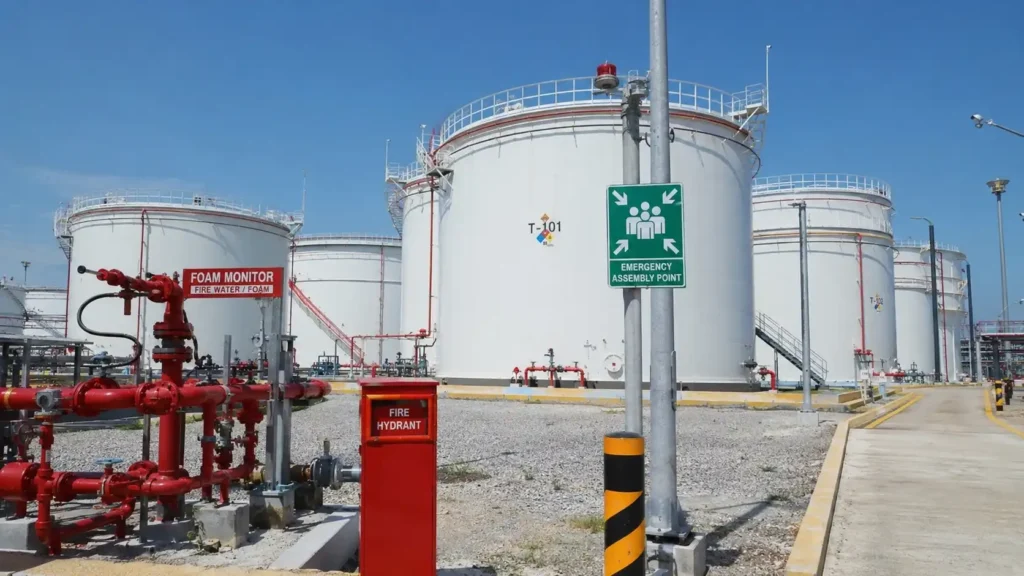
Flame detector is a fire detection device that works by identifying radiation from flames, so the system can provide an alarm faster before a fire grows larger. Therefore, this device is highly important for industrial areas with rapid fire risks, such as oil & gas, petrochemical plants, power plants, generator rooms, tank farms, and flammable material storage facilities.
In high-risk areas, fire can develop within a very short time. Therefore, fire protection systems cannot rely only on smoke or heat detection. In addition, industrial facilities need devices that can directly recognize the presence of open flames.
With proper implementation, this fire detection device can be connected to a fire alarm system, fire and gas system, deluge system, foam system, or emergency shutdown system. As a result, emergency response becomes faster, more structured, and safer for operators.
For integrated fire protection needs, PT Adiwarna Anugerah Abadi provides solutions through its Fire Protection Contractor service, which covers design, procurement, installation, testing, commissioning, service, and maintenance of industrial fire protection systems.
Why Is a Flame Detector Important for Industry?
Flame detector is important because some industrial fires do not always begin with thick smoke. In contrast, hydrocarbon, gas, solvent, and liquid fuel fires can immediately produce open flames.
Therefore, this device is used to detect fire at an early stage. After the signal is detected, the panel can activate visual alarms, audible alarms, control room notifications, or automatic suppression systems.
In addition, flame-based detection devices are very useful in open or semi-open areas. For example, loading areas, unloading areas, process areas, compressor stations, tank farms, and pump stations often require fast and direct detection.
With this approach, companies can reduce the potential for incident escalation. Furthermore, good integration can help reduce downtime, asset damage, and operational disruption.
How a Flame Detector Works

Flame detector works by reading radiation patterns generated by flames. Generally, fire produces ultraviolet or infrared energy that can be identified by special sensors.
Then, the sensor processes the signal to distinguish real fire from ordinary light interference. For this reason, modern devices usually include algorithms to reduce the risk of false alarms.
After the signal meets the alarm parameters, the device sends output to the panel. Next, the system can perform actions based on the protection scenario that has already been designed.
In industrial facilities, the signal may be connected to a fire alarm control panel, fire and gas controller, or safety system. As a result, operators can identify the alarm location and take action more quickly.
Common Types of Flame Detector
Flame detector technology is available in several types, so the selection must match the fire risk and environmental conditions. In addition, the fuel type also affects the most suitable detector choice.
Common types include:
- UV flame detector.
- IR flame detector.
- UV/IR flame detector.
- Dual IR flame detector.
- Triple IR or IR3 flame detector.
- Multi-spectrum flame detector.
- Video flame detector.
- Explosion-proof flame detector.
Because each technology has strengths and limitations, engineers need to assess the area comprehensively. In addition, potential disturbances such as welding, sunlight, hot surfaces, flares, dust, and chemical vapor must also be considered.
As a technical reference, UV, IR, and multispectrum technologies are often discussed in industrial fire detection solutions such as the explanation on the Crowcon Flame Detection page.
UV Flame Detector
UV detection works by reading ultraviolet radiation from fire. Because its response is fast, this technology is suitable for several applications that require early detection.
However, UV devices can be affected by other radiation sources. For example, welding activity, lightning, or arc flash can trigger signals that resemble fire.
Therefore, UV detector selection must consider operating conditions. If an area frequently involves hot work, engineers may need to add verification logic or select another technology.
IR Flame Detector
IR detection reads infrared radiation from flames. With this characteristic, the technology is widely used for hydrocarbon fire applications.
In addition, IR devices can perform well in industrial areas with potential open flame risks. However, certain heat sources can become a challenge if the design is not performed properly.
Therefore, placement must consider detection distance, viewing angle, hot background, and potential obstruction. With proper evaluation, detector performance can become more stable.
UV/IR Flame Detector
UV/IR detection combines ultraviolet and infrared sensors in one device. With this combination, the system can validate alarms from two different spectrums.
As a result, the risk of false alarms can be reduced. However, the device must still be selected based on the risk type and area condition.
In industrial areas, UV/IR technology is often used to improve detection reliability. In addition, this technology can be a good option when a facility needs a balance between fast response and signal verification.
IR3 Flame Detection
IR3 detection uses three infrared sensors at different wavelengths. Therefore, this technology is often used in areas that require high accuracy.
Besides helping distinguish fire from ordinary heat sources, IR3 is also suitable for several outdoor areas. Therefore, this technology is commonly used in oil & gas, petrochemical plants, tank farms, and process areas.
Even so, detection distance and field of view must still be calculated. If the detector is blocked by pipes, vessels, or steel structures, the flame may not be detected optimally.
Flame Detector for Oil & Gas and High-Hazard Areas
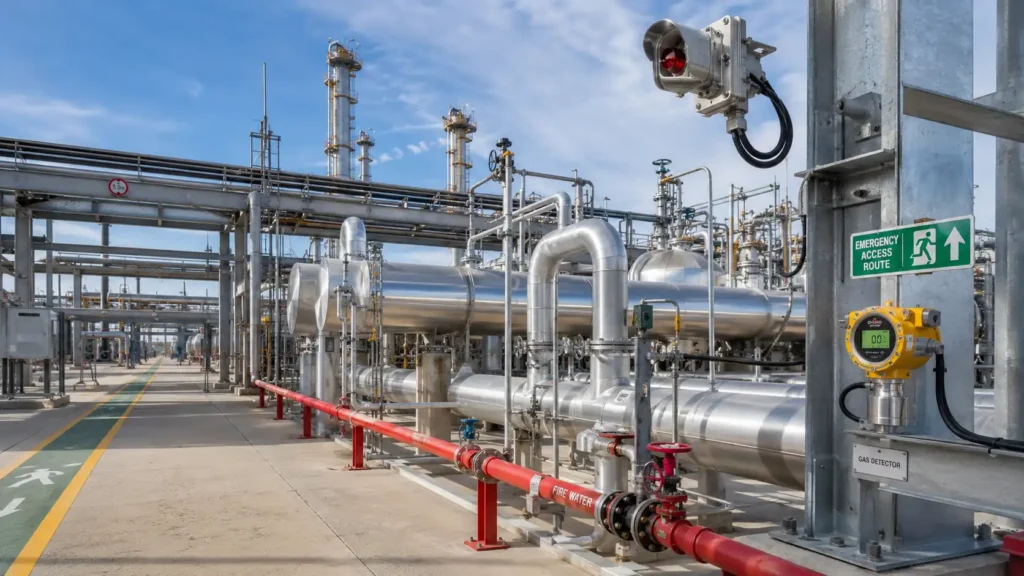
Flame detector is highly relevant for oil & gas because these facilities involve flammable gas, hydrocarbon liquids, and pressurized processes. Therefore, delayed fire detection can cause more serious incident escalation.
In oil & gas facilities, fire detection devices are commonly installed in process areas, compressor areas, loading stations, tank farms, pump areas, and wellhead facilities. In addition, these devices can be integrated with deluge systems, foam systems, fire alarm systems, or emergency shutdown systems.
Adiwarna also discusses protection needs for oil and gas facilities through its Oil and Gas Fire Protection System page, so companies can understand the importance of integrating detection, alarm, and suppression into one protection system.
With proper integration, an alarm is not only a warning. Instead, it can trigger automatic actions according to the approved cause and effect matrix.
Flame Detector in a Fire and Gas Detection System
Flame detector is usually part of a fire and gas detection system. This system combines fire detection, gas detection, alarms, shutdown, and control room monitoring.
First, the fire detection device identifies open flames. Then, the gas detector detects combustible or toxic gas leaks. After that, the controller processes the signal based on alarm priority.
Because this system is related to process safety, alarm logic must be clearly defined. For example, engineers need to determine voting, alarm delay, output relay, interlock, and reset procedures.
In addition, every scenario must be tested during commissioning. With this testing, facility owners can ensure that detector signals are truly received by the panel and produce the correct action.
Areas That Require Flame-Based Detection

Not all areas require flame-based detection. However, this technology is strongly recommended for areas with rapid fire potential and flammable materials.
Common areas that require this device include:
- Oil and gas process areas.
- Tank farms.
- Loading and unloading stations.
- Compressor stations.
- Generator rooms.
- Turbine enclosures.
- Chemical plants.
- Petrochemical facilities.
- Fuel storage areas.
- Pump stations.
- Boiler areas.
- Paint booths.
- Solvent storage rooms.
- Flammable material warehouses.
In addition, areas with high ventilation also need special attention. This is because smoke can be diluted, so smoke detectors may not respond as quickly as required.
Difference from Smoke Detectors and Heat Detectors
Smoke detectors read smoke particles, so these devices are suitable for enclosed rooms such as offices, data centers, panel rooms, and general areas. However, smoke detectors are less ideal for outdoor areas with high ventilation.
Heat detectors read temperature increase or a specific fixed temperature limit. Therefore, these devices are often used in dusty, humid, or unsuitable areas for smoke detectors.
Meanwhile, fire detection devices for open flames read radiation from flames. Thus, this technology is more suitable for areas that may experience fast-developing open fires.
To understand the alarm system more completely, the Fire Alarm System Adiwarna page can be used as an internal reference for alarm functions, panels, and fire detection component integration.
Integration with Fire Alarm System

Fire detection devices must be connected to the fire alarm system so the signal can be processed correctly. Usually, integration is performed through an input module, relay, addressable module, or dedicated controller.
After the detector is activated, the panel will display the alarm location. Then, sounders, strobes, annunciators, and control room notifications can operate according to the configuration.
In addition, the system can send signals to a deluge valve, fire suppression release panel, BMS, or emergency shutdown system. Therefore, integration design must be prepared from the engineering stage.
As a reference, NFPA 72 National Fire Alarm and Signaling Code is often used to understand the principles of fire alarm and signaling systems.
Integration with Fire Suppression System
Flame-based detection can also be connected to automatic fire suppression systems. However, suppression activation must follow safe and validated logic.
In process areas, detector signals can be used to activate a deluge system. Meanwhile, in tank farms, the system can be connected to foam monitors or foam systems.
In certain facilities, alarm signals may also activate clean agent, CO2, or water mist systems. Therefore, integration must consider the risk type and operational needs.
Adiwarna provides Fire Suppression System solutions for various facility needs, including data centers, machine rooms, industrial areas, and high-risk applications.
Technical Standards to Consider
Fire detection system design must follow relevant standards. With proper standards, the system becomes easier to audit, test, and justify.
Common references include:
- NFPA 72 for fire alarm and signaling.
- NFPA 70 for electrical installations.
- IEC 60079 for equipment in explosive atmospheres.
- FM Approval or UL listing based on project requirements.
- Manufacturer installation manuals.
- Project cause and effect matrix.
- Company HSE requirements.
- Insurance requirements.
- Local regulations and authority requirements.
Besides standards, field conditions must still be analyzed. This is because area classification, obstruction, weather, vibration, corrosion, and maintenance access can affect system performance.
Important Factors in Detector Placement
Device placement must be designed carefully. If the position is incorrect, the detector may fail to read fire even though the device is still functioning.
Key factors that must be considered include:
- Field of view.
- Detection distance.
- Fuel type.
- Potential obstruction.
- Installation height.
- Installation angle.
- Potential false alarms.
- Area classification.
- Indoor or outdoor conditions.
- Exposure to dust, vapor, rain, or heat.
- Welding and hot work activities.
- Maintenance access.
In addition, the device must have a clear line of sight to the risk area. If the flame is blocked by equipment, walls, pipes, or structures, the system will not work optimally.
System Planning Stages
System planning must begin with an area survey. At this stage, engineers assess the layout, equipment, flammable materials, potential fire sources, and integration requirements.
Then, the team performs a hazard analysis. With this analysis, the detector technology can be selected based on potential fire scenarios and environmental conditions.
After that, engineers determine the installation location and coverage. Therefore, a field-of-view diagram should be prepared to avoid blind spots.
Next, the system is integrated with the panel and alarm logic. In addition, the cause and effect matrix must be agreed upon by the HSE, operations, and engineering teams.
Finally, testing and commissioning are performed to ensure all signals work properly. Testing may include loop tests, functional tests, alarm simulations, response tests, and integration tests.
Common Mistakes in Fire Detection Projects
Many problems occur not because the device is poor. Instead, issues often happen because the design, installation, or maintenance does not match the actual need.
Common mistakes include:
- Selecting the wrong detector technology.
- Failing to calculate field of view.
- Installing detectors behind pipes or equipment.
- Ignoring false alarm sources.
- Placing detectors too far from the risk area.
- Ignoring area classification.
- Not testing panel integration.
- Creating an unclear cause and effect matrix.
- Skipping functional tests.
- Not cleaning the lens regularly.
- Providing no maintenance access.
- Not updating the layout after plant modification.
By avoiding these mistakes, facilities can improve system reliability. In addition, operational teams can perform periodic inspections more easily.
Maintenance and Periodic Inspection
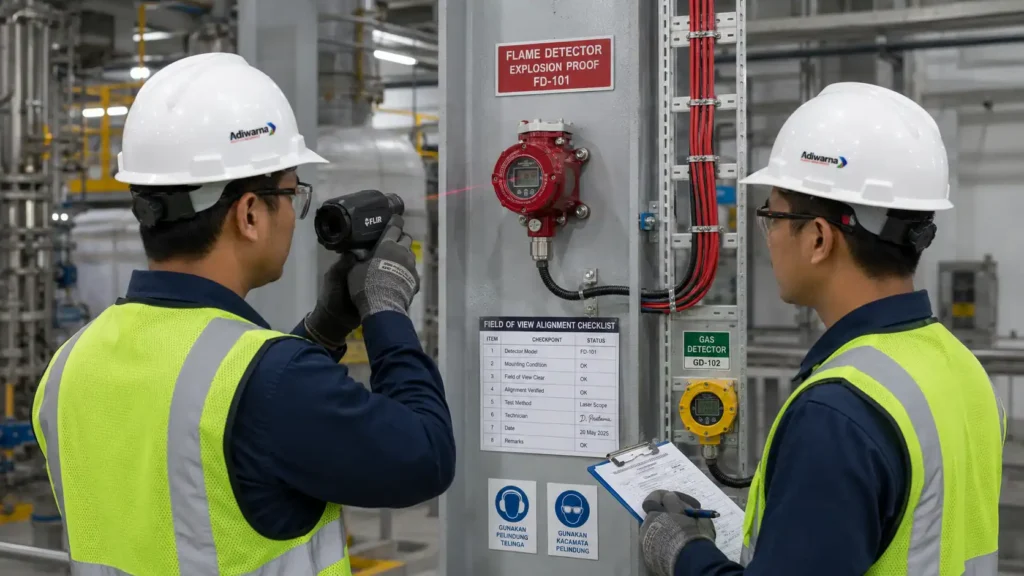
Maintenance is required to keep the device clean, accurate, and ready for operation. Therefore, inspection schedules must be created consistently.
Common inspection points include:
- Housing condition.
- Lens cleanliness.
- Power status.
- Fault status.
- Bracket condition.
- Detector viewing direction.
- New potential obstruction.
- Relay or signal output.
- Communication with the panel.
- Event log.
- Functional test.
- Inspection documentation.
In addition, outdoor areas require more attention. Dust, rain, oil, chemical vapor, and corrosive atmospheres can affect the device lens and housing.
Why Choose PT Adiwarna Anugerah Abadi?
PT Adiwarna Anugerah Abadi can support fire detection needs as part of an integrated industrial fire protection system. With experience in various high-risk facilities, Adiwarna understands design, installation, testing, commissioning, service, and maintenance requirements.
In addition, Adiwarna can help integrate detectors with fire alarm panels, fire and gas systems, gas detectors, deluge valves, suppression systems, hydrants, foam systems, and control room monitoring.
For integrated projects, EPC Fire Protection Adiwarna can support engineering, procurement, construction, testing, commissioning, and maintenance needs.
With a professional approach, the detection system does not become only an additional device. Instead, it becomes part of a safety strategy that supports the protection of people, assets, and operational continuity.
Conclusion
Flame detector is an important solution for detecting open flames quickly in high-risk industrial areas. Therefore, this device is highly relevant for oil & gas, petrochemical plants, power plants, tank farms, generator rooms, and flammable material storage areas.
However, system performance depends heavily on technology selection, placement, field of view, panel integration, testing, and maintenance. Therefore, the design must be performed by a team that understands real field risks.
If your company needs fire detection, fire alarm system, fire and gas detection system, gas detector, suppression system, deluge, foam system, testing, commissioning, or maintenance solutions, consult your project needs through the Adiwarna Contact Page.