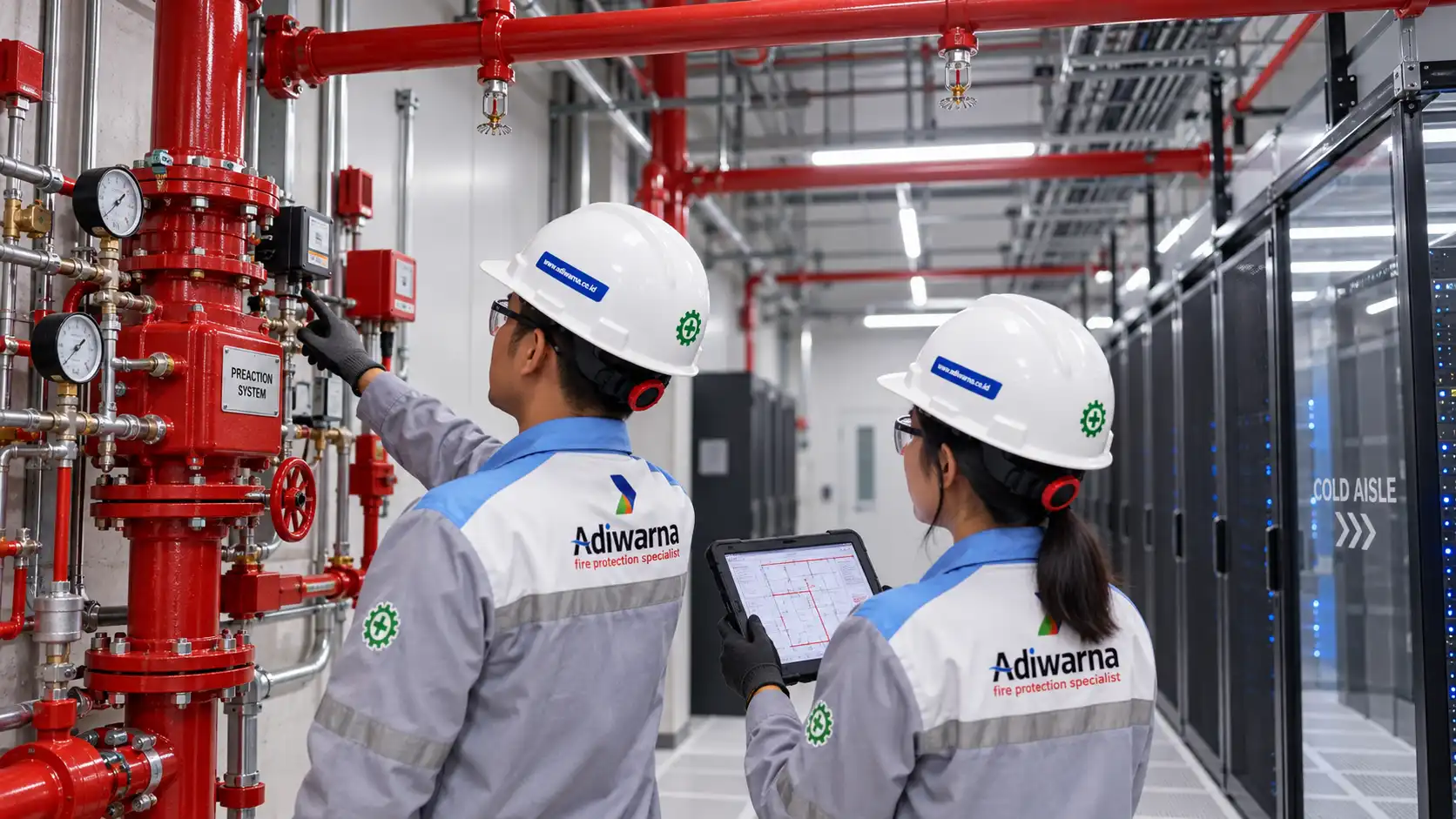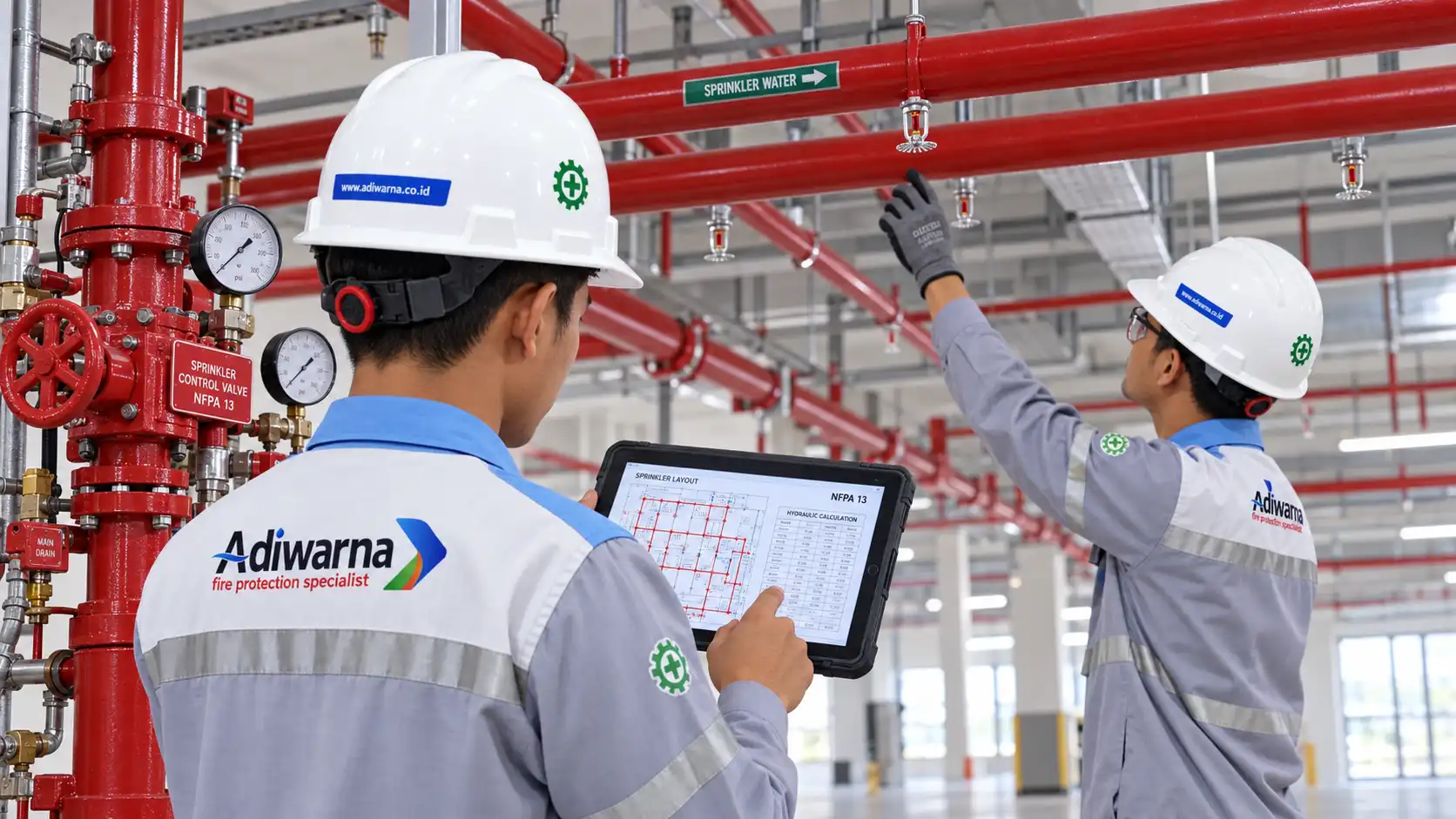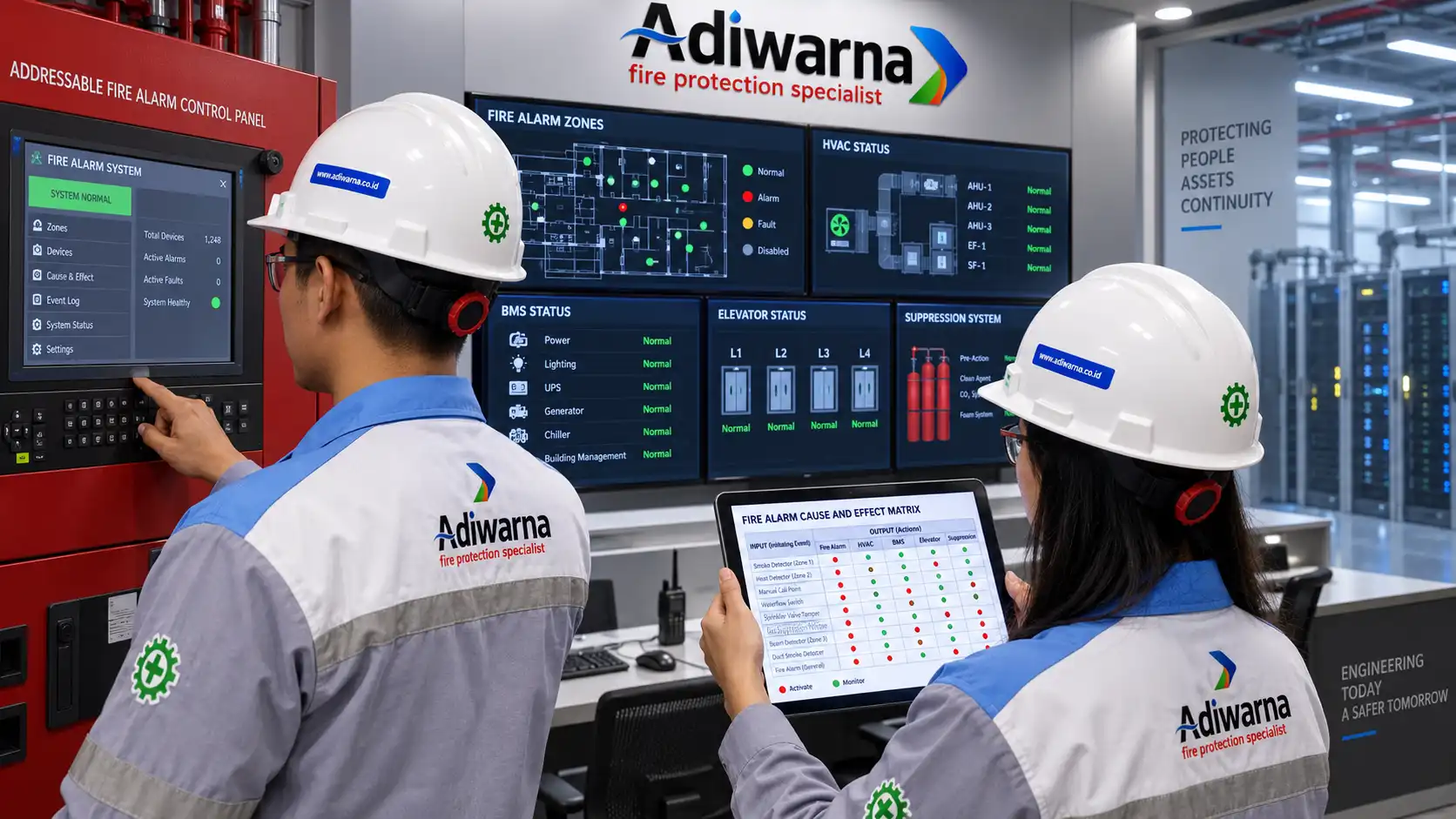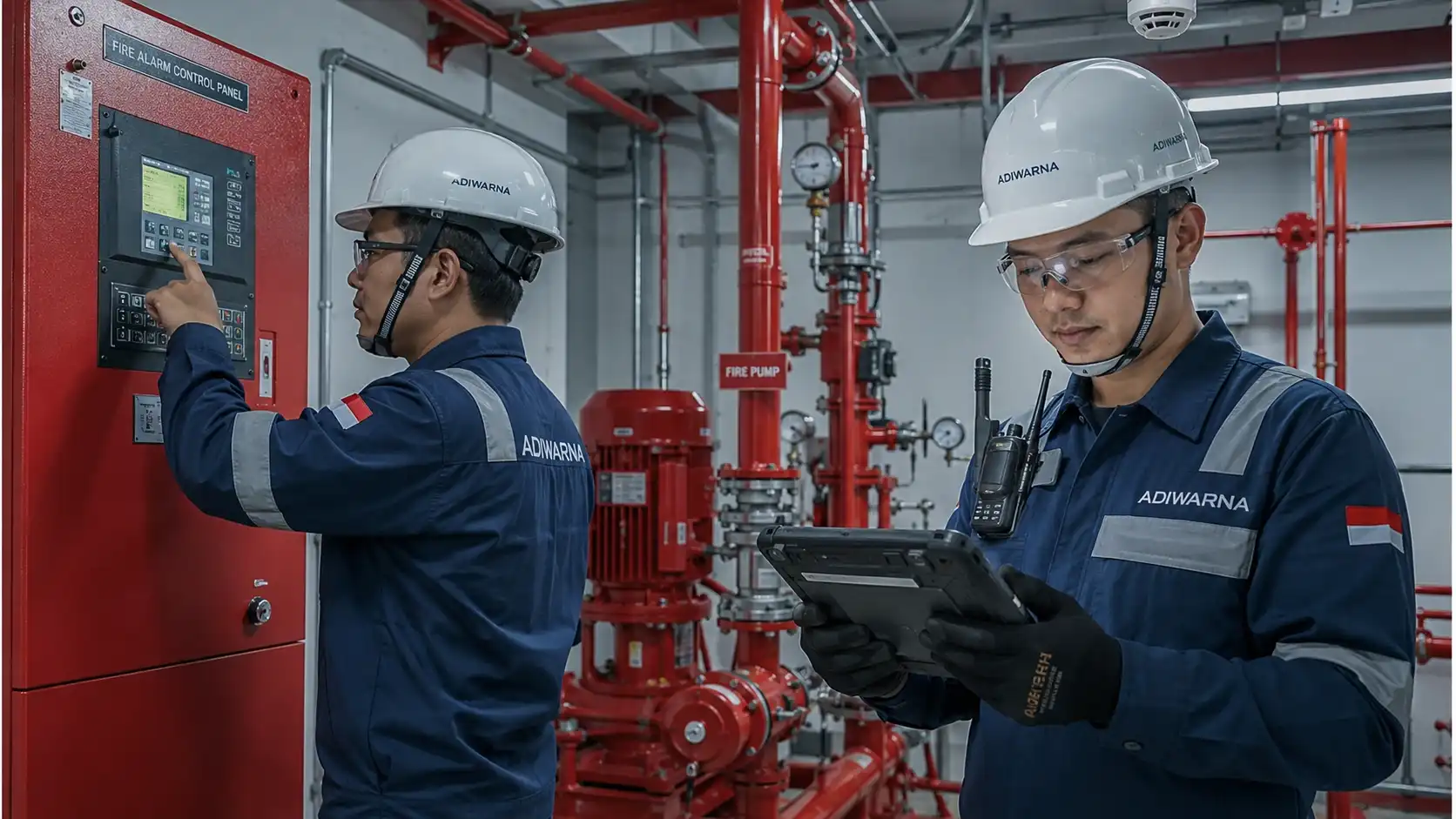

Oil and Gas Fire Protection System requires a much stricter technical approach than general building protection. This industry has risks from flammable gas, hydrocarbon liquids, process areas, storage tanks, and pressurized equipment. Therefore, fire protection design must be based on real facility hazards.
In oil and gas facilities, fire can develop very quickly. Fire may also trigger explosions, extreme heat exposure, asset damage, and production disruption. Therefore, the protection system must detect, warn, and control fire rapidly.
In addition, oil and gas facilities often have special classified areas. Some zones require explosion-proof devices, corrosion-resistant materials, and integration with process safety systems.
PT Adiwarna Anugerah Abadi helps companies design, install, test, and maintain fire protection systems for high-risk industries. The Adiwarna team adjusts each solution to facility hazards, technical standards, and operational needs.
Adiwarna fire protection contractor service
Why Oil and Gas Fire Protection System Requires Special Design
Oil and Gas Fire Protection System must be specially designed because hazards in this industry are complex. Risks may come from flammable vapor, process gas, crude oil, condensate, solvents, hot work, and equipment failure.
First, fire may occur because of gas or flammable liquid leaks. Second, ignition sources may come from electricity, hot surfaces, friction, or welding activities. In addition, open and enclosed areas have different hazard patterns.
As a result, the design must not rely on one system only. Facilities need a combination of detection, alarm, automatic suppression, manual firefighting systems, and evacuation procedures.
OSHA Oil and Gas Extraction Hazards
Fire Risk Characteristics in Oil and Gas Facilities

Each area in an oil and gas facility has different fire risk characteristics. Therefore, engineers must map hazards before selecting the protection system.
High-risk areas often include:
- Process area.
- Storage tank.
- Loading and unloading area.
- Pump station.
- Compressor area.
- Electrical room.
- Control room.
- Instrument room.
- Power generation area.
- Utility area.
- Jetty or marine terminal.
- Chemical warehouse.
- Hot work area.
In addition, environmental conditions affect the design. Corrosion, humidity, high temperature, wind, and chemical exposure can reduce system life if materials are not selected properly.
Key Components in an Oil and Gas Fire Protection System
Oil and Gas Fire Protection System usually consists of several connected systems. Each system has a specific role in an emergency scenario.
Key components may include:
- Fire alarm control panel.
- Flame detector.
- Gas detector.
- Smoke detector.
- Heat detector.
- Manual call point.
- Sounder strobe.
- Hydrant system.
- Fire pump.
- Water tank.
- Foam system.
- Deluge system.
- Sprinkler system.
- Fire monitor.
- Fire extinguisher.
- Clean agent system.
- Inert gas system.
- Emergency shutdown interface.
- Valve monitoring system.
- Fire water network.
In addition, the system must have complete technical documentation. Documentation supports inspection, commissioning, audits, and long-term maintenance.
Early Detection for Oil and Gas Fire Areas
Early detection is the first layer of fire protection. This system provides warning before the condition develops into a major incident.
Flame Detector
A flame detector detects flame radiation from combustion. This device suits areas with potential open flame or flash fire.
In addition, flame detectors are often used in process areas, loading areas, and hydrocarbon risk zones. Detector type selection must follow fire characteristics and environmental conditions.
Gas Detector
A gas detector detects flammable or hazardous gas leaks. This system is important to prevent gas accumulation before it reaches a dangerous condition.
However, gas detector placement must not be random. Engineers must consider gas density, ventilation, wind direction, and potential leak points.
Heat Detector and Smoke Detector
Heat detectors can be used in dusty areas or harsh environments. Smoke detectors are more suitable for clean enclosed rooms, such as control rooms or electrical rooms.
Therefore, detector selection must follow room function. The wrong detector can trigger false alarms or fail to detect early conditions.
Adiwarna fire alarm system service
Oil and Gas Fire Protection System for Process Areas

Oil and Gas Fire Protection System in process areas must respond to fire quickly. These areas often contain pipes, valves, pumps, vessels, and pressurized equipment.
In certain areas, a deluge system can provide cooling and fire control. This system releases a large volume of water through open nozzles when activated.
In addition, a foam system can be used for areas with flammable liquids. Foam helps cover the fuel surface and reduce vapor release.
NFPA Codes and Standards
Oil and Gas Fire Protection System for Storage Tanks
Oil and Gas Fire Protection System for storage tanks needs a special approach. Storage tanks may contain crude oil, condensate, fuel, or other flammable liquids.
In this area, a foam system often becomes an important layer. Foam can help control liquid surface fires and reduce fire spread risk.
In addition, tank farms need a reliable fire water network. Hydrants, fire monitors, foam chambers, and valves must be accessible during emergencies.
Hydrant System and Fire Water Network
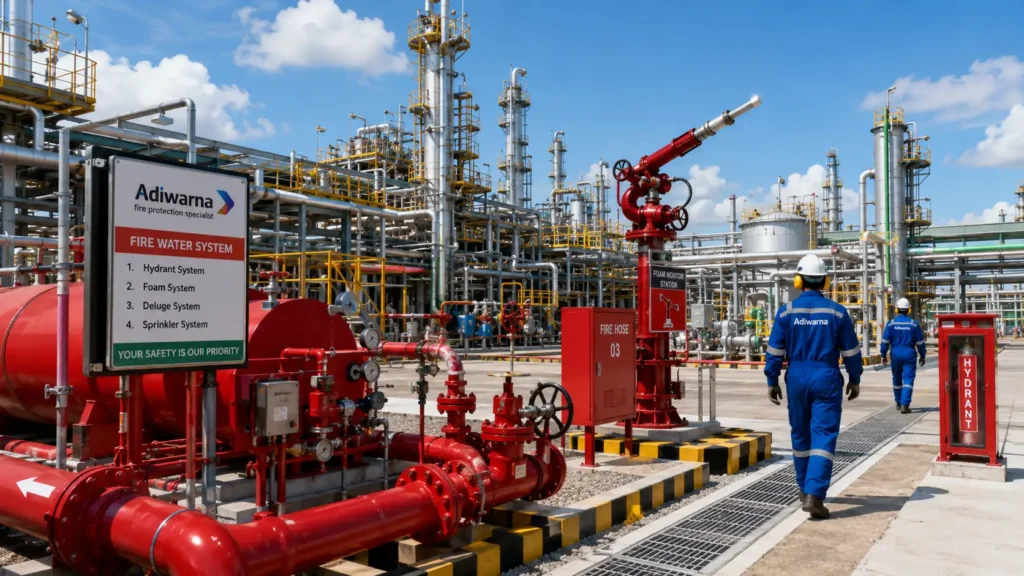
A hydrant system is the backbone of manual firefighting. This system supports emergency response teams and firefighters in controlling fire.
The fire water network must provide enough pressure and flow. Therefore, fire pump capacity, water tank volume, pipe diameter, and hydrant spacing must be calculated carefully.
In addition, the fire water ring main must be designed for reliability. If one line is disrupted, the network should still supply water from another route.
Adiwarna fire fighting system
Fire Pump for Oil and Gas Industry
A fire pump maintains water supply when the system operates. This system usually consists of an electric fire pump, diesel fire pump, and jockey pump.
First, the electric fire pump works as the main pump. Second, the diesel fire pump works as backup when power fails. In addition, the jockey pump keeps system pressure stable.
However, fire pumps must be tested periodically. Without testing, pumps may fail during emergencies.
Protection for Control Rooms and Electrical Rooms
Control rooms, electrical rooms, and instrument rooms need special protection. These areas contain panels, PLC, DCS, servers, UPS units, and monitoring devices.
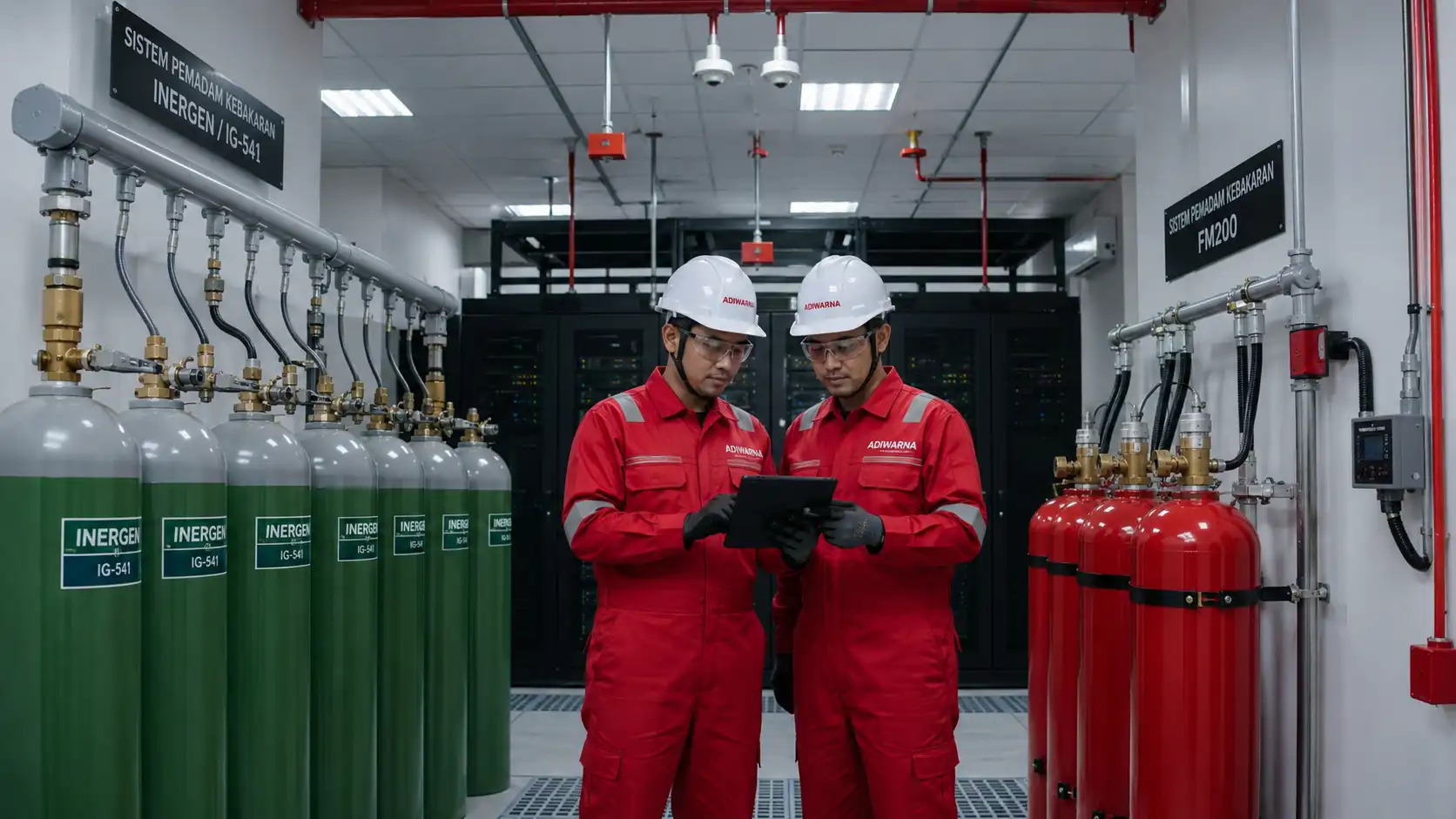
For these areas, clean agent or inert gas systems are often more suitable than water-based suppression. These agents leave no residue and are safer for electronic equipment.
In addition, the system must connect with the fire alarm. Integration controls detection, initial alarm, delay time, manual release, abort switch, and discharge.
Technical Standards to Consider
Oil and Gas Fire Protection System must refer to relevant standards. Standards help ensure the system is safe, testable, and suitable for industrial needs.
Common references include:
- NFPA 11 for low, medium, and high expansion foam.
- NFPA 13 for sprinkler systems.
- NFPA 15 for water spray fixed systems.
- NFPA 20 for fire pumps.
- NFPA 24 for private fire service mains.
- NFPA 30 for flammable and combustible liquids.
- NFPA 72 for fire alarm and signaling.
- NFPA 2001 for clean agent systems.
- API standards and company internal standards.
- Applicable occupational safety and HSE regulations.
However, standards must be translated into actual facility conditions. Engineers must assess layout, hazards, firefighting access, climate, and operational requirements.
NFPA 30 Flammable and Combustible Liquids Code
Integration with Operations and Emergency Response
A fire protection system must not stand alone. The system must integrate with operating procedures, emergency shutdown, alarms, and evacuation routes.
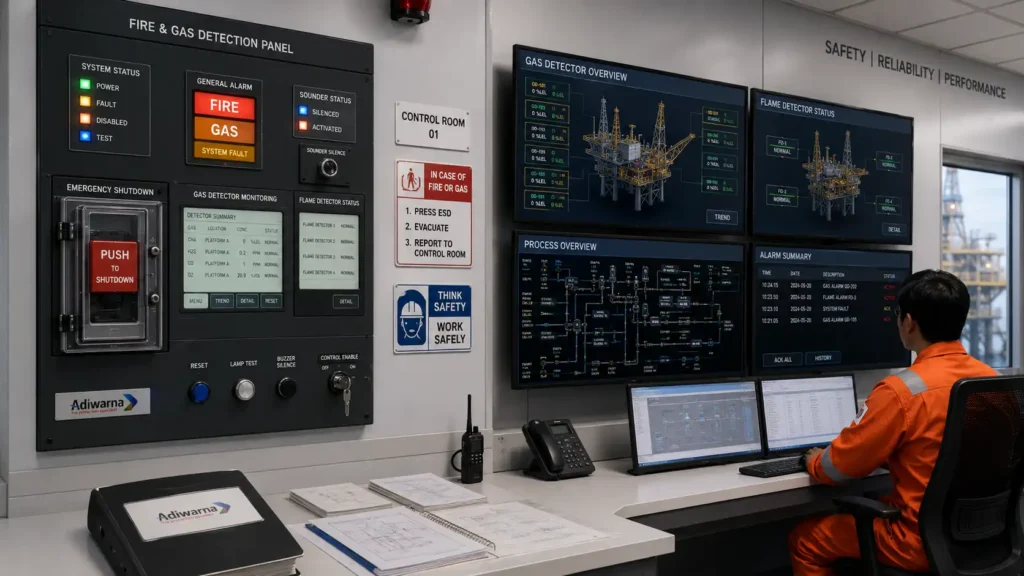
For example, a gas detector can send an early alarm signal. After that, the system can warn operators and trigger investigation or shutdown procedures based on the scenario.
In addition, emergency response teams must understand hydrant, foam station, fire monitor, and manual call point locations. Routine training makes the system more effective during emergencies.
Planning Stages for Oil and Gas Fire Protection System
Planning must start with surveys and risk analysis. Clear stages help reduce design errors.
1. Area Survey and Data Collection
First, the team collects facility data. This data includes layout, P&ID, material types, tank capacity, process points, and area classification.
In addition, the team evaluates firefighting access. Vehicle access, evacuation routes, and muster points must be considered from the beginning.
2. Hazard Analysis
Next, engineers map fire potential. The analysis covers fuel type, ignition sources, operating conditions, and worst-case scenarios.
Therefore, the design becomes more targeted. Each area receives a system that matches its risk.
3. System Selection
After understanding the hazards, engineers select the protection system. Process areas may need deluge systems. Tank farms may need foam systems. Electrical rooms may need clean agent systems.
In addition, manual systems remain necessary. Hydrants, fire extinguishers, and fire monitors support field response.
4. Technical Design
Then, the team prepares the technical design. The design includes detector layout, piping, nozzles, hydrants, pumps, panels, and alarm devices.
In addition, the design must consider maintenance. Valves, gauges, panels, and equipment must be easy to inspect.
5. Installation and Commissioning
After design approval, the team performs installation. Work must follow material specifications, safety procedures, and facility operating schedules.
Next, commissioning is performed. Testing may include alarm tests, flow tests, pump tests, valve tests, foam system tests, and functional tests.
Common Mistakes in Oil and Gas Projects
Many projects face problems because design is not risk-based. This can make the system unsuitable for actual hazards.
Common mistakes to avoid include:
- Not conducting hazard assessment.
- Using general design for special areas.
- Ignoring area classification.
- Not calculating fire water demand.
- Choosing the wrong detector.
- Placing hydrants and fire monitors incorrectly.
- Not integrating alarms with operating procedures.
- Ignoring corrosion and environmental conditions.
- Not performing complete testing.
- Not preparing a maintenance plan.
In addition, process changes are often not followed by protection updates. Yet, capacity, material, or layout changes can alter fire risk.
Benefits of a Professionally Designed System
Using a professionally designed Oil and Gas Fire Protection System provides major benefits. These benefits are important for safety and business continuity.
Main benefits include:
- Fire risk becomes more controlled.
- Emergency response becomes faster.
- Critical areas receive better protection.
- Downtime can be reduced.
- The system becomes more audit-ready.
- HSE teams become more confident.
- Operational integration becomes cleaner.
- Maintenance becomes easier.
- Facility reliability improves.
In addition, a good system helps companies meet expectations from insurers, auditors, and operational stakeholders.
NIOSH Hydrocarbon Gases and Vapors in Oil and Gas
Why Choose PT Adiwarna Anugerah Abadi?
PT Adiwarna Anugerah Abadi focuses on fire protection solutions for high-risk industries. Adiwarna helps clients from consultation, design, installation, testing, to maintenance.
In addition, the Adiwarna team understands the needs of oil and gas facilities, data centers, factories, petrochemical plants, power plants, and other industrial facilities.
Adiwarna’s key advantages include:
- Experienced technical team.
- Facility risk-based design.
- Integrated system solutions.
- Support for fire alarm, hydrant, sprinkler, foam, and suppression systems.
- Clean and professional installation.
- Measurable testing and commissioning.
- More complete project documentation.
- Inspection and maintenance support.
With this approach, oil and gas facilities can have systems that are more ready for emergencies. In addition, the system becomes easier for internal teams to manage.
About PT Adiwarna Anugerah Abadi
Tips Before Starting an Oil and Gas Fire Protection Project

Before starting a project, prepare complete technical data. This data helps the team create a more accurate design.
Prepare the following information:
- Facility plot plan.
- Latest P&ID.
- Flammable material list.
- Storage tank capacity.
- Area classification drawing.
- Fire water source data.
- Existing hydrant layout.
- Existing fire pump data.
- Evacuation routes.
- Emergency response procedures.
- Target standards and audits.
- Facility operating schedule.
In addition, involve HSE, operations, maintenance, engineering, and security teams from the beginning. They understand daily conditions and technical limitations in the field.
Conclusion: Oil and Gas Fire Protection System Must Be Risk-Based
Oil and Gas Fire Protection System determines facility readiness in facing fire and explosion risks. A good system must be designed based on hazards, standards, operating scenarios, and firefighting needs.
However, every facility has different risks. Therefore, solutions must not be generalized. Process areas, tank farms, electrical rooms, control rooms, and loading areas need different approaches.
In conclusion, PT Adiwarna Anugerah Abadi is ready to help your business build a reliable fire protection system. Consult your fire alarm, gas detector, flame detector, hydrant, fire pump, foam system, deluge system, fire suppression, and maintenance needs with Adiwarna’s specialist team.
Contact Adiwarna for fire protection system consultation