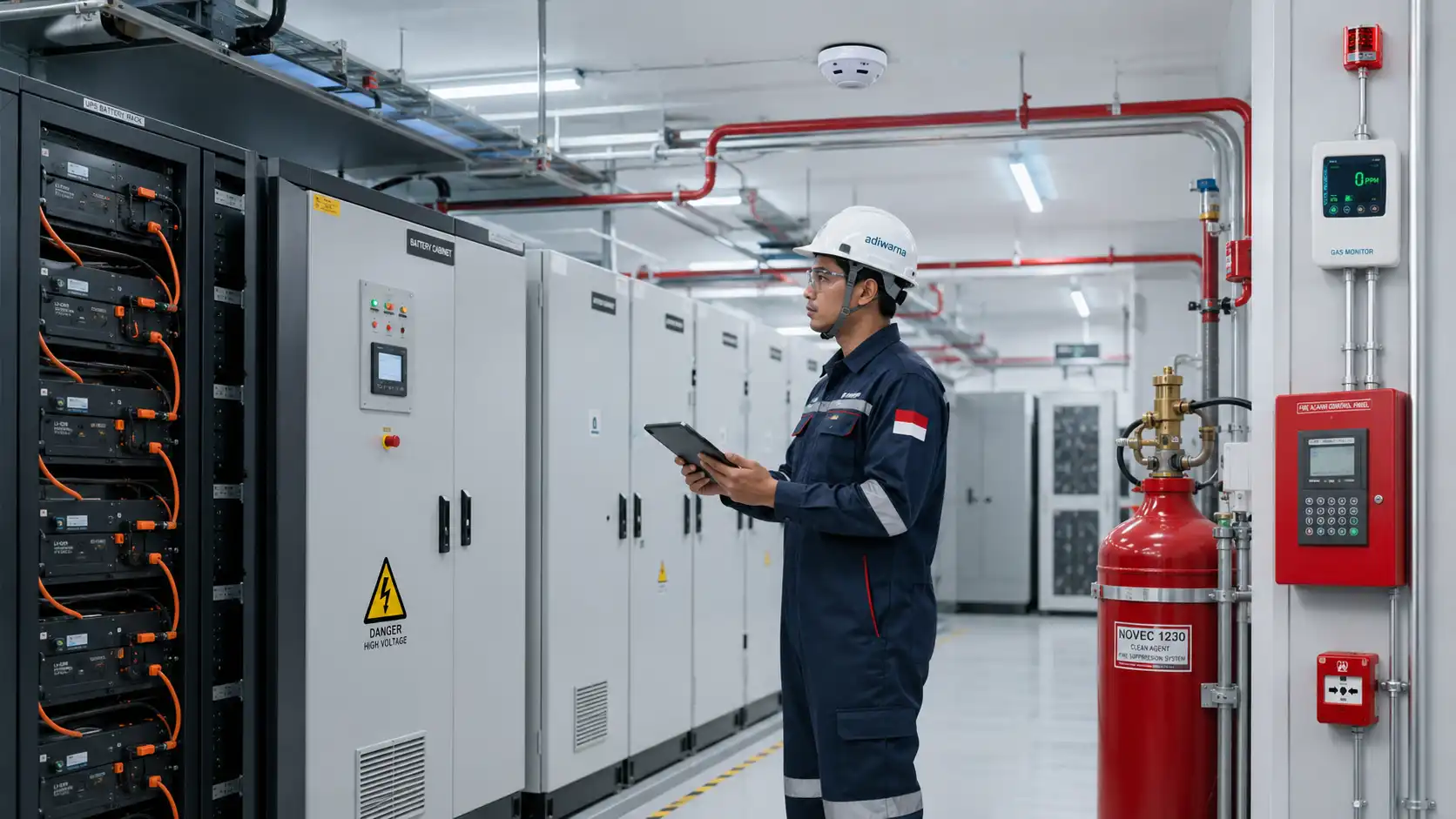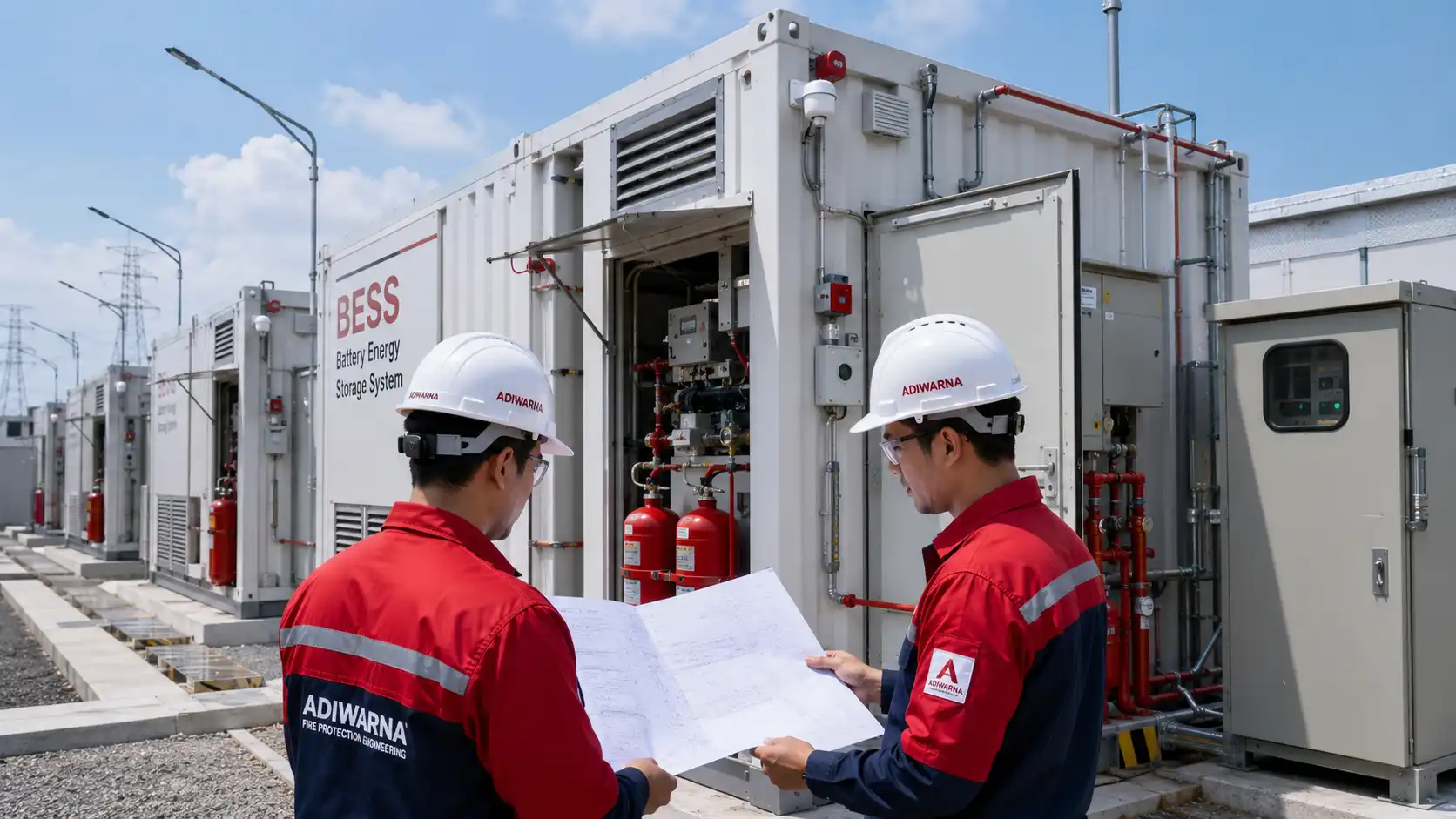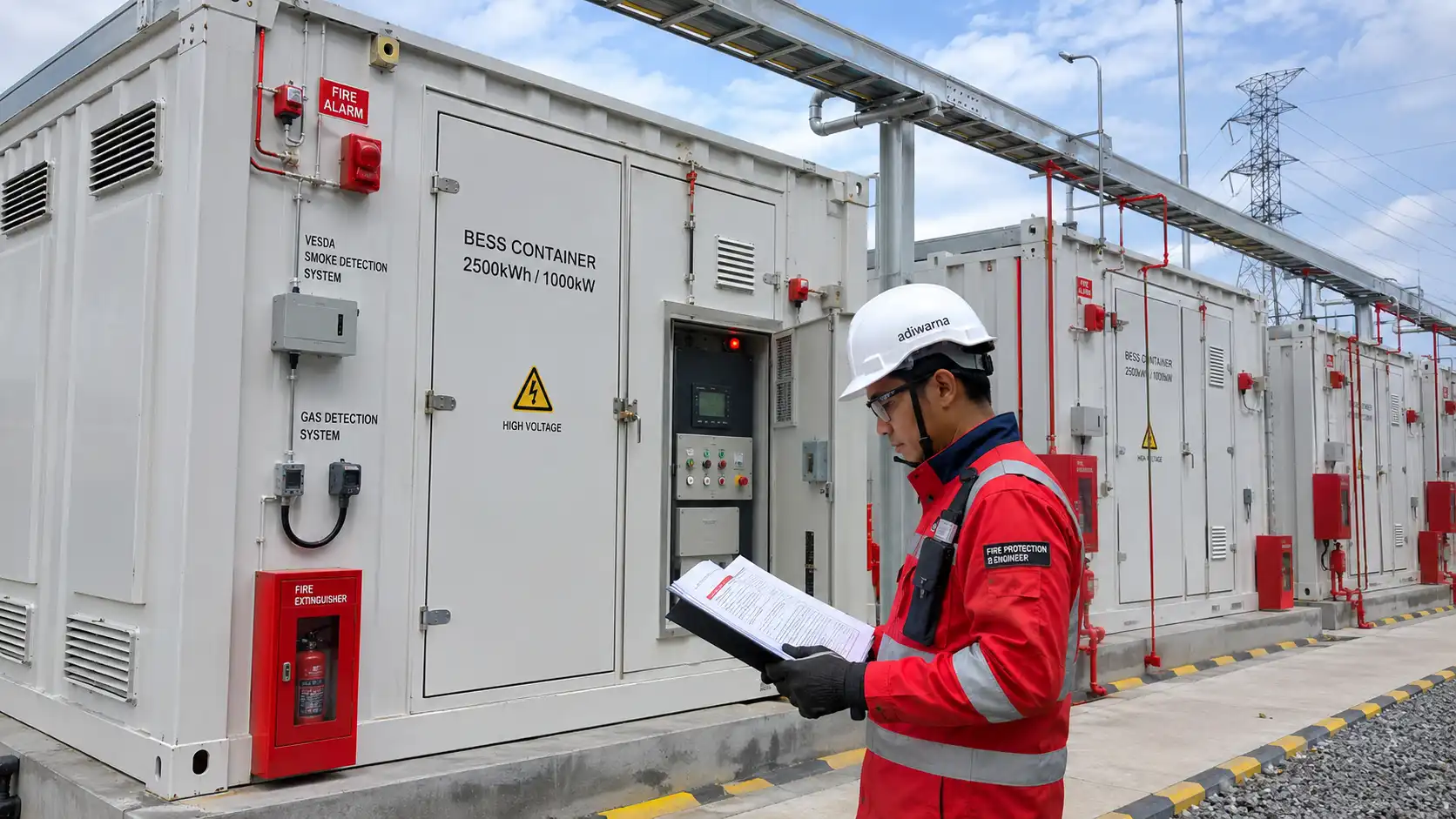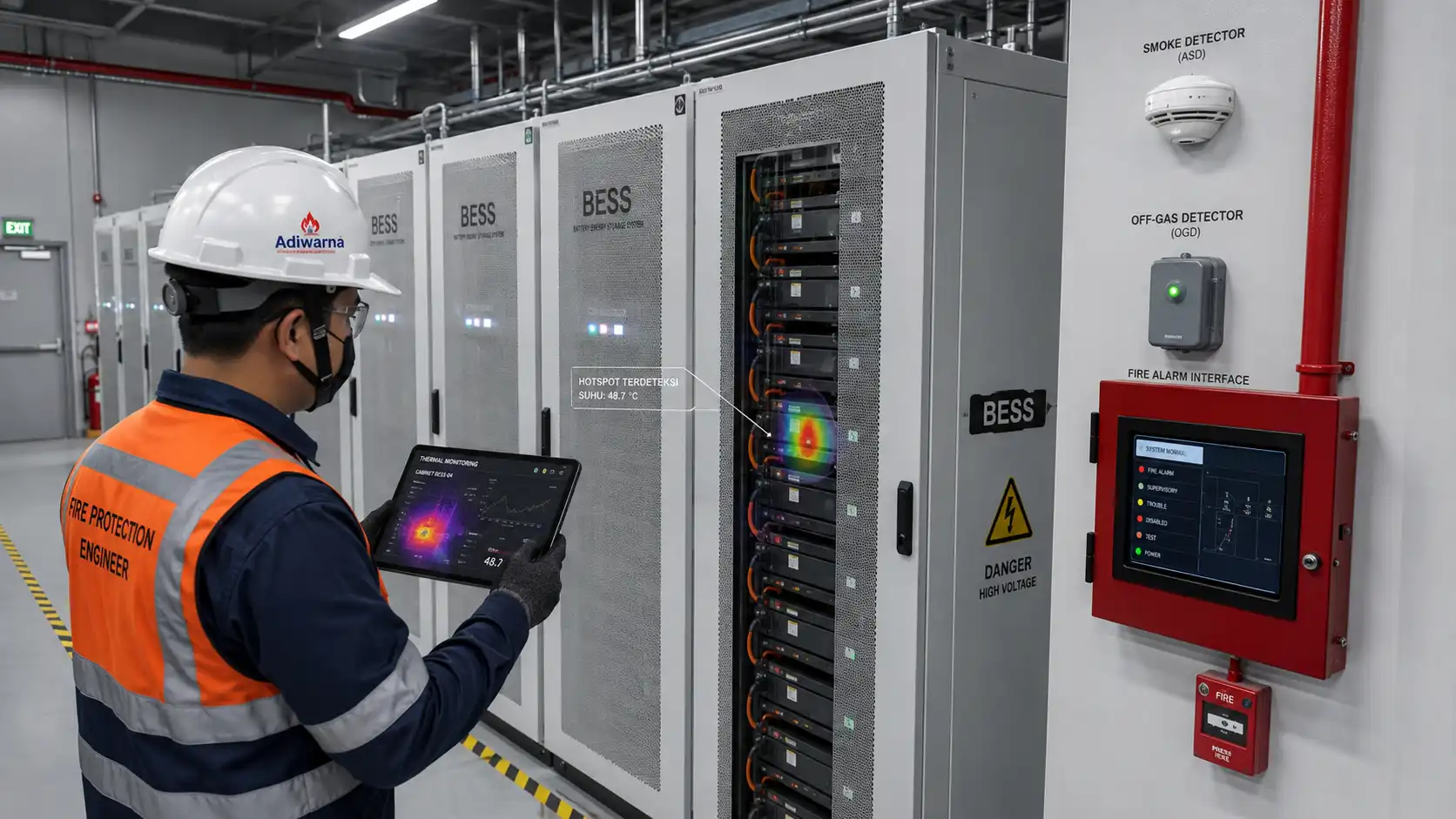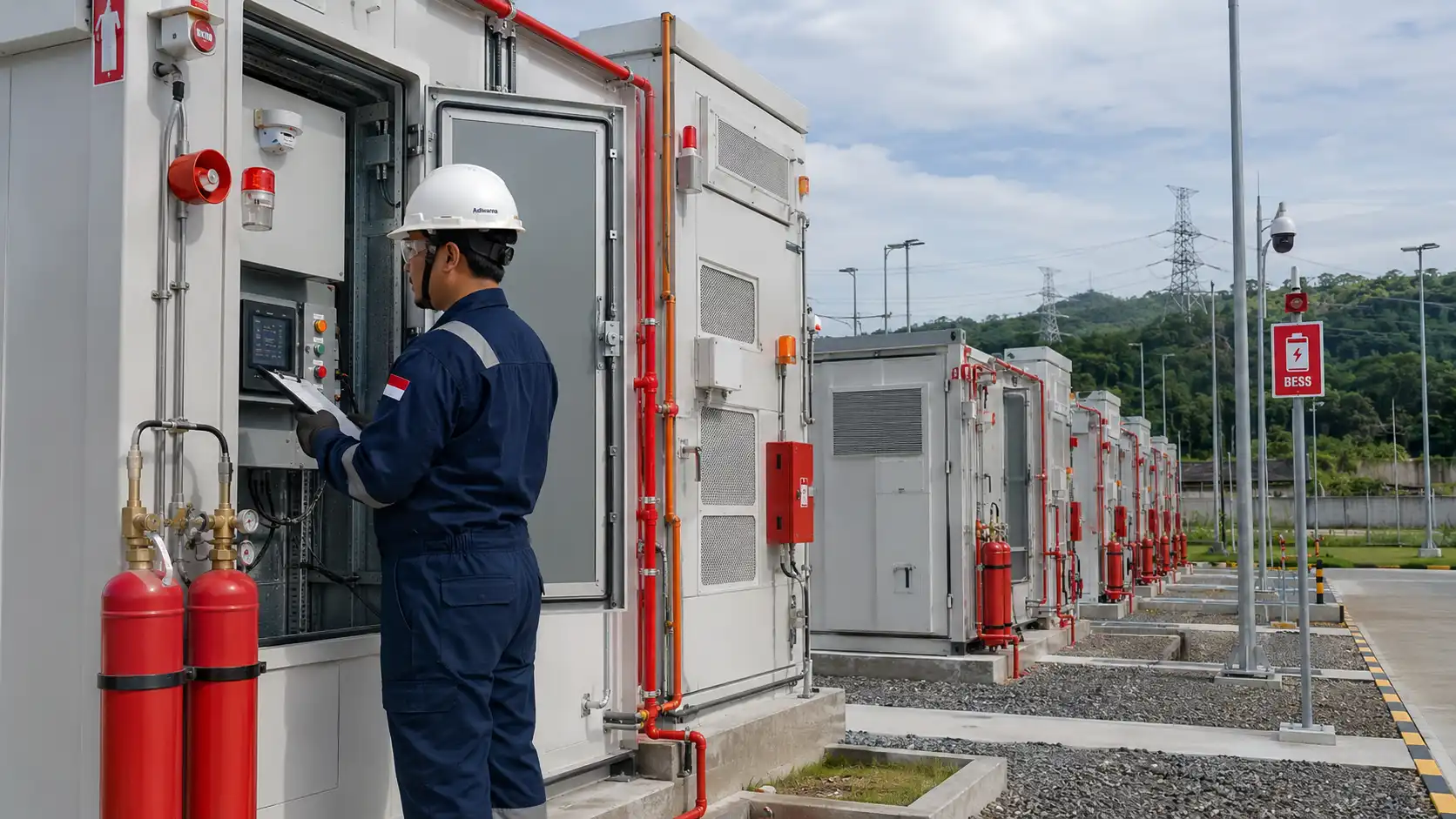

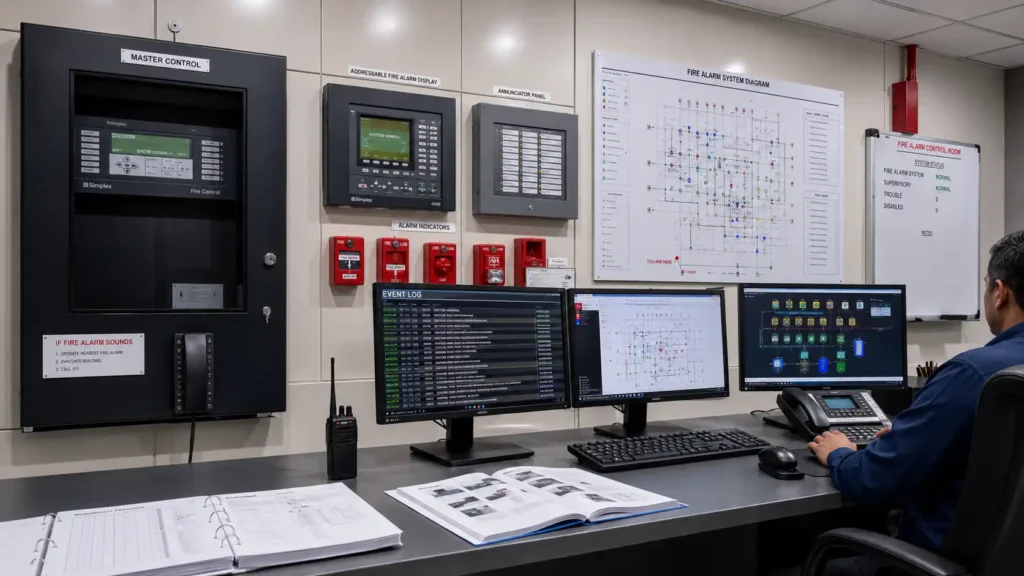
MCFA fire alarm is the main control panel in a fire alarm system that receives, processes, and displays signals from various detection and alarm devices. Therefore, this equipment becomes an important control center for commercial buildings, factories, warehouses, data centers, hospitals, hotels, apartments, malls, and industrial facilities.
In addition, MCFA Fire Alarm, or Master Control Fire Alarm, helps operators identify alarm locations more quickly. As a result, security teams, technicians, and emergency response teams can take action before a fire develops into a larger incident.
In modern fire protection systems, the main panel is usually connected to smoke detectors, heat detectors, manual call points, alarm bells, sounders, strobes, modules, annunciators, fire suppression panels, lift controls, exhaust fans, and building management systems. Therefore, design and installation must be performed properly from the engineering stage.
For integrated fire protection needs, PT Adiwarna Anugerah Abadi provides Fire Alarm System services covering design, procurement, installation, testing, commissioning, service, and maintenance.
Why Is MCFA Fire Alarm Important?
MCFA fire alarm is important because a fire detection system requires a control center that can read signals from many devices. Without a reliable main panel, alarms from detectors or manual call points cannot be processed clearly.
In addition, modern buildings usually have many zones, floors, rooms, and risk areas. Therefore, the panel must be able to show alarm locations so response can be carried out quickly and accurately.
In industrial facilities, panel requirements are more complex because the system can be connected to fire suppression, gas detection, flame detectors, preaction sprinklers, hydrant pump monitoring, and control rooms. Thus, MCFA is not only an alarm panel but also part of the building safety system.
Because of this function, panel selection must consider capacity, technology, number of loops, number of zones, integration needs, standards, and future expansion requirements.
Main Function of MCFA Fire Alarm
The main function of this panel is to receive signals from input devices. Then, the panel processes the signals and activates output devices according to the configuration.
Input devices may include smoke detectors, heat detectors, beam detectors, flame detectors, gas detectors, manual call points, waterflow switches, tamper switches, or modules. Meanwhile, output devices may include alarm bells, sounders, strobes, relays, shutdown signals, or outputs to other systems.
In addition, the panel displays system status such as alarm, trouble, supervisory, disabled, and normal. Therefore, operators can understand whether the system is operating normally or requires technical action.
With this function, the fire alarm system becomes easier to monitor. As a result, the risk of delayed response can be reduced.
Main Components in an MCFA System
An MCFA system consists of several interconnected components. Therefore, each component must be selected and installed according to project requirements.
Common main components include:
- Master control fire alarm panel.
- Smoke detector.
- Heat detector.
- Manual call point.
- Alarm bell.
- Sounder.
- Strobe light.
- Input module.
- Output module.
- Monitor module.
- Control module.
- Annunciator panel.
- Power supply unit.
- Battery backup.
- Fire alarm cable.
- Junction box.
- End-of-line resistor for certain systems.
- Repeater panel.
- Printer or event logger for specific applications.
In addition to these devices, the system also requires drawings, cable schedules, cause-and-effect matrices, testing reports, and commissioning documents. Thus, the installation is not only physically completed but also technically verifiable.
MCFA Fire Alarm for Buildings and Industrial Facilities
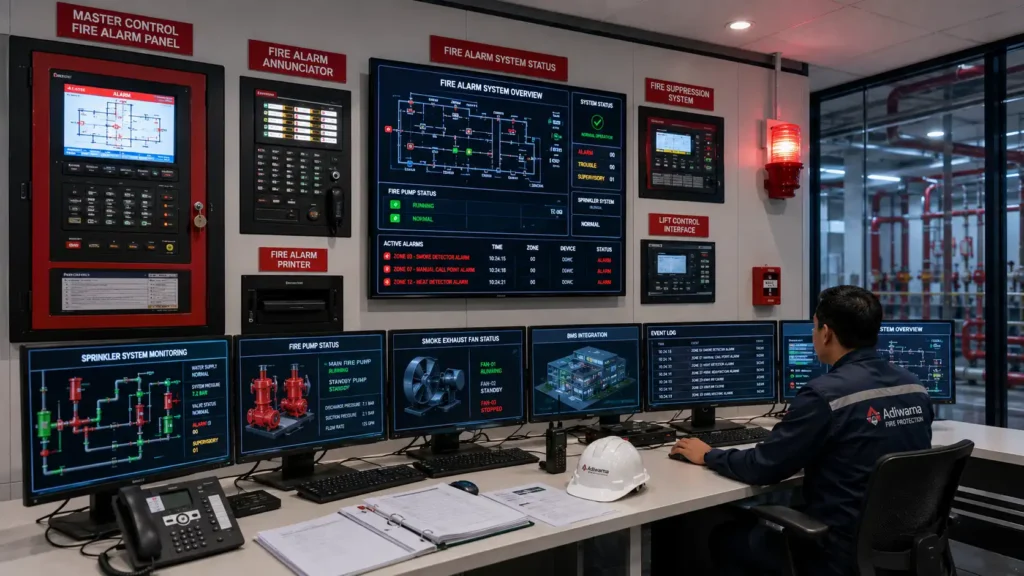
MCFA fire alarm is used in various types of buildings because fire detection is required in almost every facility. However, each building has different risk characteristics.
In office buildings, the panel usually monitors smoke detectors, heat detectors, manual call points, alarm bells, and strobes on each floor. Meanwhile, in hotels and apartments, the system must consider evacuation routes, public areas, panel rooms, basements, and service areas.
In industrial facilities, the panel can monitor production areas, warehouses, electrical rooms, control rooms, generator rooms, chemical areas, and fire pump rooms. In addition, the panel can be integrated with other protection systems such as fire suppression and sprinklers.
For industrial facility needs, Adiwarna provides Industrial Fire Protection Contractor services so system design can be adapted to actual field risks.
MCFA Fire Alarm in an Integrated Fire Protection System
MCFA fire alarm is usually part of a larger fire protection system. Therefore, the panel must be able to communicate clearly with other devices and systems.
First, detectors read early signs of fire. Then, signals are sent to the main panel to be processed based on zone, loop, or address.
After that, the panel activates alarm notification devices so occupants or workers receive a warning. In addition, the panel can send signals to lifts, access control, smoke control, fire suppression, or BMS.
With this integration, fire response does not rely only on audible alarms. Instead, the system can support evacuation, smoke control, and automatic protection actions.
Difference Between Conventional and Addressable MCFA

A conventional system divides protected areas into zones. Therefore, the panel can show the alarm zone, but it may not always identify the exact device address.
In contrast, an addressable system can read each device address. As a result, operators can identify which detector or module is active.
For small buildings, conventional systems can be a simpler option. However, for large buildings, multi-story facilities, data centers, hospitals, and industrial sites, addressable systems are often more effective because they provide more detailed information.
In addition, addressable systems are more flexible for integration and expansion. Therefore, technology selection must consider building size, number of devices, monitoring requirements, and expansion plans.
How MCFA Fire Alarm Works
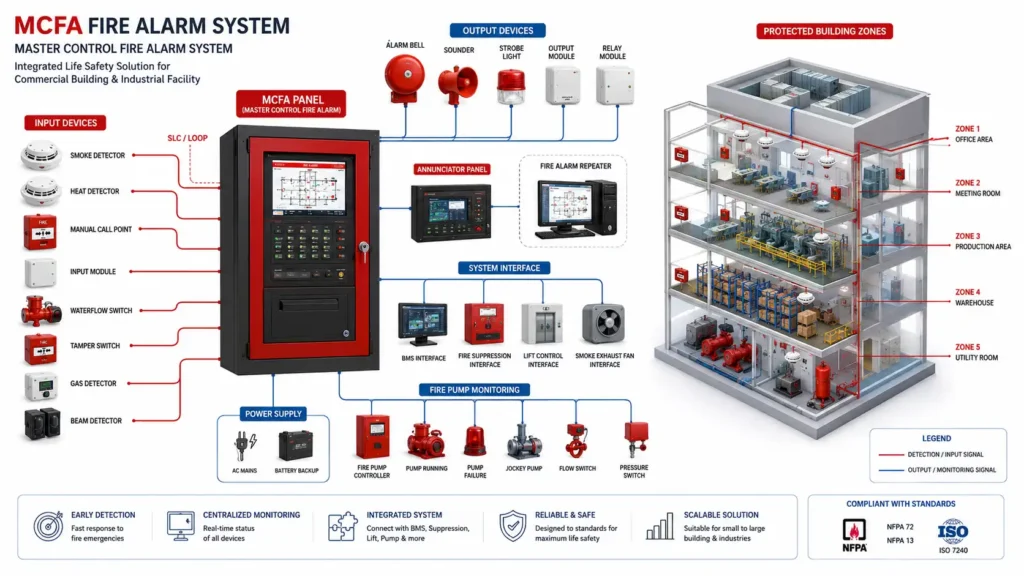
The main panel works by receiving signals from field devices. If a detector identifies smoke, heat, fire, or abnormal conditions, the signal is sent to the panel.
Then, the panel processes the signal according to its configuration. If the signal is considered an alarm, the panel displays the location, activates audible alarms, turns on strobes, and sends outputs to related systems.
Besides alarms, the panel also reads trouble status. For example, broken cables, short circuits, weak batteries, power failures, dirty detectors, or module problems can appear as trouble indications.
With this information, technicians can repair issues before the system fails during an emergency. Therefore, panel status monitoring is very important in building operations.
Input Devices in an MCFA System
Input devices are devices that send signals to the panel. Therefore, the quality and placement of input devices strongly influence system reliability.
Common input devices include smoke detectors, heat detectors, beam detectors, flame detectors, gas detectors, manual call points, flow switches, tamper switches, and monitor modules.
Smoke detectors are suitable for general areas, corridors, offices, panel rooms, and certain server rooms. Meanwhile, heat detectors are often used in dusty, humid areas or areas with potential false alarms from non-fire smoke.
Manual call points allow occupants to manually activate the alarm when they see a fire. In addition, flow switches and tamper switches are used to monitor sprinkler systems.
Output Devices in an MCFA System
Output devices provide warnings or perform specific actions after the panel receives an alarm. Therefore, output devices must be installed in locations where they can be clearly seen and heard.
Common outputs include alarm bells, sounders, horns, strobes, beacons, relay modules, output modules, and annunciators. In addition, the panel can also send signals to lifts, smoke exhaust fans, pressurization fans, access control, or BMS.
In certain facilities, panel output can activate a fire suppression release panel. However, activation logic must be designed carefully to prevent accidental suppression discharge.
With proper output design, the system can provide clear warnings to occupants. Then, the operations team can carry out evacuation and firefighting procedures according to SOP.
Integration with Fire Suppression System
The main panel can be integrated with a fire suppression system for areas that require automatic extinguishing. For example, data centers, server rooms, panel rooms, generator rooms, and archive rooms often require detection and suppression integration.
However, suppression activation should not occur without safe logic. Therefore, the system usually uses a releasing panel, cross-zone detection, abort switch, manual release, pre-discharge alarm, and time delay.
In addition, MCFA can receive status from the suppression panel such as alarm, trouble, discharge, low pressure, or system isolation. Thus, operators can monitor system conditions more comprehensively.
Adiwarna provides Fire Suppression System solutions for critical asset protection and technical rooms that require automatic suppression systems.
Integration with Sprinkler and Fire Pump
A fire alarm system can also monitor devices in sprinkler and fire pump systems. Therefore, MCFA often receives signals from waterflow switches, pressure switches, tamper switches, and pump running status.
When the waterflow switch activates, the panel can show an indication that water is flowing in the sprinkler system. In addition, the tamper switch can provide a supervisory signal when a sprinkler valve is closed or changes position.
For fire pumps, the panel can receive status such as pump running, pump fail, controller trouble, or power failure. As a result, operators have important information about fire fighting system readiness.
For water-based fire fighting needs, Industrial Fire Fighting System services can become part of a solution integrated with the fire alarm system.
Integration with BMS and Control Room
In modern buildings, MCFA is often connected to a Building Management System or control room. With this integration, alarm status can be monitored centrally.
In addition, integration helps the security team identify alarms from several areas at once. Therefore, large buildings, malls, hotels, hospitals, and industrial facilities usually require clear monitoring displays.
Signals that can be sent to BMS include fire alarm, trouble, supervisory, waterflow, valve closed, pump running, and system fault. However, integration must still maintain the fire alarm system’s priority as a life safety system.
With this concept, BMS functions as additional monitoring. Meanwhile, the fire alarm panel remains the primary device for fire alarm operation.
Technical Standards to Consider
Fire alarm system design must follow relevant standards and regulations. Therefore, the system should not be designed only based on the number of rooms or device prices.
In general, NFPA 72 is often used as a reference for fire alarm and signaling systems. In addition, projects in Indonesia also need to consider local regulations, company standards, insurance requirements, and manufacturer guidelines.
For certain installations, SNI standards, fire department requirements, and building safety provisions must also be considered. Thus, the design must be adjusted to project requirements and local obligations.
Important items that are usually reviewed include device layout, zone or address mapping, cable specification, battery calculation, notification coverage, cause and effect, testing procedures, and commissioning documentation.
Important Factors in MCFA Design
Main panel design must consider overall building requirements. Therefore, engineers need to understand layouts, room functions, fire risks, evacuation routes, and integration needs.
Important factors include:
- Building type.
- Total area.
- Number of floors.
- Number of zones or loops.
- Detector type.
- Addressable or conventional requirements.
- Alarm notification coverage.
- Annunciator requirements.
- Integration with suppression.
- Integration with sprinkler.
- Integration with BMS.
- Battery backup.
- Main panel location.
- Operator access.
- Expansion requirements.
- Local authority requirements.
In addition, the design must consider maintenance convenience. This is because systems that are difficult to access are usually inspected less effectively.
MCFA Testing and Commissioning
Testing and commissioning are required to ensure that all devices work according to design. Therefore, testing must cover panels, detectors, modules, alarm devices, batteries, and output integrations.
Important activities usually include:
- Visual inspection.
- Continuity test.
- Loop test.
- Detector activation test.
- Manual call point test.
- Alarm bell or sounder test.
- Strobe test.
- Module test.
- Battery backup test.
- Trouble simulation.
- Supervisory signal test.
- Waterflow signal test.
- Integration test.
- Cause-and-effect test.
- Documentation review.
In addition, test results must be recorded in an official report. With this documentation, owners, consultants, contractors, and HSE teams can confirm that the system is ready for use.
If a device does not match its mapping, correction must be completed before the system is handed over. Therefore, commissioning becomes an important stage in project quality.
MCFA Fire Alarm Maintenance

MCFA fire alarm requires periodic maintenance so it remains ready to operate. Therefore, inspections should not only be performed when an alarm or trouble occurs.
Common checks include panel condition, power supply, battery, charger, detector, module, alarm device, wiring, event log, and trouble status. In addition, technicians need to clean certain detectors according to manufacturer recommendations.
In continuously operating buildings, layout changes must also be considered. If new partitions are added, ceilings are changed, rooms are repurposed, or areas are expanded, the alarm system should be re-evaluated.
With consistent maintenance, the system can provide more reliable alarms. Conversely, panels that are rarely tested may fail to provide warnings when needed.
Common Mistakes in Fire Alarm Projects
Many fire alarm system problems occur because design and installation are not properly planned. Therefore, every project needs to pay attention to details from the early stage.
Common mistakes include:
- The number of detectors does not match requirements.
- Detectors are installed in the wrong location.
- Zone or address mapping is not organized.
- Cables do not follow specifications.
- The panel has no expansion capacity.
- Battery calculation is not performed.
- Alarm notification is not clearly audible.
- Suppression integration is not tested.
- Annunciator location does not match operator needs.
- As-built documentation is incomplete.
- Testing is only partially performed.
- Maintenance is not scheduled.
By avoiding these mistakes, the alarm system can operate more consistently. In addition, the operations team can perform inspection and troubleshooting more easily.
Benefits of MCFA for Companies and Buildings
A fire alarm panel provides major benefits for building owners and companies. First, the system helps provide early warning when fire indications occur.
In addition, the panel helps operators identify alarm locations more quickly. As a result, response can be carried out based on the correct area.
Furthermore, an integrated system can support evacuation, smoke control, automatic suppression, and facility monitoring. Therefore, the alarm system is not only a requirement but also a safety investment.
Finally, good system documentation can support HSE audits, insurance reviews, and authority inspections. Therefore, design, installation, testing, and maintenance must be managed professionally.
Why Choose PT Adiwarna Anugerah Abadi?
PT Adiwarna Anugerah Abadi can help companies and building owners design fire alarm systems according to facility needs. In addition, Adiwarna understands the requirements of various sectors such as commercial buildings, industries, data centers, hotels, hospitals, warehouses, and high-risk facilities.
With the right engineering approach, each device can be selected based on risk, standards, panel capacity, integration requirements, and operational needs. Therefore, the system is not only installed but also ready to be tested, maintained, and expanded.
For projects that require complete integration, EPC Fire Protection Adiwarna can support engineering, procurement, construction, testing, commissioning, service, and maintenance.
If your company needs fire alarm system design, installation, testing, commissioning, service, or maintenance, consult your project requirements through the Adiwarna Contact Page.
Conclusion
MCFA fire alarm is an important control center in a fire alarm system because it can receive, process, and display signals from various detection and alarm devices. Therefore, this panel is highly relevant for commercial buildings, industrial facilities, data centers, hotels, hospitals, warehouses, and high-risk sites.
However, system reliability is not determined only by the main panel. Instead, performance depends heavily on design, device selection, mapping, integration, testing, commissioning, and maintenance.
With proper planning, a fire alarm system can help protect people, assets, operations, and company reputation. Therefore, PT Adiwarna Anugerah Abadi is ready to help deliver professional, integrated, and risk-based fire alarm solutions.