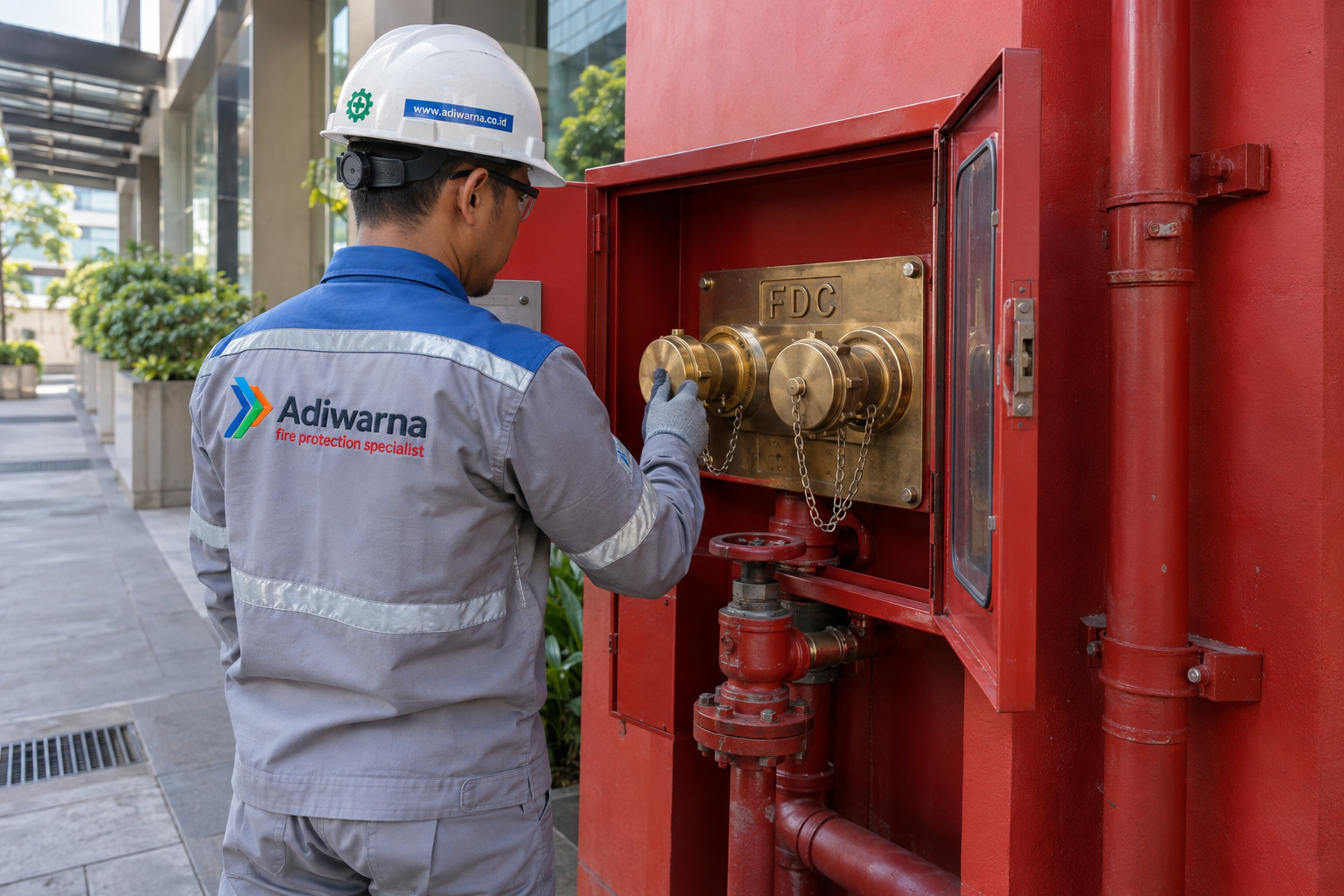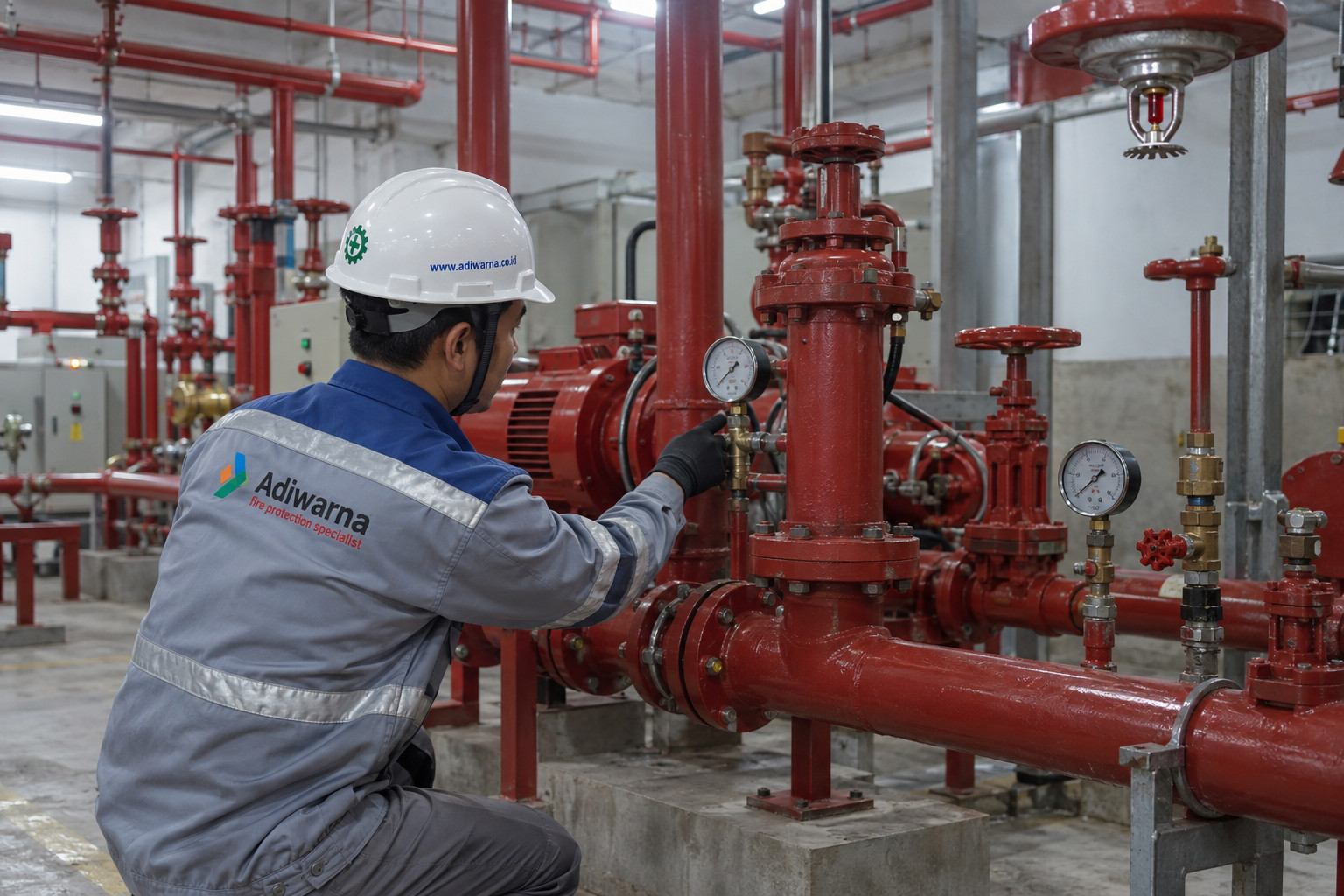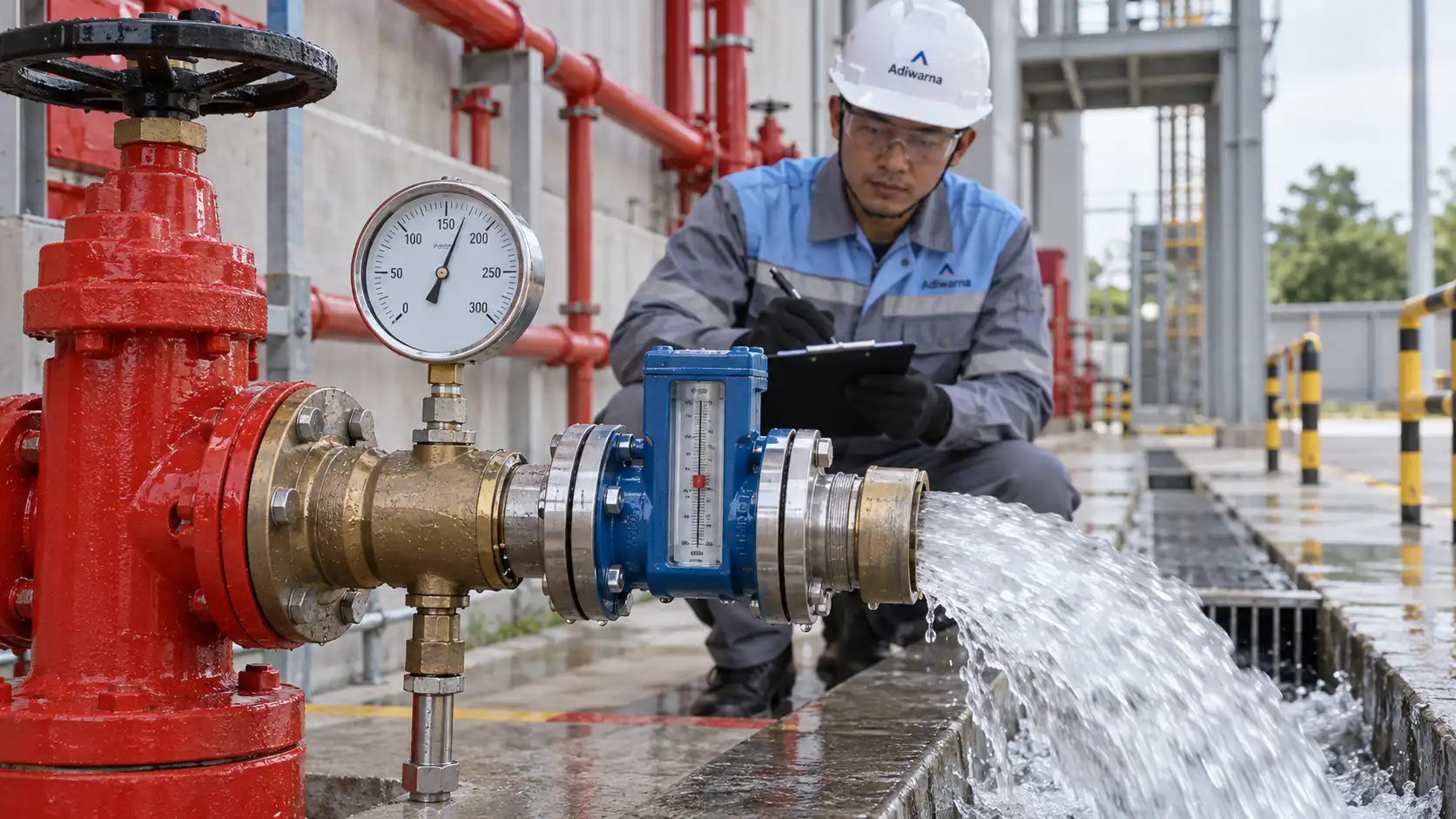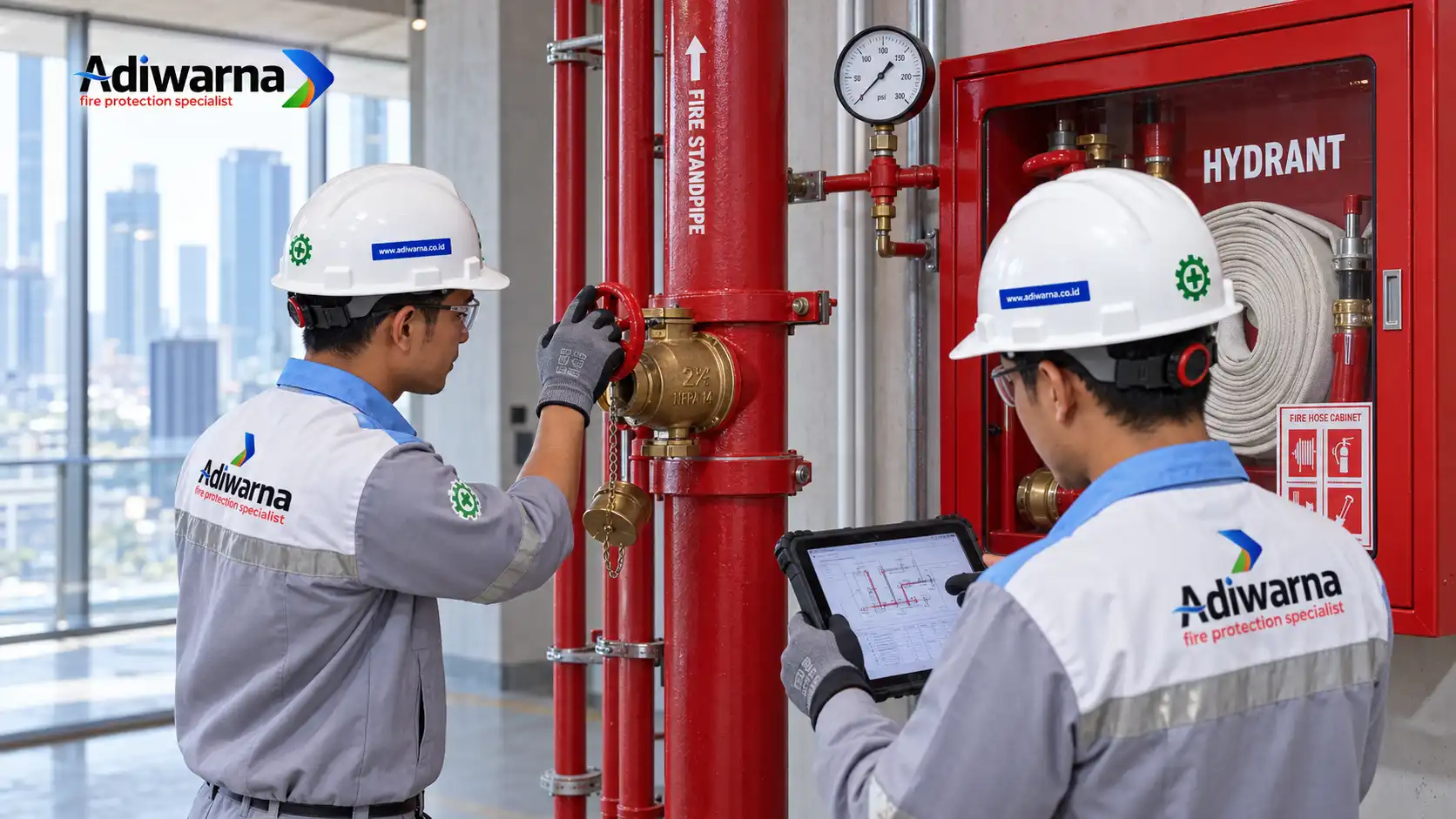

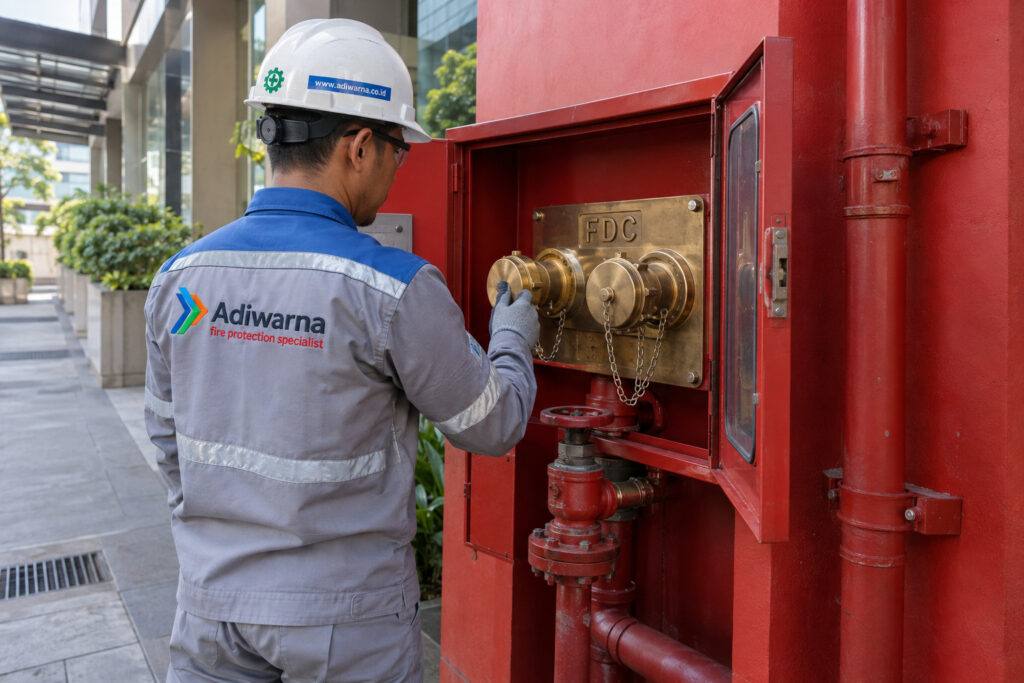
FDC Test is a series of checks to confirm that a Fire Department Connection can be found, accessed, connected, and used to support a standpipe or hydrant system according to the design basis. The test is not limited to checking whether the inlet looks intact. The team should also review caps, swivels, clapper or check valves, drains, signs, pipe supports, fire-apparatus access, and the connection between the FDC and the riser.
A Fire Department Connection can be critical when the fire department supplies or supplements water using a fire apparatus. Therefore, an incorrect location, blocked inlet, seized cap, failed valve, or obstructed access route can delay emergency operations.
Quick answer about FDC Test
FDC Test should demonstrate three things: the components are accessible and operable, the connection reaches the correct system, and pressure or flow results can be compared with the approved design and acceptance criteria. Competent personnel should perform the test with an approved method statement, suitable instruments, and safe procedures.
| Test area | What is verified | Risk if it fails |
|---|---|---|
| Location and access | Visible, unobstructed, and reachable by fire apparatus | Response time increases |
| FDC components | Inlet, cap, swivel, clapper, drain, and gasket | Connection leaks or cannot be made |
| System path | Riser, valve, check valve, and connection match drawings | Water enters the wrong zone |
| Acceptance | Pressure, flow, alarm, and records | Performance is not proven |
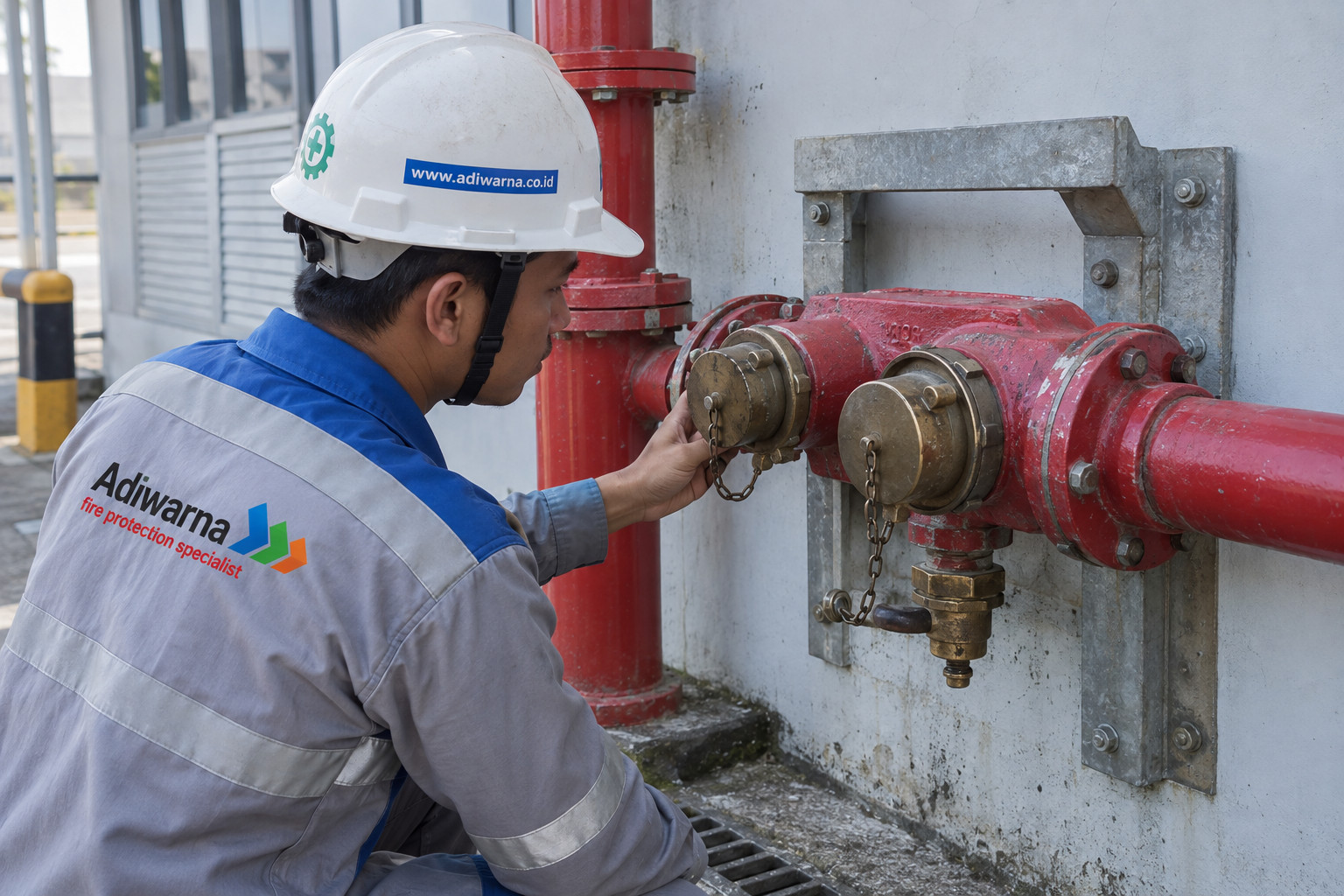
Fire Department Connection location and access
The FDC should be easy to identify and not blocked by vehicles, fences, landscaping, construction materials, other signs, or facade changes. Its position relative to fire-department access should be reviewed against the building layout, fire lane, entrance, stairs, standpipe riser, and AHJ requirements.
Do not judge access from a front elevation photograph alone. Check whether the coupling can be reached, whether there is enough working space for hose connection, whether the cabinet door opens fully, and whether the fire apparatus can stop safely. On active projects, inspect again after landscaping, bollards, fencing, or facade work is complete.
NFPA 14, 2024 edition covers standpipe and hose systems, including components and system acceptance related to Fire Department Connections. Final details should follow the project’s adopted edition, approved drawings, and AHJ requirements.
Field access checklist
- The FDC is visible from the fire-department approach route.
- Vehicles, materials, fences, and landscaping do not block it.
- Couplings are positioned for operation.
- Cabinet, cover, or sign can be opened and read.
- Fire lane and working space remain clear after civil work.
- Drain or ball drip does not discharge into a hazardous area.
Components checked during an FDC Test
Visual inspection should cover the inlet body, cap, chain, swivel, gasket, clapper or check valve, drain, ball drip, sign, pipe, fittings, supports, and connection to the standpipe or hydrant riser. Check for corrosion, impact damage, missing caps, damaged threads, leakage, paint overspray, and foreign material inside the inlet.
The cap is not merely a cover. It protects the inlet from contamination and damage. However, a cap that is overtightened, has damaged threads, or has a chain that interferes with coupling can delay hose connection. Record every finding and close it before acceptance is declared complete.
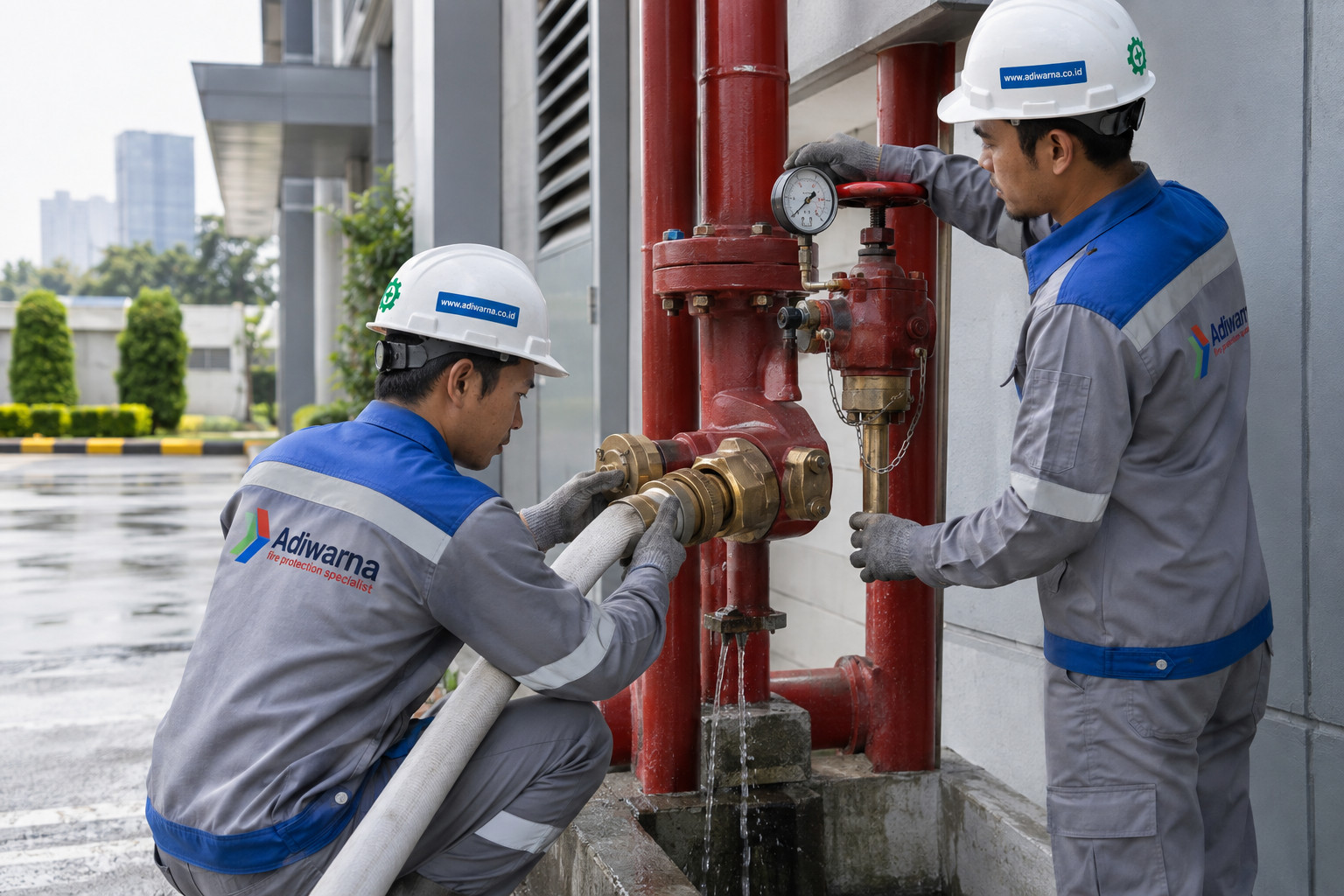
FDC Test with pressure and flow
The test method follows the design basis, approved test plan, and water-supply capability. The scope may include flushing, pressure testing, flow testing, or functional testing. Do not increase pressure or open valves until the discharge path, hose, drain, and surrounding area are safe.
- Confirm the system boundary, riser, valves, and zone connected to the FDC.
- Check normal valve, cap, drain, and gauge conditions.
- Confirm that the hose, test header, drain, or discharge outlet is ready.
- Perform the test gradually with communication between personnel.
- Record pressure, flow, time, gauge location, and water-supply condition.
- Check leakage at the inlet, cap, gasket, fittings, and connections.
- Test alarm or supervisory signals when included in the cause-and-effect.
- Return valves and the system to normal after testing.
FDC connection to standpipe and hydrant risers
The FDC must connect to the correct system. During as-built review, compare riser labels, pipe routing, check valves, sectional valves, drains, and test connections. A wrong connection can send fire-apparatus water into a path that was not designed to receive that supply.
For high-rise buildings, confirm that the FDC supports the specified standpipe and that valve or riser indications are understandable to the fire department. For outdoor configurations, distinguish an FDC from a hydrant pillar, hydrant box, and other hose connections. Similar terms do not always mean the same function or design basis.
Acceptance documentation and maintenance
After an FDC Test, the report should describe the method, instruments, initial condition, pressure or flow results, photographs, punch list, corrective action, retest, and restoration status. Include marked-up or as-built drawings when routing, labels, cabinets, or valves change.
NFPA 25, 2026 edition is a reference for inspection, testing, and maintenance of water-based fire protection systems. The inspection schedule should match the adopted edition and facility procedures. Recheck the FDC after facade, paving, landscaping, repainting, or fire-lane changes.
Handover checklist
- Approved drawings and test plan are available.
- FDC location and access are approved.
- Inlet, cap, swivel, gasket, clapper, drain, and sign are inspected.
- Riser connection matches the as-built documentation.
- Pressure or flow test records are complete.
- Alarm or supervisory signals are verified when relevant.
- Punch list and retest are complete.
- Final-condition photographs and restoration checklist are handed over.
- O&M information and inspection schedule are accepted by the owner.
Common FDC Test mistakes
- Inspecting the FDC only from the front elevation.
- Not testing the cap, thread, swivel, gasket, and clapper.
- Ignoring fire-apparatus access after civil work is complete.
- Connecting the FDC to the wrong riser or an outdated as-built route.
- Performing a flow test without a safe discharge path and communication.
- Failing to record gauge location and water-supply condition.
- Failing to retest after leakage repairs.
- Declaring acceptance only because there is no visible damage.
FAQ: FDC Test
Is an FDC Test the same as a hydrant flow test?
No. An FDC Test focuses on the fire-apparatus supply connection and its relationship to the building system. A hydrant flow test evaluates flow and pressure at the hydrant or network being tested.
Must an FDC always be near a hydrant pillar?
Not always. The location depends on the design basis, building layout, fire-department access, standpipe arrangement, and AHJ requirements.
Should caps and gaskets be replaced during maintenance?
If a cap, thread, gasket, chain, or swivel is damaged and affects coupling or sealing, it should be repaired or replaced according to product data and the approved procedure.
When should an FDC be retested?
Retesting is needed after changes to the riser, valves, facade, fire lane, cabinet, inlet, or after pressure or flow results fail the acceptance criteria.
Conclusion
FDC Test should confirm that a Fire Department Connection can be found, accessed, connected, and used to support the standpipe or hydrant system according to the design basis. Location, components, riser, pressure, flow, alarms, records, and maintenance should be checked as one chain.
For FDC and hydrant evaluation, review Adiwarna’s NFPA 14 Hydrant System guide, see the fire protection testing and commissioning service, or contact Adiwarna.