

Accurate FM200 HFC-227ea concentration calculation is the most critical stage in designing a clean agent gas suppression system. Concentration that is too low makes the agent ineffective, while concentration that is too high increases toxicity risks and installation costs. This article explains how to calculate FM200 agent concentration per NFPA 2001.
What Is FM200 (HFC-227ea) and Why Is Concentration Critical?
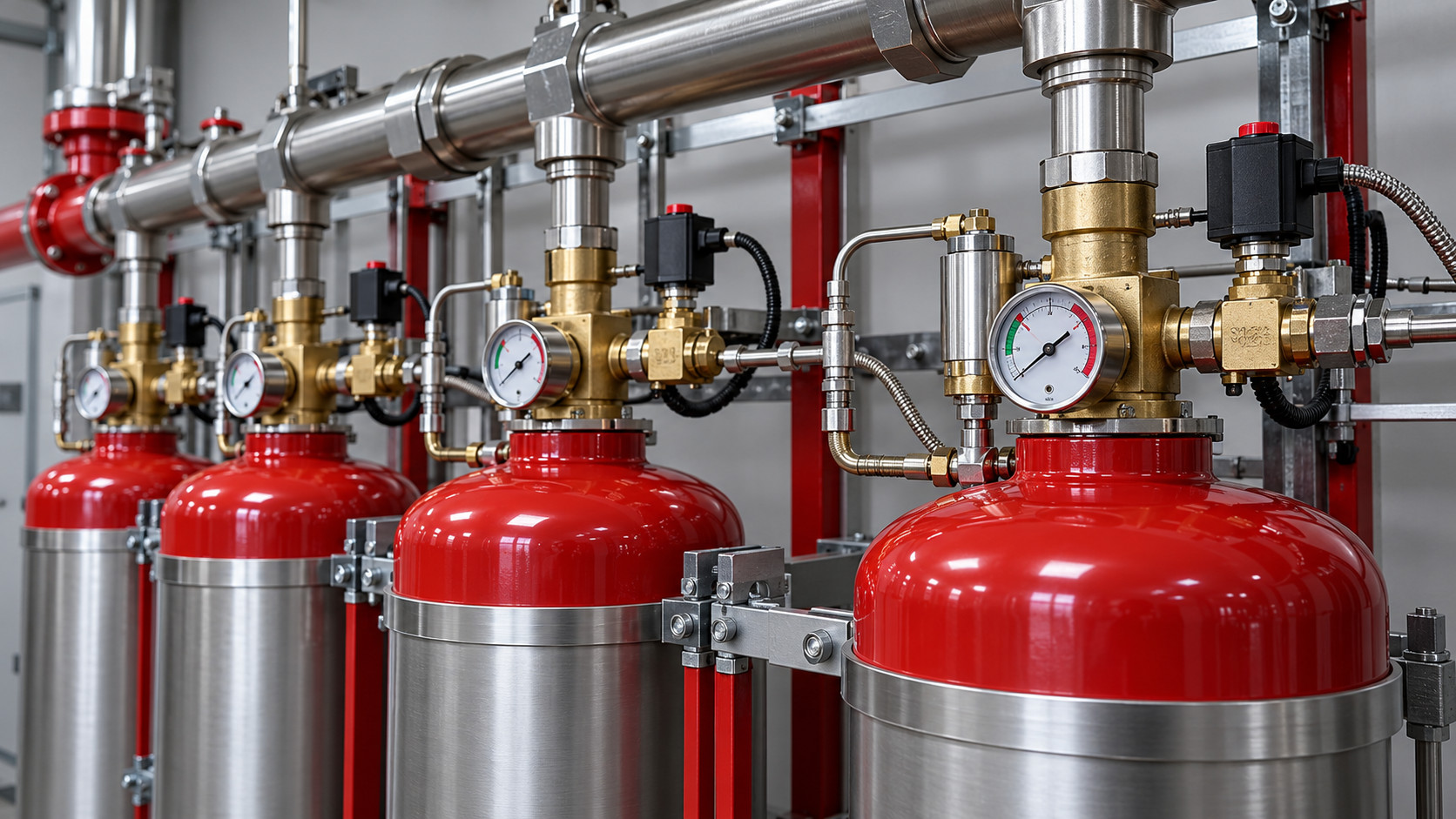
FM200 is the trade name for the chemical suppression agent HFC-227ea (heptafluoropropane). FM200 works by absorbing heat from the combustion reaction and suppressing the chemical fire chain. FM200 systems protect critical assets such as server rooms, data centers, industrial control rooms, and important archives.
The minimum design concentration for FM200 per NFPA 2001 is 6.25% to 9% by volume depending on fire class. For Class A fires (solids), the standard typically sets a minimum of 7%-9%. Using below the minimum means the system will not suppress the fire effectively, while above 10.5% (NOAEL) begins to pose risks to occupants.
FM200 Concentration Calculation Formula
The primary formula per NFPA 2001 Annex A is:
W = V/S x [C/(100-C)]
W = Required FM200 agent weight (kg)
V = Net protected room volume (m3)
S = Agent specific volume at design temperature (m3/kg)
C = FM200 design concentration (%v/v)
The specific volume S for FM200 is calculated using: S = k1 + k2 x T, where T is room temperature in Celsius, k1 = 0.1269 and k2 = 0.0005 for HFC-227ea.
FM200 Concentration Calculation Steps
Here is the systematic procedure for calculating the required FM200 agent quantity:
- Calculate the net room volume: subtract the volume of fixed furniture, equipment, and non-void structures from total volume.
- Determine the design temperature (typically 20-25 degrees Celsius or the maximum temperature that may occur).
- Calculate specific volume S: S = 0.1269 + (0.0005 x T). At 20 C: S = 0.1369 m3/kg.
- Determine the design concentration C: minimum 7% for Class A per the agent safety data sheet.
- Calculate agent weight W: W = V/S x [C/(100-C)].
- Add safety factor: typically 10-20% to compensate for room leakage.
- Verify against NOAEL limit (9%) and LOAEL (10.5%) per NFPA 2001.
Worked Example: 50 m3 Server Room
A server room with a net volume of 50 m3, design temperature of 25 C, and design concentration of 7%.
- T = 25 C; S = 0.1269 + (0.0005 x 25) = 0.1394 m3/kg
- C = 7%; C/(100-C) = 7/93 = 0.0753
- W = 50/0.1394 x 0.0753 = 27.0 kg FM200
- With 15% safety factor: W_total = 27.0 x 1.15 = 31.1 kg FM200

Temperature and Altitude Correction Factors
Temperature Correction Factor
Room temperature affects the agent specific volume. Higher temperature means greater specific volume. Designing at maximum temperature ensures the minimum concentration is met under the most critical conditions.
Altitude Correction Factor
At altitudes above 300 m above sea level, lower atmospheric pressure changes the required agent quantity. NFPA 2001 Table A.6.2.1 provides altitude correction factors for locations at significant elevations.
FM200 Safety Concentration Limits
| Parameter | FM200 Value | Notes |
|---|---|---|
| NOAEL | 9% | Safe limit for unintended exposure |
| LOAEL | 10.5% | Level where effects on humans begin |
| Design concentration Class A | 7% – 9% | Per NFPA 2001 |
| Maximum recommended concentration | 10.5% | Mandatory evacuation above this level |
For systems in potentially occupied rooms, mandatory pre-discharge evacuation procedures must be implemented. Systems must include pre-discharge alarms and adequate delay to allow evacuation before agent discharge.
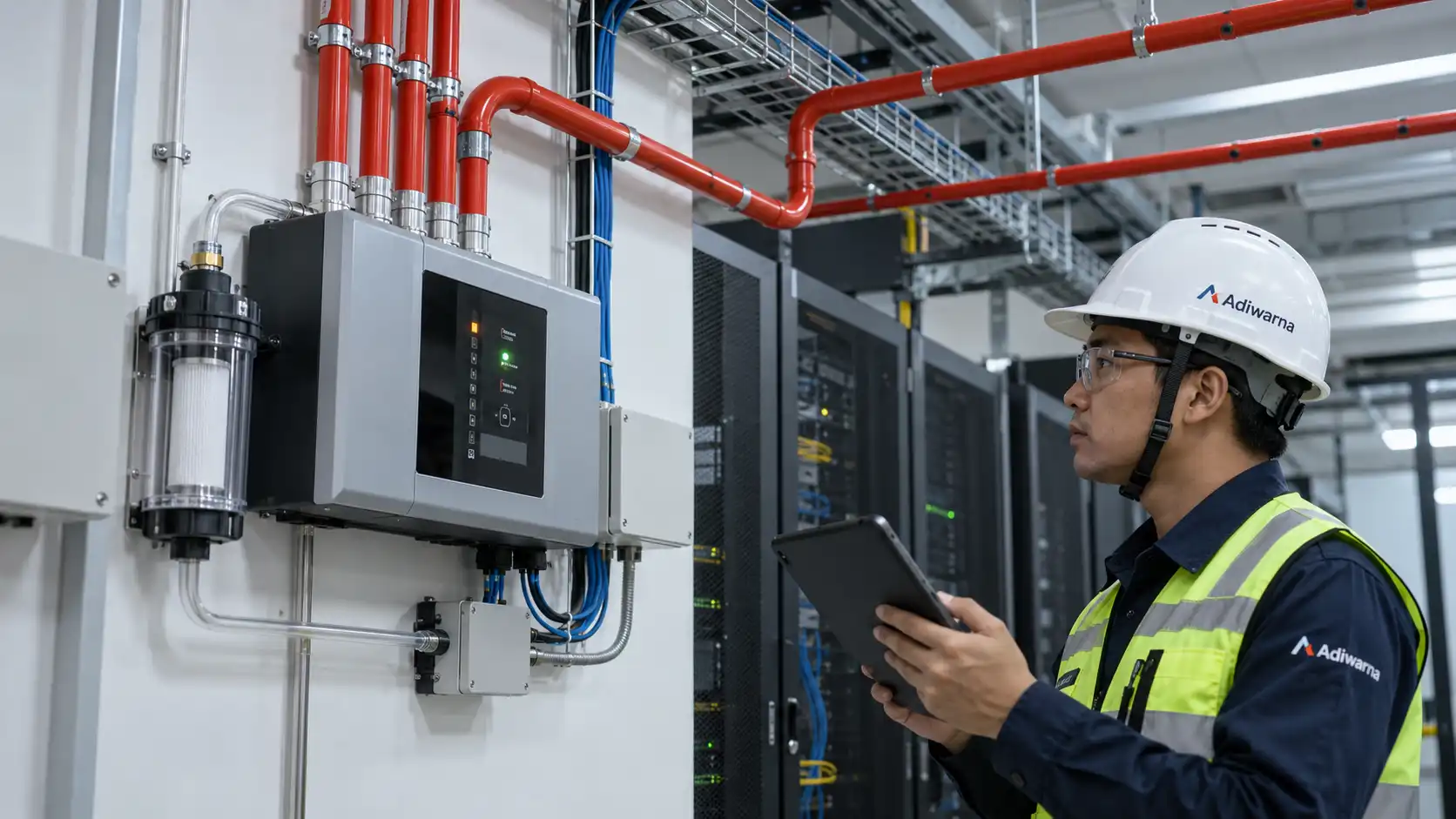
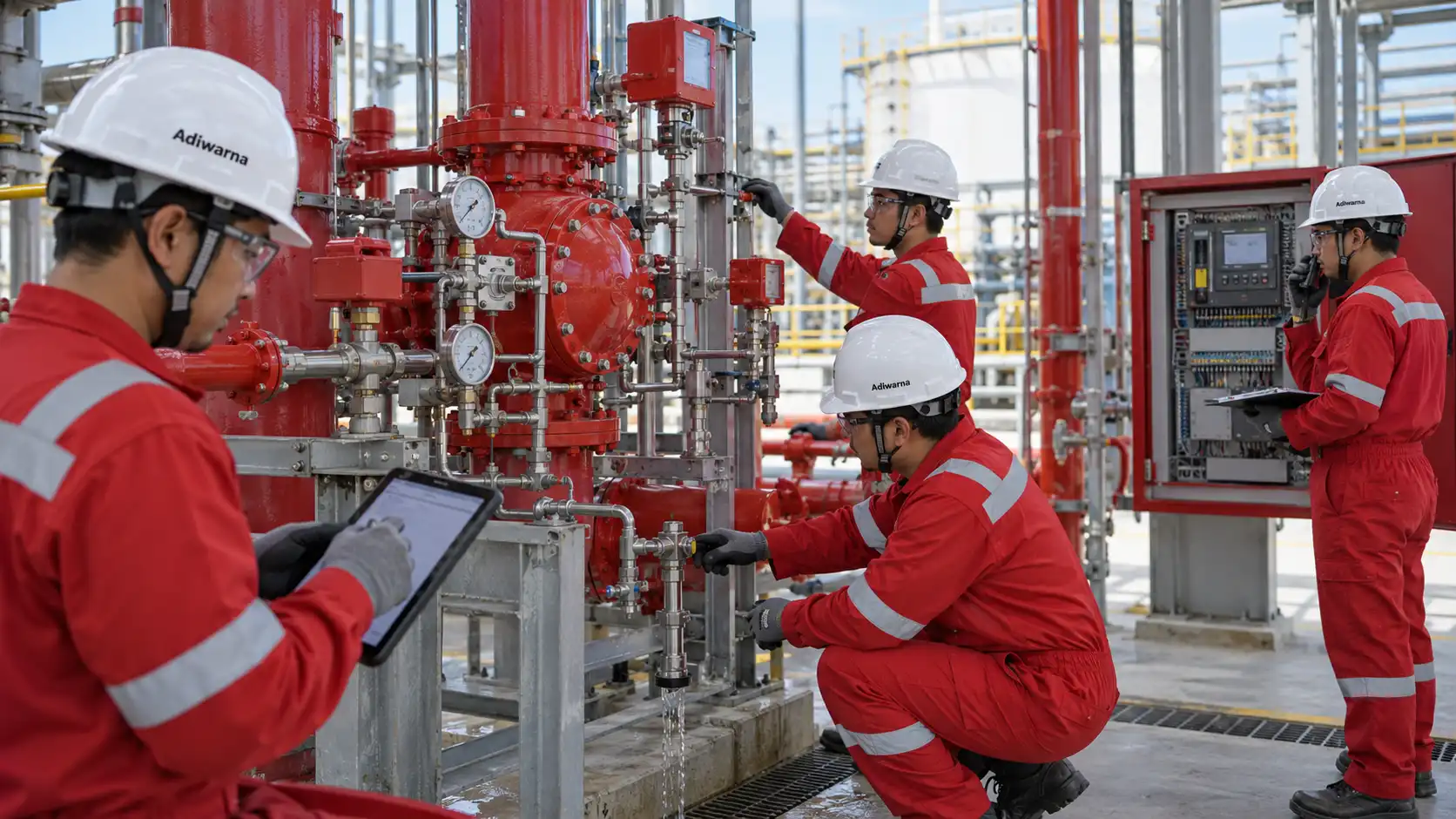
Adiwarna Fire Protection Specialist provides consultation and design services for FM200 gas suppression systems including hydraulic calculations and NFPA 2001 verification. Our certified technicians ensure every system meets applicable safety standards.
Applicable FM200 Standards
- NFPA 2001: Standard on Clean Agent Fire Extinguishing Systems – primary standard for clean agent suppression including FM200.
- ISO 14520: international standard for gaseous fire suppression systems, equivalent to NFPA 2001.
- SNI 06-7061: Indonesian national standard for halon-replacement gas suppression systems.
- Minister of Public Works Regulation No. 26/PRT/M/2008: technical requirements for fire protection systems in buildings.
FAQ: FM200 HFC-227ea Concentration
What is the minimum FM200 concentration for a server room?
The minimum design concentration for FM200 against Class A fires in a server room is 7% per NFPA 2001. Some designs use 8-9% for a larger safety margin, especially in rooms with higher leakage rates.
Is FM200 safe for humans?
FM200 is safe at 7-9% concentration based on a NOAEL of 9%. However, FM200-protected rooms must be evacuated before agent discharge. Systems must include pre-discharge alarms and adequate delay for evacuation.
How quickly does FM200 suppress a fire?
FM200 suppresses fire within 10 seconds or less after the design concentration is achieved. Total discharge time from cylinder to room is typically 10 seconds per NFPA 2001 requirements.
Conclusion
Accurate FM200 HFC-227ea concentration calculation is the foundation of a reliable and safe gas suppression system. From net room volume to design temperature, correction factors, and NOAEL verification, each parameter directly impacts system effectiveness and safety. Errors in this calculation can result in an ineffective or hazardous system.
Need assistance designing and calculating an FM200 suppression system for your critical facility? Contact the Adiwarna Fire Protection Specialist team at our contact page for a free technical consultation per NFPA 2001 and SNI standards.