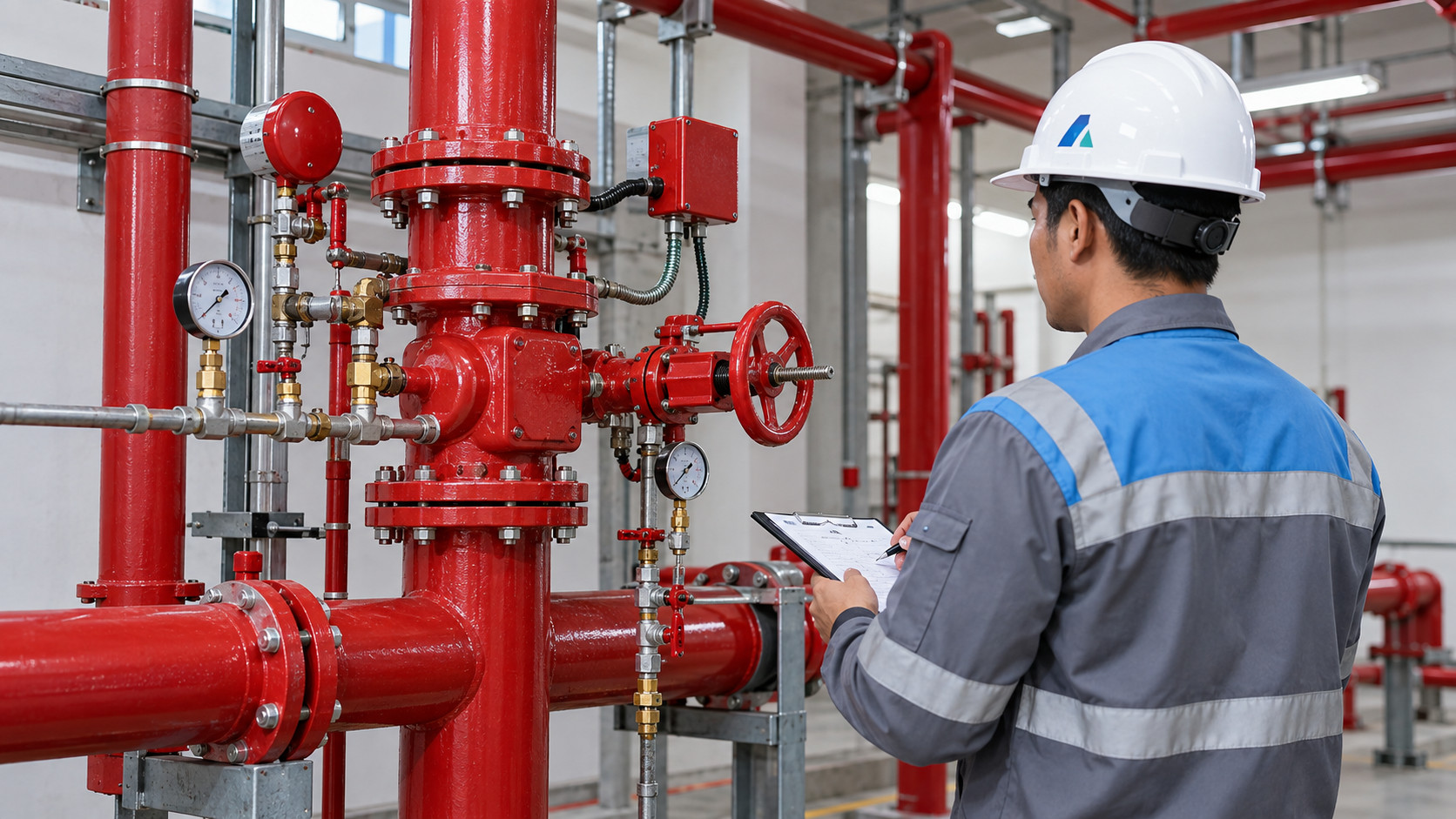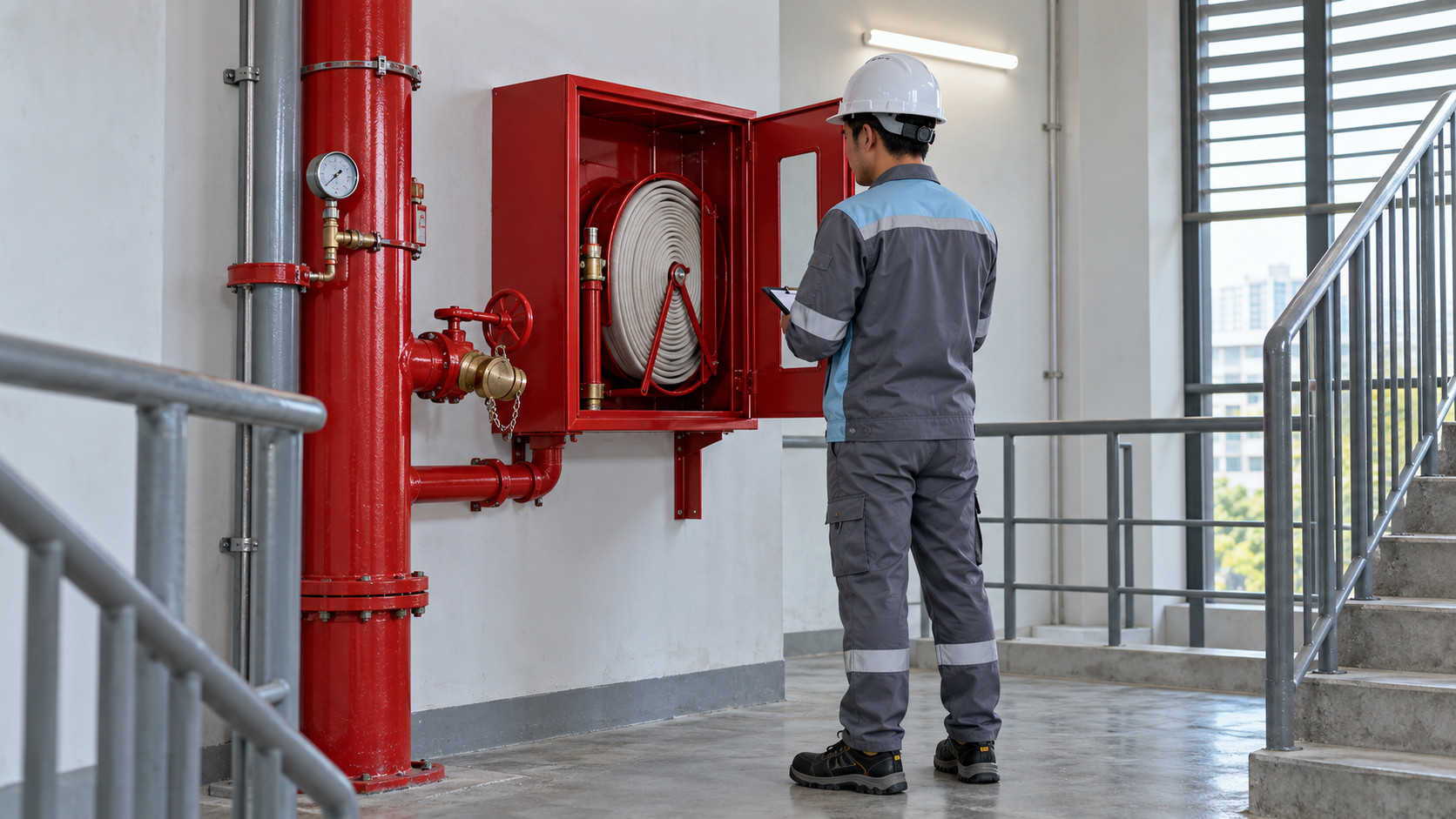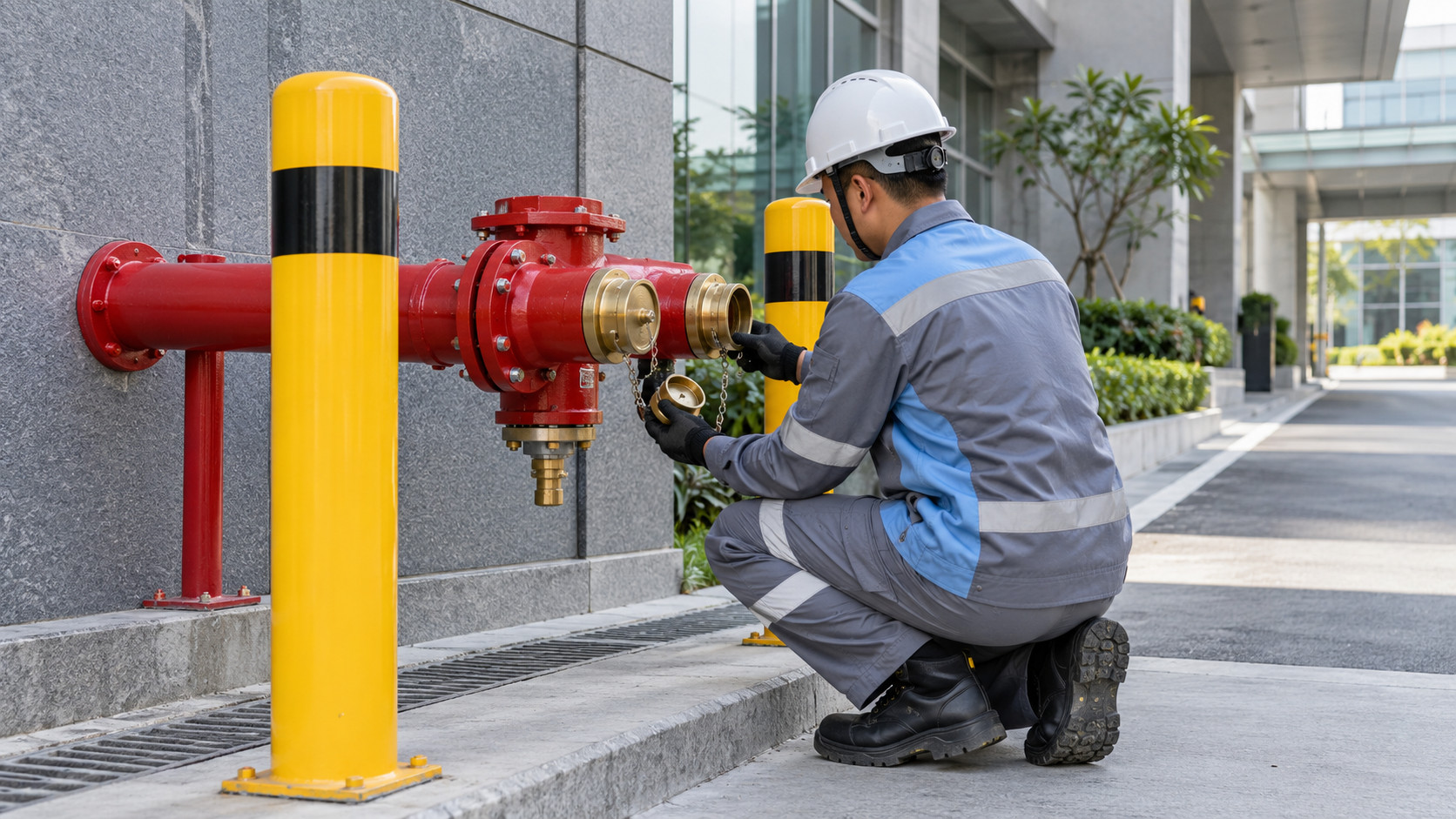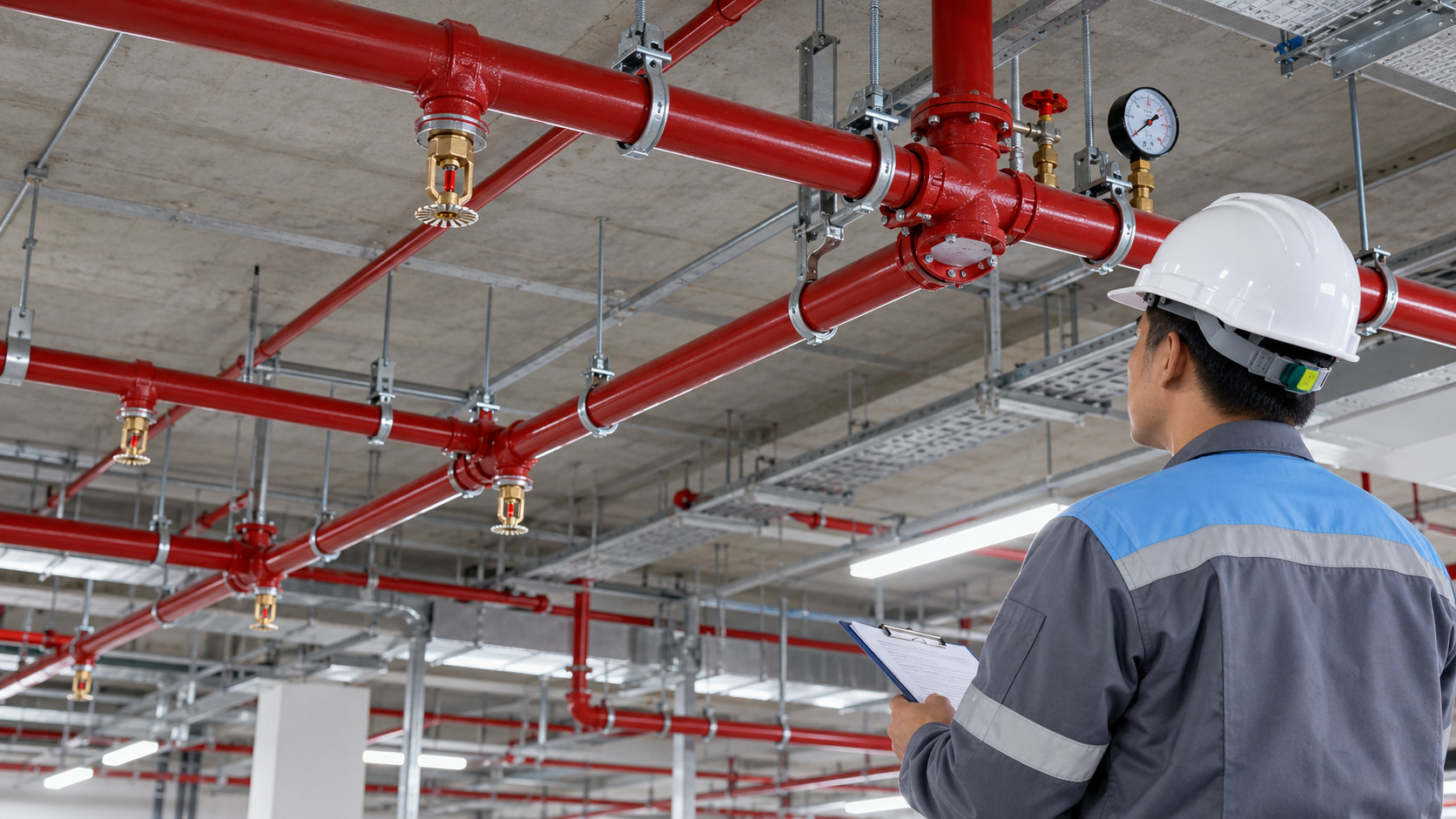

Fire Pump Performance Test demonstrates whether the fire pump, controller, water supply, and discharge arrangement can deliver the performance required by the design basis. First, the test is not complete when the pump starts. The team must understand the no-flow, rated-flow, and higher-capacity points required by the project, then record pressure, flow, alarms, and equipment condition consistently.
Test results support acceptance, handover, troubleshooting, and maintenance. Incomplete data can make a system appear operational without proving that it can support sprinklers, hydrants, hose reels, or other water-based fire protection systems when demand increases.
Quick answer about Fire Pump Performance Test
Fire Pump Performance Test should connect the approved pump curve and nameplate information with actual field conditions. The scope may include visual inspection, controller checks, automatic start, no-flow pressure, flow at defined points, suction condition, discharge pressure, alarms, and documentation. Acceptance criteria follow the approved design, manufacturer data, contract, AHJ, and adopted standard edition.
| Test section | What is verified | Main document |
|---|---|---|
| Preparation | Valve, tank, suction, power, controller, and access | Approved drawing and method statement |
| No-flow | Pressure with discharge closed under the procedure | Manufacturer curve and test form |
| Rated-flow | Flow and pressure at the rated point | Approved hydraulic calculation |
| High-flow point | Capacity and system stability at higher demand | Project acceptance criteria |
| Handover | Alarm, controller, retest, and as-built | Commissioning dossier |
Preparation before a Fire Pump Performance Test
A test plan should be prepared before the team arrives at the pump room. Confirm the pump, driver, controller, flow meter, pressure gauges, test header, hydrant, and discharge path. Check that the tank has sufficient level, the suction valve is open, the test valve can be operated, and discharge water can be routed safely.
Coordinate the schedule with the owner, building operator, fire alarm team, electrical team, sprinkler or hydrant contractor, and AHJ when required. During testing, some protection systems may be impaired or temporarily bypassed. Prepare notifications, fire watch, permits, and a restoration plan so the test does not create an operational hazard.
Visual and mechanical inspection
- Inspect the pump, motor or diesel engine, coupling, base, and alignment.
- Confirm suction and discharge piping against the approved drawing.
- Confirm valves are correctly positioned and supervised when required.
- Inspect gauges, sensing lines, test header, drain, and hose connections.
- Confirm controller power, battery, or starting arrangements.
- Confirm pump-room ventilation, lighting, drainage, and maintenance access.
No-flow, rated-flow, and higher-capacity points
At no-flow, the pump operates without opening the main discharge route. Record suction pressure, discharge pressure, running condition, speed, voltage or engine status, and controller alarms. A no-flow test alone cannot prove pump performance because it does not show the pump while moving water.
At rated-flow, the team opens the test route and stabilizes the flow at the defined point. Record flow, suction pressure, discharge pressure, voltage, current, speed, and abnormal conditions. For diesel pumps, record engine parameters required by the method statement, such as oil pressure, coolant temperature, battery status, and fuel condition.
A higher-capacity or 150% point should only be performed when required by the approved test plan, water-supply capacity, and project safety procedure. Check the test header, hose, drain, hydrant, and discharge area before increasing flow. Do not chase a test number by ignoring equipment or environmental limits.
NFPA 20, 2025 edition covers stationary pumps for fire protection and includes acceptance testing, performance, and maintenance provisions. Use the edition specified by the AHJ, contract, regulation, or project specification. In addition, NFPA 25, 2026 edition is an important reference for inspection, testing, and maintenance of water-based fire protection after handover.
Instrumentation and data quality
Test data is useful only when instruments have a suitable range, are installed correctly, and have traceable calibration status. A pressure gauge with an excessive range can make readings difficult, while a flow meter that does not suit the pipe arrangement can produce misleading results.
- Record the serial number or identity of each instrument.
- Confirm calibration certificates are valid for the project requirements.
- Use consistent pressure and flow units.
- Take readings after stabilization, not during rapid valve changes.
- Photograph valve positions, gauges, controller, and discharge setup.
- Compare field data with the approved curve, not an operator estimate.
Fire pump integration with alarm and monitoring
A fire pump does not operate in isolation. Commissioning should check automatic start, pump-running signal, controller trouble, power failure, phase reversal when relevant, low-fuel or battery alarms for diesel systems, and signals to the fire alarm or BMS as designed. Ensure signal names match the cause-and-effect matrix and alarm schedule.
After testing, return all valves, controllers, alarms, and interfaces to normal condition. Conduct a walkdown with the owner to confirm that no bypass, temporary hose, open drain, or impairment tag remains.
Report and handover checklist
- Approved method statement and risk assessment.
- Equipment data sheet, pump curve, and nameplate record.
- Calibration certificates for pressure and flow instruments.
- Pre-test checklist covering valves, tank, suction, and controller.
- Approved no-flow, rated-flow, and higher-capacity data points.
- Automatic start, alarm, controller, and monitoring interface records.
- Photographs of the test setup, gauge, valve, discharge, and pump room.
- Punch list, corrective action, retest, and sign-off.
- As-built drawing, O&M manual, spare-parts list, and ITM schedule.
Common fire pump testing mistakes
- Testing before water supply and the discharge path are ready.
- Using gauges or flow instruments without calibration verification.
- Recording pressure without flow, suction, time, and pump condition.
- Comparing results with old numbers without checking the design basis.
- Failing to check automatic start and alarm signals.
- Ignoring changes to routing, valves, tank, or hydrants after approval.
- Failing to perform a restoration check after testing.
- Declaring success only because the pump can start.
FAQ: Fire Pump Performance Test
Is no-flow testing enough?
No. No-flow is only one condition. Performance while moving water must be verified at the flow points defined by the approved test plan.
Who determines rated-flow and high-flow points?
The points come from the approved design, pump curve, hydraulic calculation, manufacturer data, contract, and AHJ requirements. Do not select values only from another project.
Should the test be connected to the fire alarm?
Required interfaces should be tested, including pump running, controller trouble, power condition, and other alarms sent to the fire alarm or BMS.
When is a retest required?
A retest is required when results fail the criteria, equipment or valve conditions change, instruments are unreliable, readings are unstable, or a punch-list item affects test validity.
Conclusion
Fire Pump Performance Test should prove the relationship between the pump, water supply, controller, test arrangement, alarms, and fire-protection demand. No-flow, rated-flow, and higher-flow tests require suitable instruments, safe procedures, complete data, and clear acceptance criteria.
For fire-pump testing and commissioning, review Adiwarna’s fire protection testing and commissioning service, learn about NFPA 14 hydrant systems, or contact Adiwarna to discuss system verification.