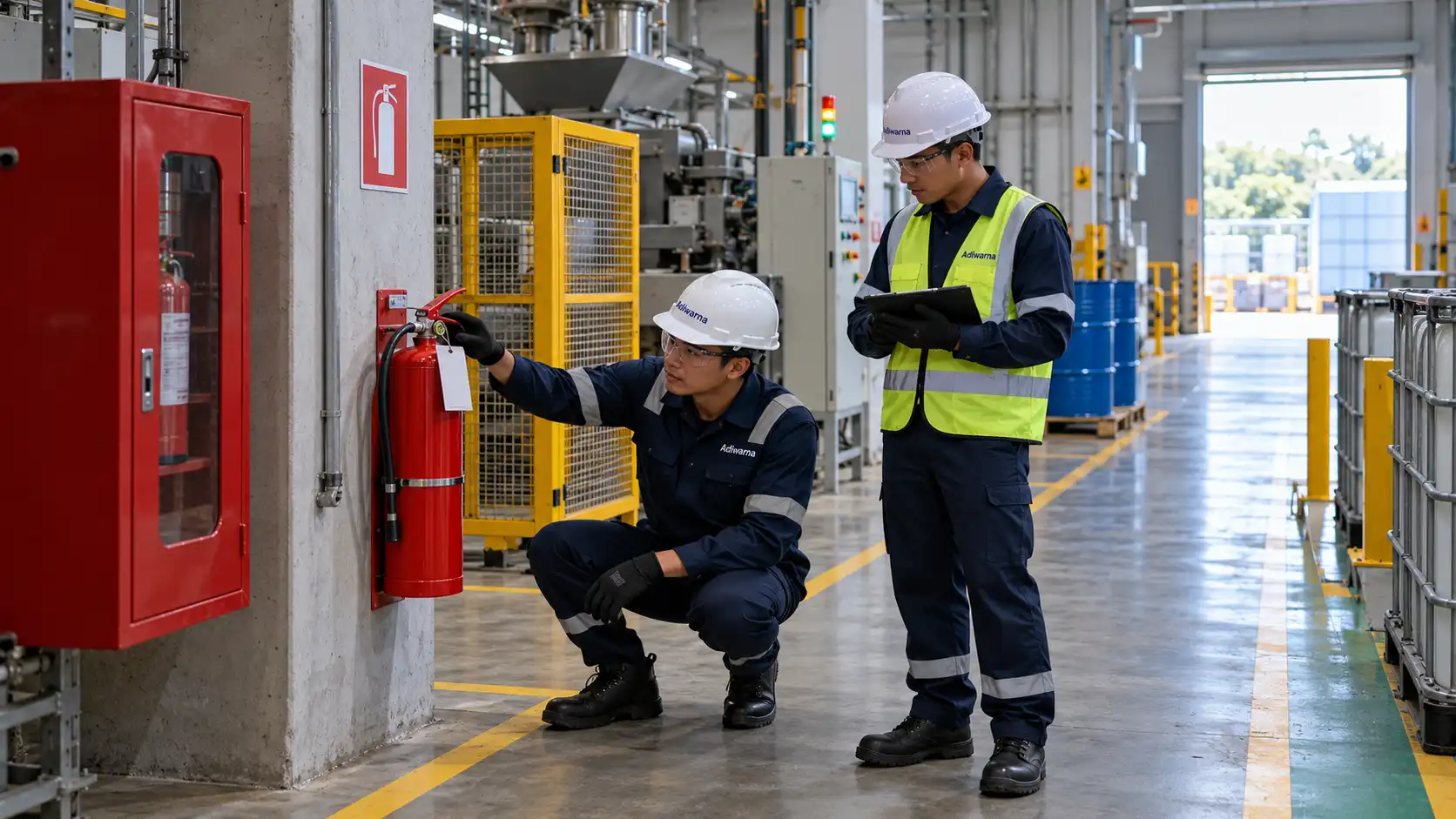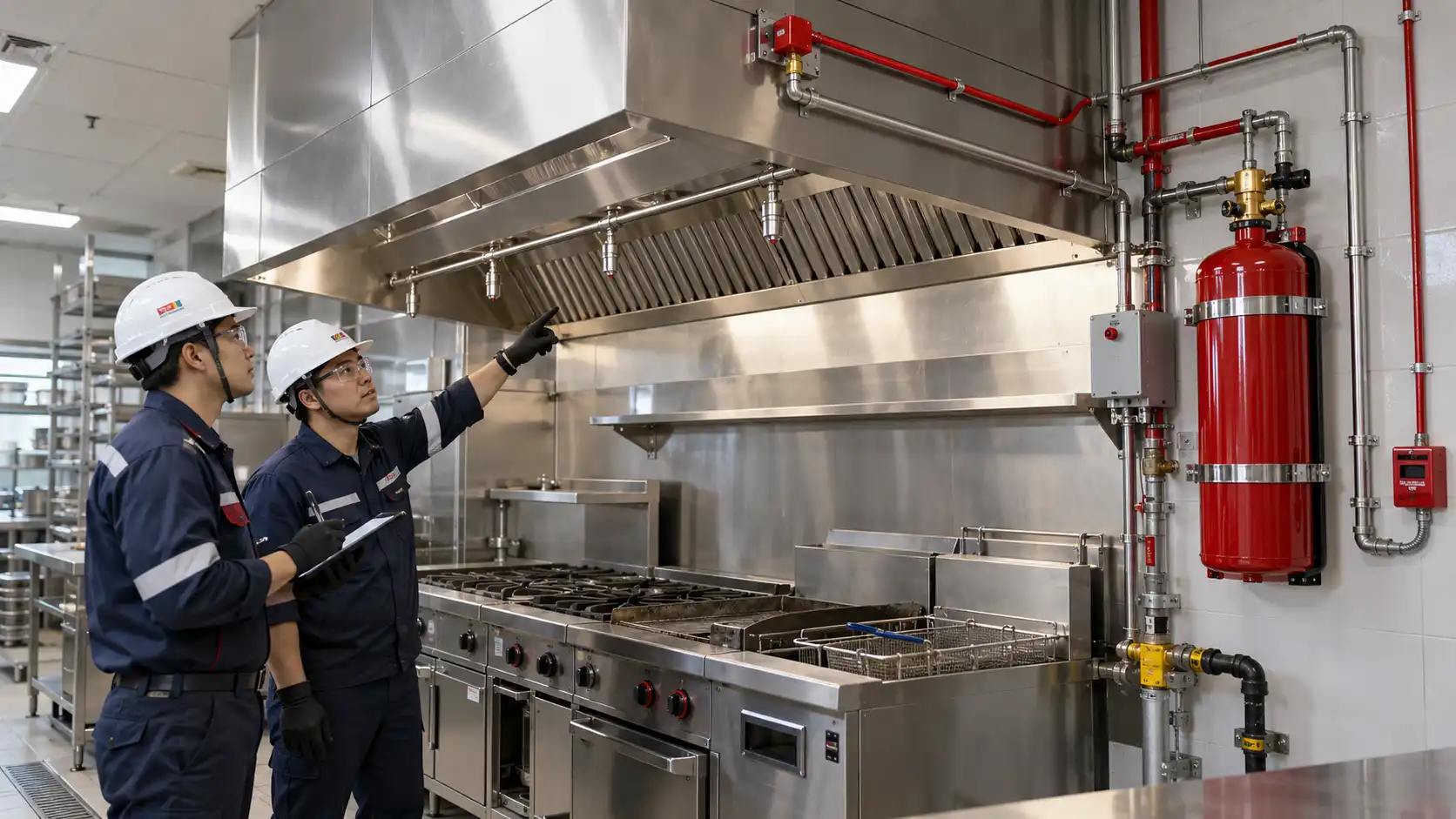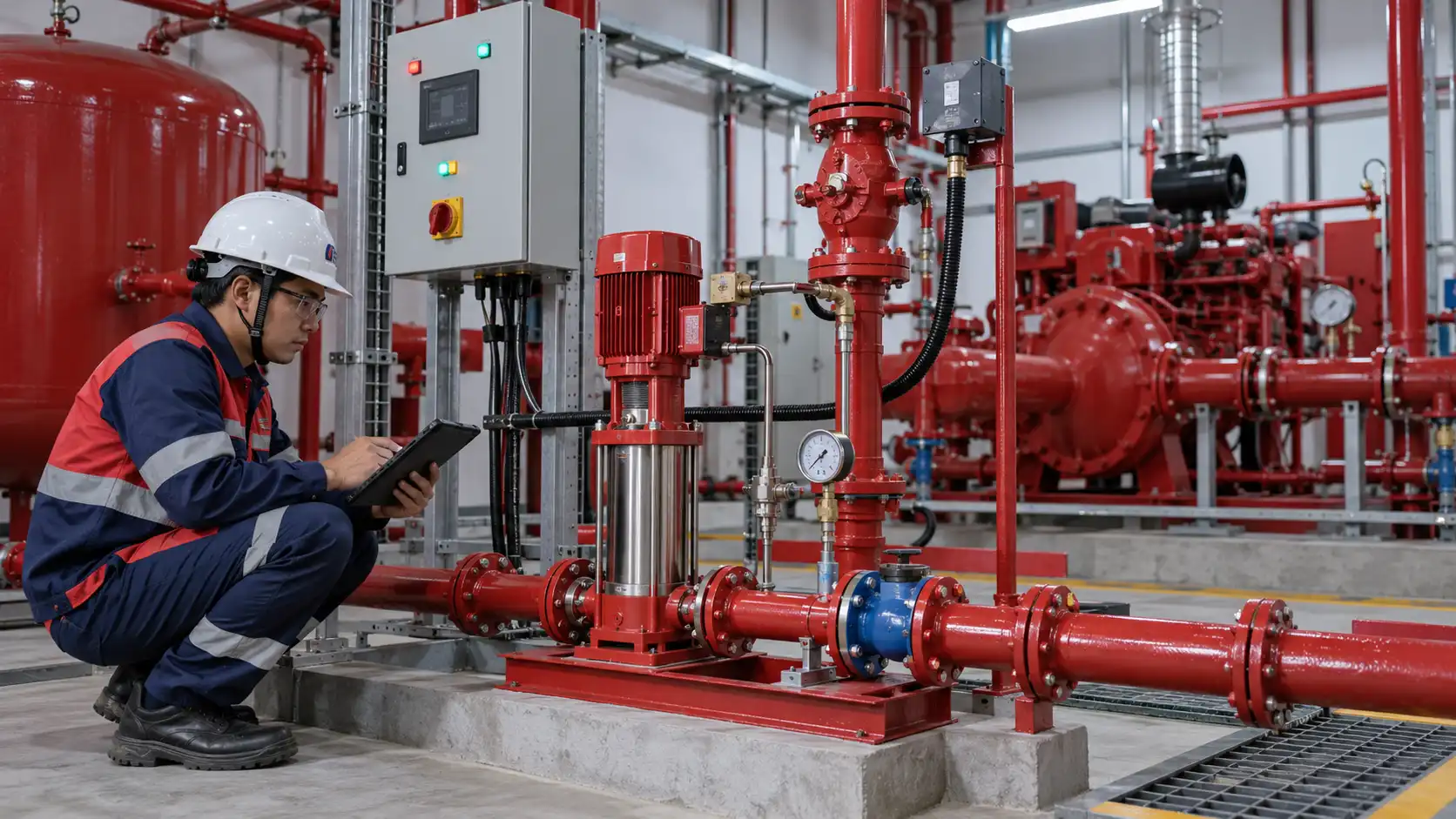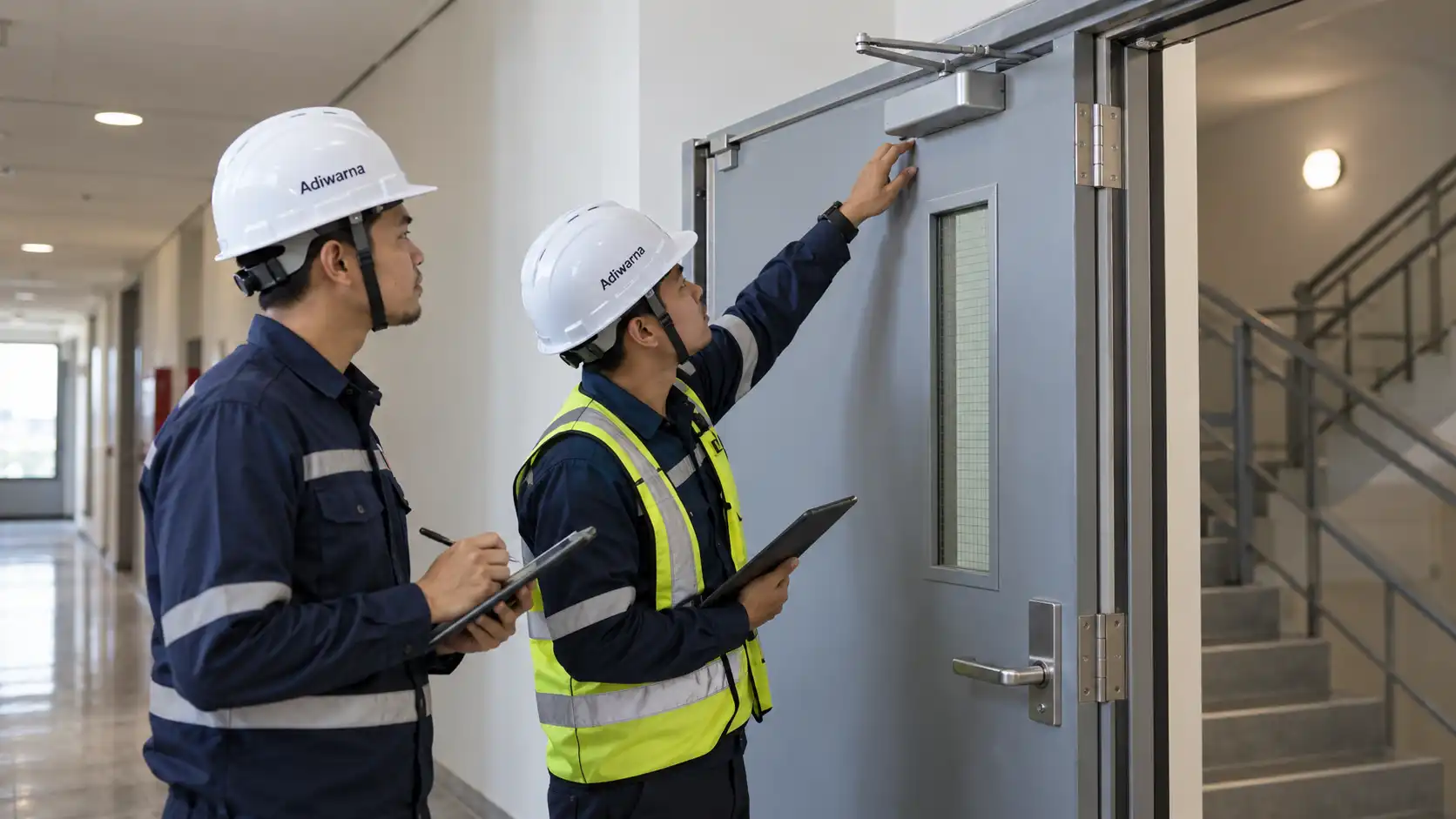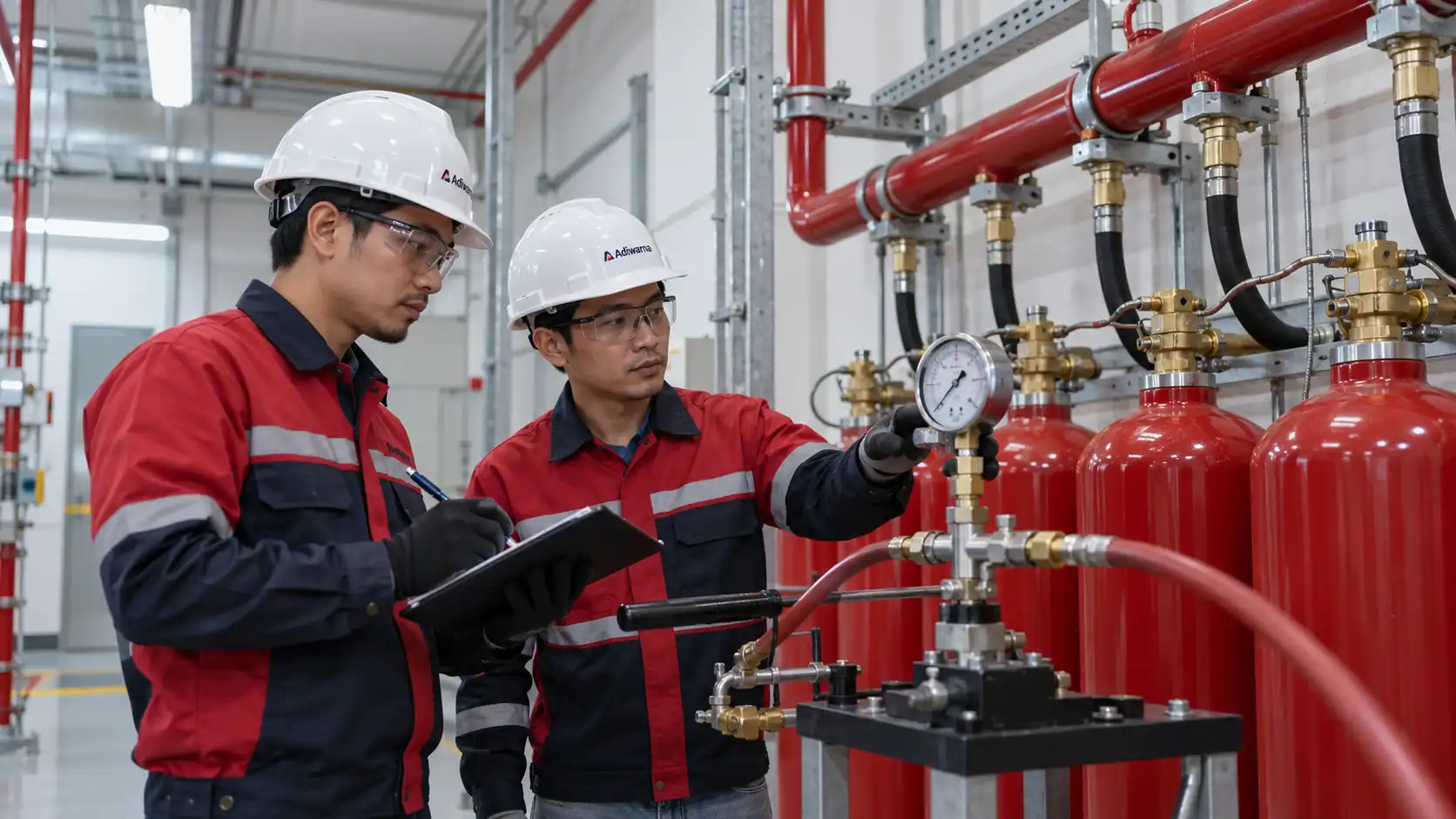


Fire risk assessment is a systematic process used to identify fire hazards, evaluate risk levels, assess fire protection system readiness, and prepare control recommendations so facilities can operate more safely. Therefore, this process is important for commercial buildings, factories, warehouses, data centers, hotels, hospitals, apartments, malls, oil & gas facilities, petrochemical plants, power plants, and high-risk industrial areas.
In addition, fire risk is not always visible from the physical condition of a building alone. This is because hazards may come from electrical installations, combustible materials, production processes, storage practices, housekeeping, evacuation routes, alarm systems, fire fighting systems, and daily operational behavior.
With proper assessment, companies can identify which areas have the highest fire potential. Furthermore, management can determine improvement priorities based on risk level, not only assumptions or routine habits.
For integrated fire protection needs, PT Adiwarna Anugerah Abadi provides Industrial Fire Protection Contractor services that can support surveys, design, installation, testing, commissioning, service, and maintenance of fire protection systems.
Why Is Fire Risk Assessment Important?
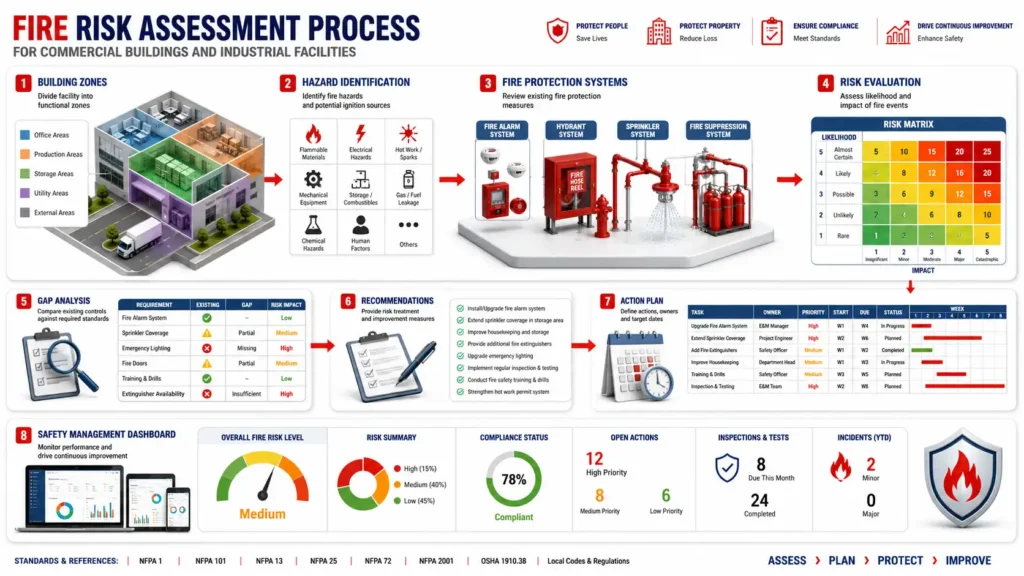
Fire risk assessment is important because every facility has different fire potential. Therefore, the same fire protection approach should not be applied equally to office buildings, logistics warehouses, server rooms, chemical plants, and oil & gas facilities.
In addition, fire can cause major losses within a short time. The impact may include injuries, asset damage, production interruption, data loss, environmental pollution, insurance claims, and reputational damage.
Through assessment, companies can understand the actual condition of their facilities. As a result, decisions related to system improvement, additional devices, procedure enhancement, and maintenance programs can be made more effectively.
In high-risk facilities, risk evaluation also helps ensure that detection, alarm, hydrant, sprinkler, foam, suppression, and emergency response systems support one another. Therefore, assessment becomes an important foundation before upgrading or investing in fire protection.
Objectives of Fire Risk Assessment
The main objective of fire risk evaluation is to reduce the likelihood of fire and limit its impact if fire still occurs. In addition, the process helps companies identify gaps between existing conditions and the required safety level.
Other objectives usually include:
- Identifying fire hazard sources.
- Assessing potential fire and smoke spread.
- Evaluating detection and alarm systems.
- Assessing fire fighting system readiness.
- Evaluating evacuation routes.
- Reviewing housekeeping and material storage.
- Assessing emergency response readiness.
- Identifying maintenance requirements.
- Determining improvement priorities.
- Supporting HSE audits and insurance reviews.
- Supporting compliance with standards and regulations.
In addition, the assessment result can become the basis for preparing a fire safety action plan. With this document, companies can implement improvements gradually and measurably.
Scope of Fire Risk Assessment
The assessment scope must be adjusted to the facility type and risk level. Therefore, the process for a commercial building will differ from the process for a refinery, tank farm, chemical plant, or data center.
In general, the inspection scope may include:
- Building condition.
- Function of each area.
- Ignition sources.
- Combustible load.
- Electrical installation.
- Fire alarm system.
- Hydrant system.
- Sprinkler system.
- Fire suppression system.
- Foam system.
- Fire pump and fire water tank.
- Evacuation routes.
- Emergency lighting.
- Safety signage.
- Fire extinguishers.
- Housekeeping.
- Chemical storage.
- Hot work procedures.
- Maintenance program.
- Training and emergency drills.
- Fire protection system documentation.
In addition, the assessment may include interviews with facility, HSE, security, operations, and maintenance teams. With this approach, the evaluator can understand both technical risks and operational habits in the field.
Fire Risk Assessment for Commercial Buildings
Fire risk assessment in commercial buildings aims to ensure that occupants, visitors, tenants, and assets are properly protected. Therefore, inspection usually focuses on early detection, alarms, evacuation, initial fire fighting, and fire department access.
In office buildings, malls, hotels, hospitals, apartments, and public facilities, risks may come from electrical installations, panel rooms, kitchens, tenant areas, basement parking, generator rooms, server rooms, and storage areas. In addition, occupant density is also an important factor in evacuation planning.
Systems commonly evaluated include fire alarms, hydrants, sprinklers, fire extinguishers, emergency lighting, signage, smoke control, and fire command centers. If these systems do not work properly, emergency response can be delayed.
For early warning needs, Adiwarna Fire Alarm System services can help facilities design, improve, and maintain fire detection and alarm systems.
Fire Risk Assessment for Industrial Facilities
Fire risk assessment in industrial facilities requires a more detailed approach because fire risks are usually more complex. This is because production areas may contain machinery, fuels, chemicals, combustible gases, hot processes, conveyors, boilers, furnaces, and pressurized equipment.
In addition, industrial fires can develop faster because large quantities of combustible materials may be present. Therefore, the assessment must consider fire scenarios, escalation potential, firefighting access, and existing fire protection capability.
In high-risk areas such as oil & gas facilities, petrochemical plants, tank farms, refineries, and chemical plants, evaluation may include gas detectors, flame detectors, foam systems, deluge systems, hydrant pillars, fire water monitors, and emergency shutdown interfaces. Thus, detection and suppression systems can be assessed as one integrated system.
For oil and gas facilities, the Oil and Gas Fire Protection System page can be used as a reference to understand the importance of integrating detection, alarm, suppression, and emergency response in high-risk areas.
Fire Hazard Identification
The first stage of assessment is identifying hazard sources. Therefore, evaluators need to understand operational activities, material types, equipment conditions, and potential heat sources in each area.
Common hazards include:
- Poor electrical installation.
- Overheated or overloaded electrical panels.
- Damaged cables.
- Combustible materials near heat sources.
- Improper chemical storage.
- Hot work without proper control.
- Machines with high operating temperatures.
- Fuel leaks.
- Gas leaks.
- Combustible dust.
- Poor housekeeping.
- Blocked evacuation routes.
- Missing or unsuitable fire extinguishers.
- Non-functional fire alarms.
- Hydrants not ready for use.
- Sprinklers obstructed by stored goods.
- Fire pumps not tested.
In addition to finding hazards, evaluators must also determine whether those hazards can develop into a fire. As a result, recommendations can be more accurate and practical.
Evaluation of Fire Alarm System
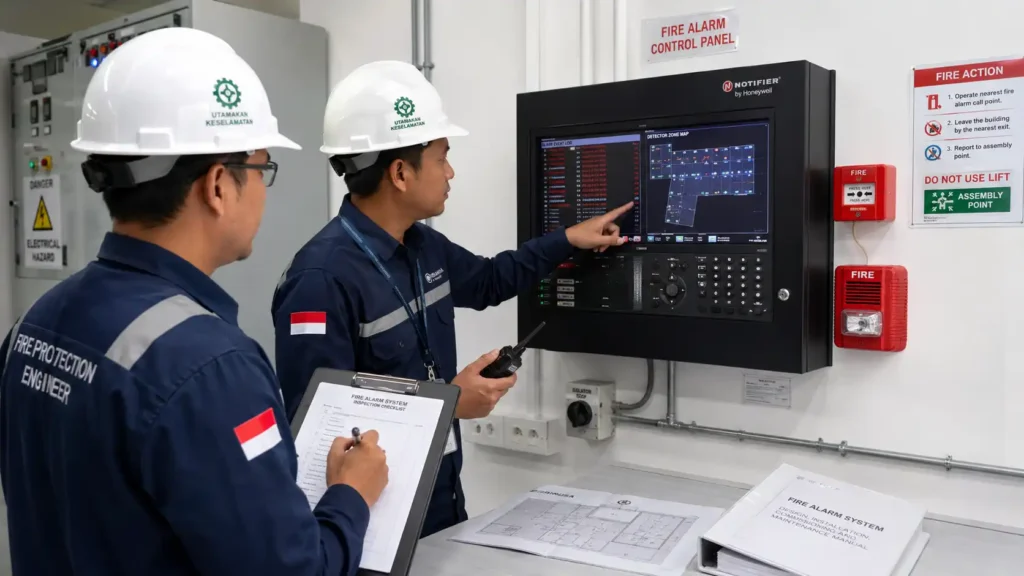
A fire alarm system is important because it provides early warning. Therefore, an assessment must check whether detectors, manual call points, alarm bells, strobes, modules, panels, batteries, and annunciators are working properly.
In addition, detector locations must match room functions. For example, smoke detectors can be used in certain areas, while heat detectors may be more suitable for areas with steam, dust, or special environmental conditions.
Addressable systems should be reviewed through event logs, loop conditions, trouble signals, and location mapping. As a result, operators can identify alarm points accurately.
As a general reference, NFPA 72 is often used for fire alarm and signaling systems. Therefore, detection, notification, monitoring, and integration principles must be considered during evaluation.
Evaluation of Hydrant and Fire Fighting System
A hydrant system must provide firefighting water access at strategic points. Therefore, the assessment should review the fire water tank, fire pump, jockey pump, hydrant pillar, hydrant box, hose, nozzle, valve, pressure gauge, and piping network.
In addition, pressure and flow must be tested periodically. If flow or pressure does not meet requirements, manual firefighting can be disrupted.
In outdoor areas, hydrant pillars must be easily accessible to emergency response teams. Meanwhile, hydrant boxes must contain complete fire hoses, nozzles, couplings, and other equipment.
For water-based fire fighting needs, Adiwarna provides Industrial Fire Fighting System services that can support design, installation, testing, commissioning, service, and maintenance of hydrants, sprinklers, fire pumps, and fire water networks.
Evaluation of Sprinkler System
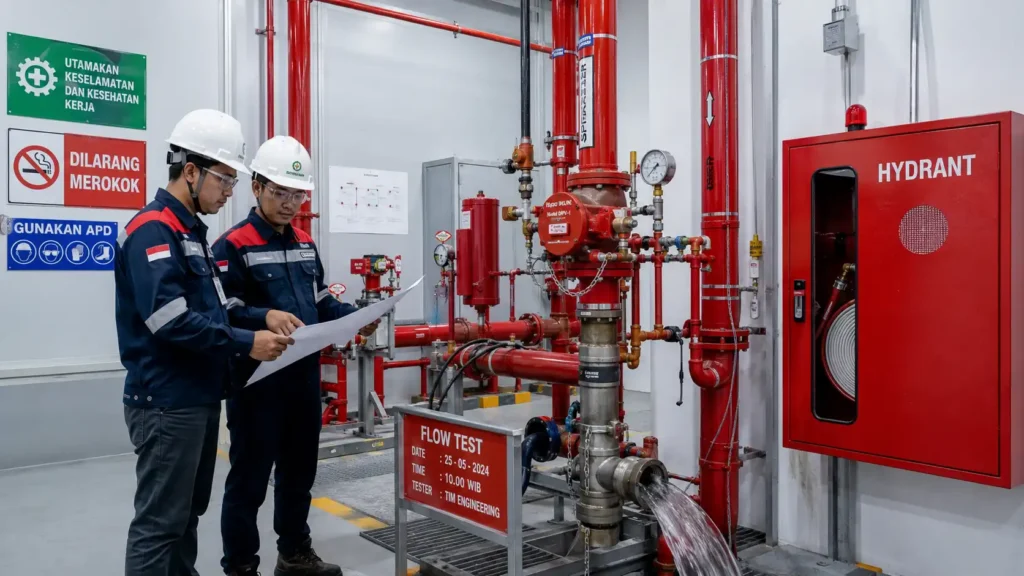
A sprinkler system provides automatic protection when fire heat activates sprinkler heads. Therefore, the assessment must ensure that sprinkler heads, piping, control valves, alarm valves, flow switches, pressure gauges, and coverage areas are in good condition.
In addition, the clearance between sprinklers and stored materials must be checked. If goods are stacked too high, the water spray pattern may be obstructed.
In warehouses, storage layout changes can affect sprinkler effectiveness. Therefore, the assessment should compare actual conditions with the original design and hazard classification.
As a technical reference, NFPA 13 is often used for sprinkler system installation. Therefore, evaluation must consider hazard classification, coverage, obstruction, and hydraulic calculation.
Evaluation of Fire Suppression System
A fire suppression system is used to protect critical rooms such as data centers, server rooms, electrical rooms, control rooms, laboratories, and archive rooms. Therefore, the assessment must check detectors, releasing panels, cylinders, pressure gauges, nozzles, abort switches, manual release stations, signage, and room integrity.
In addition, clean agent or inert gas systems require rooms that are sufficiently sealed. If there are many gaps in doors, walls, raised floors, ceiling voids, or cable penetrations, the agent may escape too quickly.
Thus, room integrity testing becomes an important part of gaseous suppression systems. If retention time does not meet design requirements, sealing improvements must be carried out.
For critical asset areas, Adiwarna provides Fire Suppression System solutions that can be designed for data centers, server rooms, electrical rooms, control rooms, and technology facilities.
Evaluation of Foam System for High-Risk Areas
A foam system is used for liquid fuel and flammable liquid fire risks. Therefore, the assessment should check foam concentrate, foam tank, proportioner, foam monitor, foam chamber, deluge valve, fire pump, and foam solution lines.
In addition, foam type must match the protected fuel. For example, some polar solvents require AR-AFFF, while hydrocarbon fuels may use specific foam types according to design recommendations.
Foam concentrate quality also needs to be checked. This is because foam stored for too long or under unsuitable environmental conditions may experience performance degradation.
For high-risk areas, Adiwarna Foam System services can support design, installation, testing, commissioning, and maintenance of foam systems for industrial facilities.
Evaluation of Evacuation Routes and Life Safety
Assessment does not only focus on fire suppression systems. Instead, life safety evaluation is also very important because human safety is the main priority.
Items that need to be checked include evacuation routes, emergency exits, emergency stairs, emergency lighting, exit signs, assembly points, fire doors, smoke control, and evacuation procedures. In addition, exit paths must be free from obstruction.
In buildings with high occupancy, evacuation time becomes an important aspect. Therefore, simulations or drills should be conducted periodically so occupants understand what to do when alarms sound.
If evacuation routes are unclear, panic may increase during emergencies. Therefore, signage, lighting, and training must become part of the assessment recommendations.
Evaluation of Housekeeping and Material Storage
Poor housekeeping can increase fire risk. Therefore, the assessment must check whether combustible materials are stored safely and are not accumulated in hazardous areas.
In addition, goods must not block hydrant boxes, fire extinguishers, sprinkler heads, electrical panels, evacuation routes, or emergency doors. If access is blocked, fire response can be delayed.
In warehouses and production areas, material storage must match the characteristics of the goods. Combustible materials, chemicals, and gas cylinders require specific storage rules.
With good housekeeping, ignition risk and fire spread can be reduced. In addition, the work area becomes safer and easier to monitor.
Evaluation of Hot Work Procedures
Hot work such as welding, cutting, grinding, and brazing has a high fire risk. Therefore, assessment should evaluate hot work permits, supervision, area isolation, and fire extinguisher readiness.
Before hot work begins, the area must be cleared of combustible materials. In addition, a fire watch should be assigned if work is carried out in a risky area.
Fire extinguishers, fire hoses, or other suppression tools must be available near the work location. Then, the area should be rechecked after work is completed to ensure that no embers or residual heat remain.
With disciplined procedures, fires caused by hot work can be prevented. Therefore, hot work permits are an important part of industrial risk control.
Standards and References in Fire Risk Assessment
Assessment must refer to technical standards, local regulations, insurance requirements, and company policies. Therefore, the evaluation result should not be based only on general opinion.
Common references include:
- NFPA 72 for fire alarm and signaling.
- NFPA 13 for sprinkler systems.
- NFPA 14 for standpipe and hose systems.
- NFPA 20 for fire pumps.
- NFPA 24 for private fire service mains.
- NFPA 2001 for clean agent systems.
- NFPA 11 for foam systems.
- Applicable SNI and local regulations.
- Manufacturer guidelines.
- Insurance requirements.
- Company HSE procedures.
In addition, NFPA 551 can be used as a reference for the evaluation of fire risk assessments. With proper references, recommendations can be prepared more objectively and responsibly.
Fire Risk Assessment Work Stages
The assessment process should be carried out in stages so the result is complete. Therefore, the process starts from data collection and continues to recommendation development.
Common stages include:
- Kick-off meeting.
- Building data collection.
- Review of drawings and existing documents.
- Site inspection.
- Interviews with related teams.
- Hazard identification.
- Fire protection system evaluation.
- Risk level assessment.
- Gap analysis.
- Recommendation development.
- Improvement priority setting.
- Final report preparation.
- Findings presentation to management.
In addition, a good assessment should separate short-term, medium-term, and long-term recommendations. With this approach, companies can implement improvements according to urgency and budget.
Risk Assessment Methods
Assessment methods can use qualitative, semi-quantitative, or quantitative approaches. Therefore, method selection must match facility complexity.
In a simple approach, risk can be assessed based on likelihood and severity. Then, the result can be entered into a risk matrix to determine action priorities.
For more complex facilities, the evaluation may consider fire scenarios, number of occupants, asset value, ignition probability, effectiveness of fire protection systems, and potential operational impact.
With a clear method, recommendations become easier to understand. In addition, management can see why certain improvements need to be prioritized.
Fire Risk Assessment Report Output

The assessment report must be prepared clearly so it can be used as a basis for decision-making. Therefore, the report should not only contain a list of findings.
A good report usually includes:
- Executive summary.
- Facility description.
- Assessment scope.
- Methodology.
- List of reviewed documents.
- Field findings.
- Photo documentation.
- Fire protection system evaluation.
- Risk rating.
- Gap analysis.
- Technical recommendations.
- Action priorities.
- Urgency estimation.
- Action plan.
- Conclusion.
In addition, the report should use language that can be understood by both management and technical teams. As a result, recommendations can be followed up more quickly.
Common Mistakes in Assessment
Many assessments become less effective because they are carried out only as a formality. In reality, this process should help companies find actual risks in the field.
Common mistakes to avoid include:
- Reviewing documents only without field inspection.
- Not involving operational teams.
- Not evaluating existing systems.
- Not conducting functional tests.
- Not checking maintenance records.
- Not assessing evacuation routes.
- Ignoring layout changes.
- Not preparing recommendation priorities.
- Not creating an action plan.
- Not conducting follow-up.
- Using overly generic checklists.
- Ignoring industry-specific risks.
By avoiding these mistakes, assessment can provide real benefits. In addition, companies can reduce fire risks in a more measurable way.
Benefits of Fire Risk Assessment for Companies
Assessment provides many benefits for companies. First, this process helps identify hazards before incidents occur.
In addition, evaluation helps companies understand weaknesses in existing fire protection systems. As a result, improvements can be made based on risk priorities.
Furthermore, the assessment report can support HSE audits, insurance reviews, internal compliance, and budget planning. Therefore, this document has both technical and managerial value.
Finally, the assessment process helps improve safety culture. This is because operations, maintenance, security, and management teams can view risks more objectively.
Why Choose PT Adiwarna Anugerah Abadi?
PT Adiwarna Anugerah Abadi can help companies evaluate fire protection needs and prepare solutions that match facility risks. In addition, Adiwarna understands the needs of various sectors such as commercial buildings, data centers, factories, warehouses, oil & gas facilities, petrochemical plants, power plants, hotels, hospitals, and public facilities.
With experience in fire alarm, fire fighting, suppression, hydrant, sprinkler, foam, and integrated fire protection systems, Adiwarna can help owners understand existing conditions and determine the right improvement steps.
For projects requiring a complete scope, EPC Fire Protection Adiwarna can support engineering, procurement, construction, testing, commissioning, service, and maintenance.
If your company needs surveys, system evaluation, design, installation, testing, commissioning, service, or maintenance for fire protection systems, contact PT Adiwarna Anugerah Abadi through the Adiwarna Contact Page.
Conclusion
Fire risk assessment is an important step to understand fire hazards and determine suitable control strategies. Therefore, this process is highly needed by commercial buildings, industrial facilities, data centers, warehouses, oil & gas facilities, petrochemical plants, hospitals, hotels, and other high-risk areas.
However, an effective assessment does not only contain a checklist. Instead, the process must include hazard identification, system evaluation, risk assessment, gap analysis, technical recommendations, and an actionable plan.
With proper evaluation, companies can better protect people, assets, operations, and business reputation. Therefore, PT Adiwarna Anugerah Abadi is ready to become a professional partner in delivering integrated, reliable, and facility-specific fire protection solutions.