
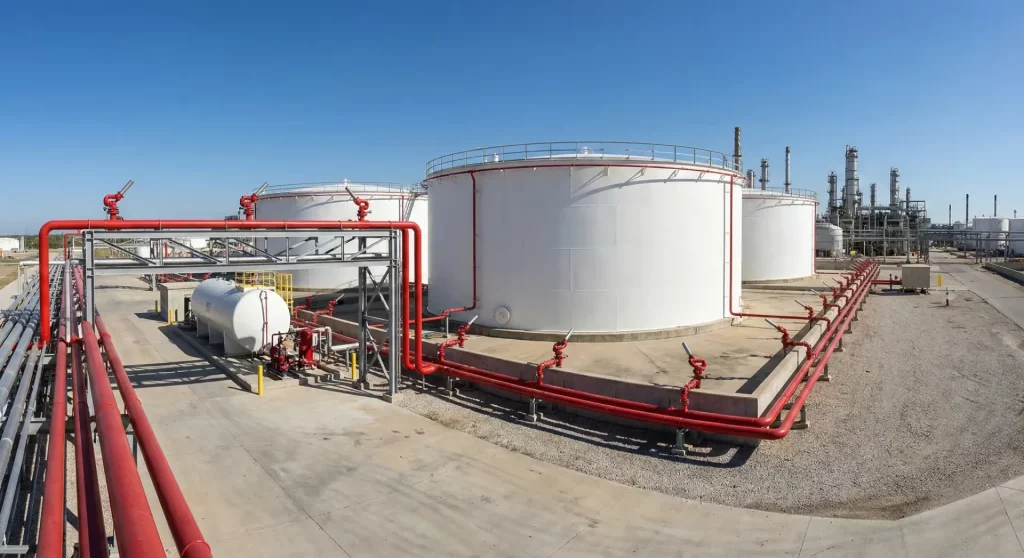
Fires involving flammable liquids require a specialized approach. Water alone is often not enough to control this type of fire. This is where a foam system plays a critical role as a reliable and effective fire suppression solution.
At Adiwarna Anugerah Abadi, we understand that every facility faces different fire risks. In this article, we explain what a foam system is, how it works, the available types, and why it is essential for high-risk environments.
What Is a Foam System in Fire Protection?
A foam system is a fire suppression system that uses foam as its primary extinguishing agent. Foam works by:
- Covering the surface of the burning material
- Separating oxygen from the fire
- Reducing heat
- Preventing re-ignition
This system is highly effective for Class B fires, which involve flammable liquids such as gasoline, diesel, alcohol, and various chemicals.
How Does a Foam System Work?
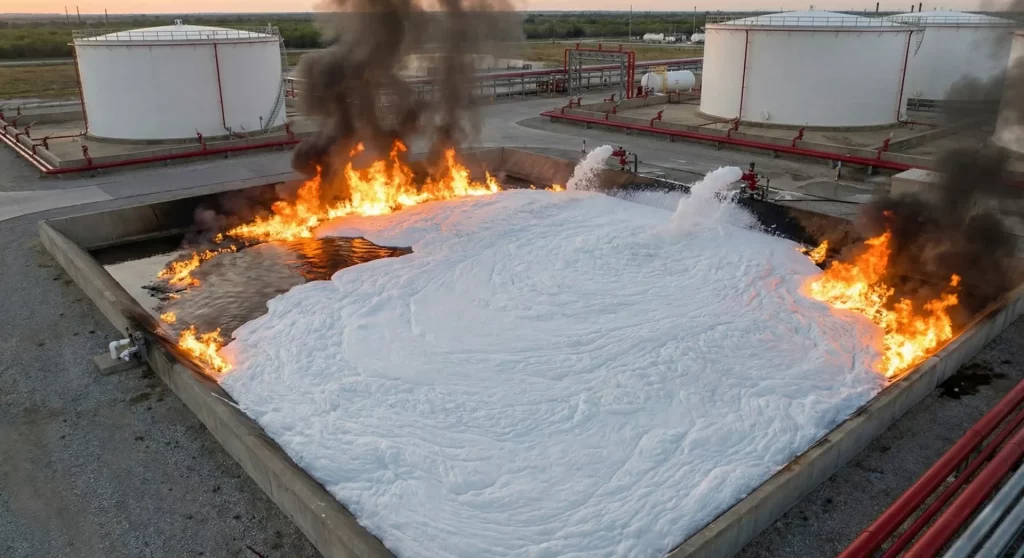
A system foam operates through a fast and structured process.
First, the system detects a fire or receives a manual activation signal. Then, the foam concentrate mixes with water through a foam proportioner to create a foam solution at the correct ratio.
Next, the solution flows through the piping network and discharges into the protected area using:
- Foam sprinklers
- Foam monitors
- Foam chambers
- Foam nozzles
The discharged foam blankets the burning surface and effectively stops the combustion process.
Common Types of Foam Systems
Choosing the right system foam depends on the specific fire risk. Below are the most commonly used types.
AFFF-Based Foam System
Aqueous Film Forming Foam (AFFF) creates a thin film layer over flammable liquid surfaces. This layer suppresses vapor release and speeds up fire extinguishment.
This system is widely used in:
- Airports
- Oil refineries
- Fuel storage facilities
- Petrochemical plants
Low, Medium, and High Expansion Foam Systems
- Low expansion foam is suitable for open areas and liquid fuel fires.
- Medium expansion foam is ideal for semi-enclosed spaces.
- High expansion foam works best in enclosed areas such as warehouses and basements.
Each type offers different expansion ratios and coverage capabilities.
Foam System Applications Across Industries
Foam systems are commonly installed in facilities with high fire risks, including:
- Industrial plants
- Fuel storage tanks
- Aircraft hangars
- Chemical warehouses
- Power generation facilities
Before designing a system, we always conduct a detailed fire risk analysis to ensure the most effective solution.
Advantages of Foam Systems Compared to Other Fire Suppression Methods
Foam systems offer several key advantages:
- Highly effective for flammable liquid fires
- Prevent fire re-ignition
- Rapid coverage of fire areas
- Reduced structural damage from heat
- Easy integration with fire alarm and fire pump systems
These benefits make system foam a preferred solution for high-risk fire protection.
Foam System Installation and Maintenance
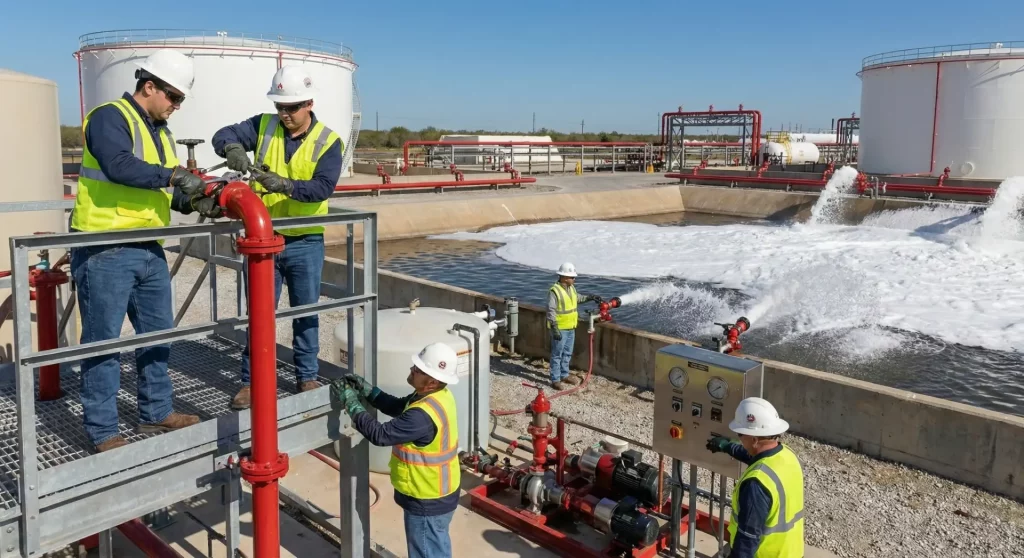
To ensure optimal performance, system foam installation must comply with international standards such as NFPA and applicable local regulations.
At Adiwarna Anugerah Abadi, we provide complete fire protection services:
- Design & Engineering
- Supply
- Installation
- Testing & Commissioning
- Service & Maintenance
Routine maintenance is equally important to ensure:
- Proper foam concentration
- Reliable pump and proportioner operation
- System readiness during emergencies
Conclusion
A foam system is a highly effective fire suppression solution for high-risk areas, especially those involving flammable liquids. With proper design, professional installation, and regular maintenance, this system protects assets, operations, and lives.
If you need a reliable system foam that meets safety standards, we are ready to support your project.
Contact Us
Adiwarna Anugerah Abadi
? Perkantoran Mutiara Taman Palem No.53
Jl. Outer Ring Road Cengkareng, West Jakarta 11730
? +62 21 2902 0216
? sales@adiwarna.co.id
? corpsecretary@adiwarna.co.id