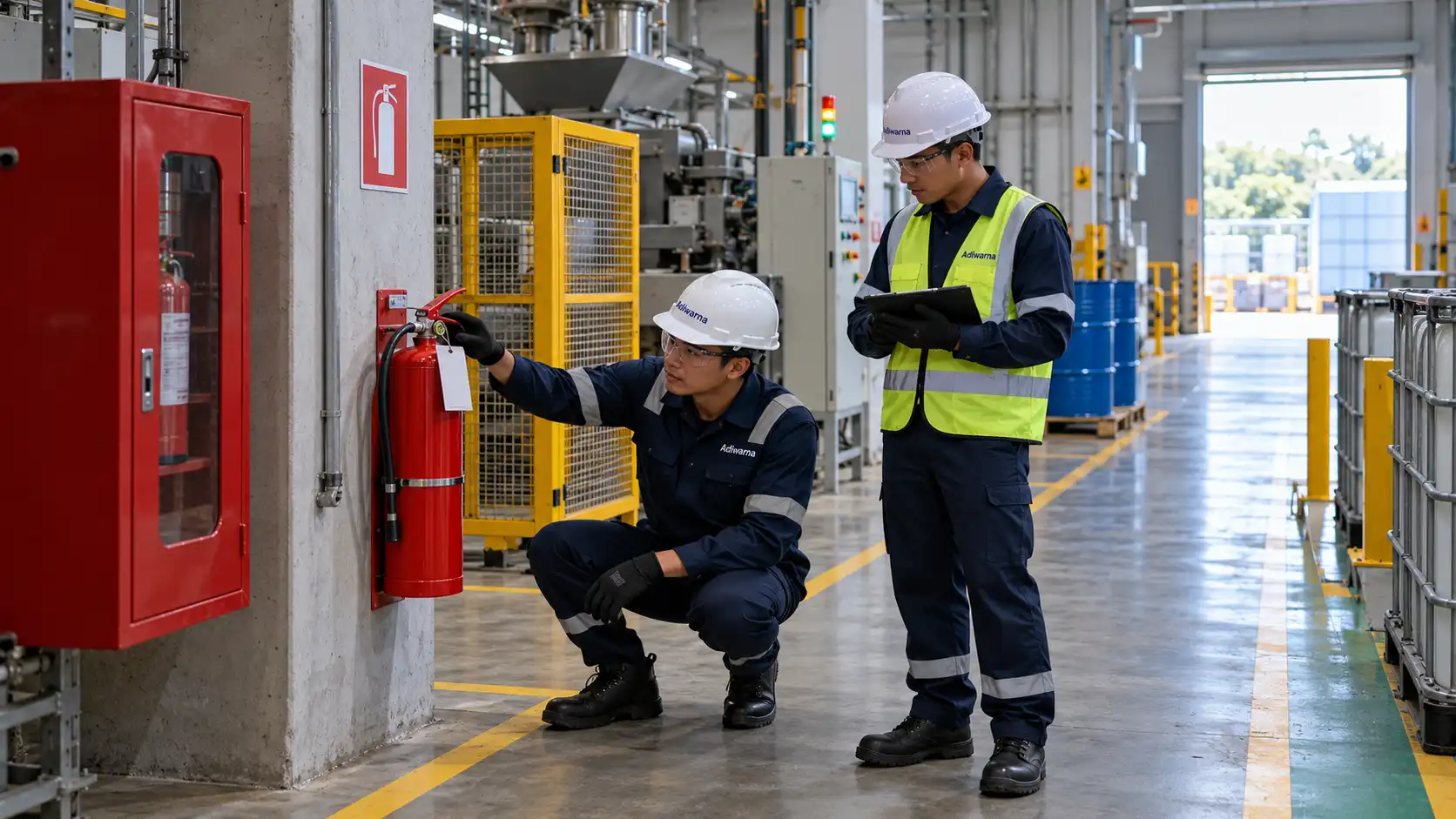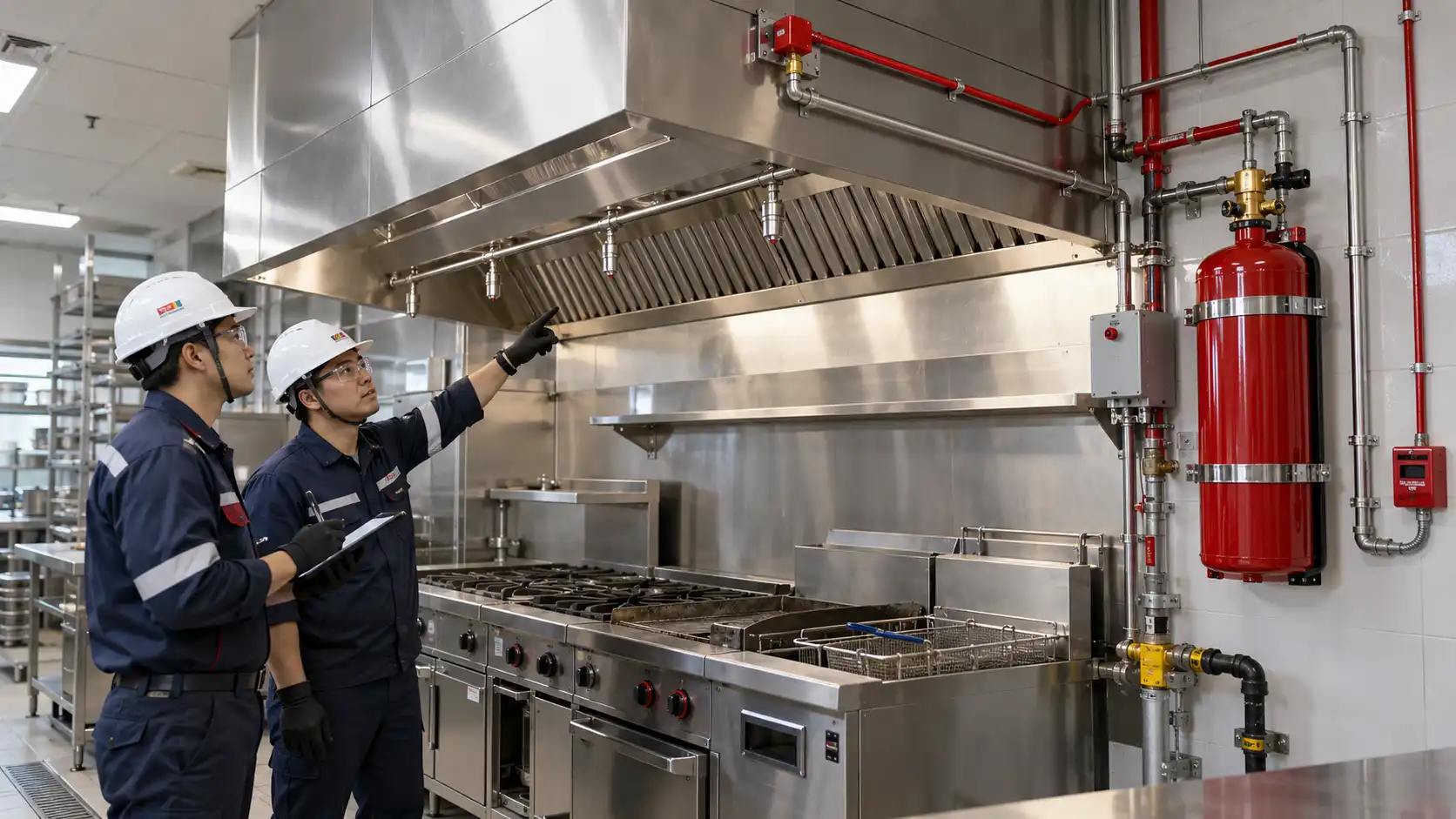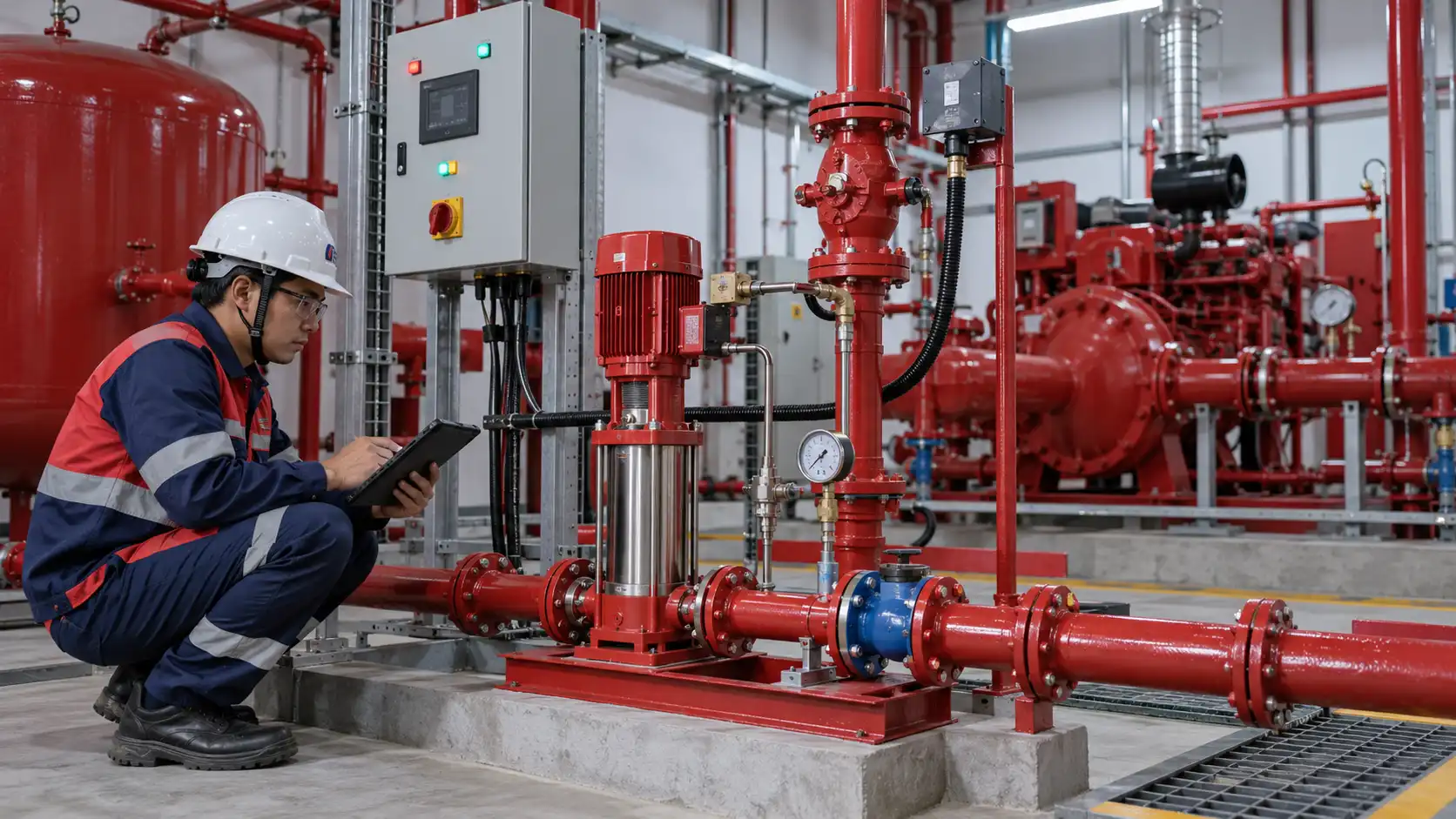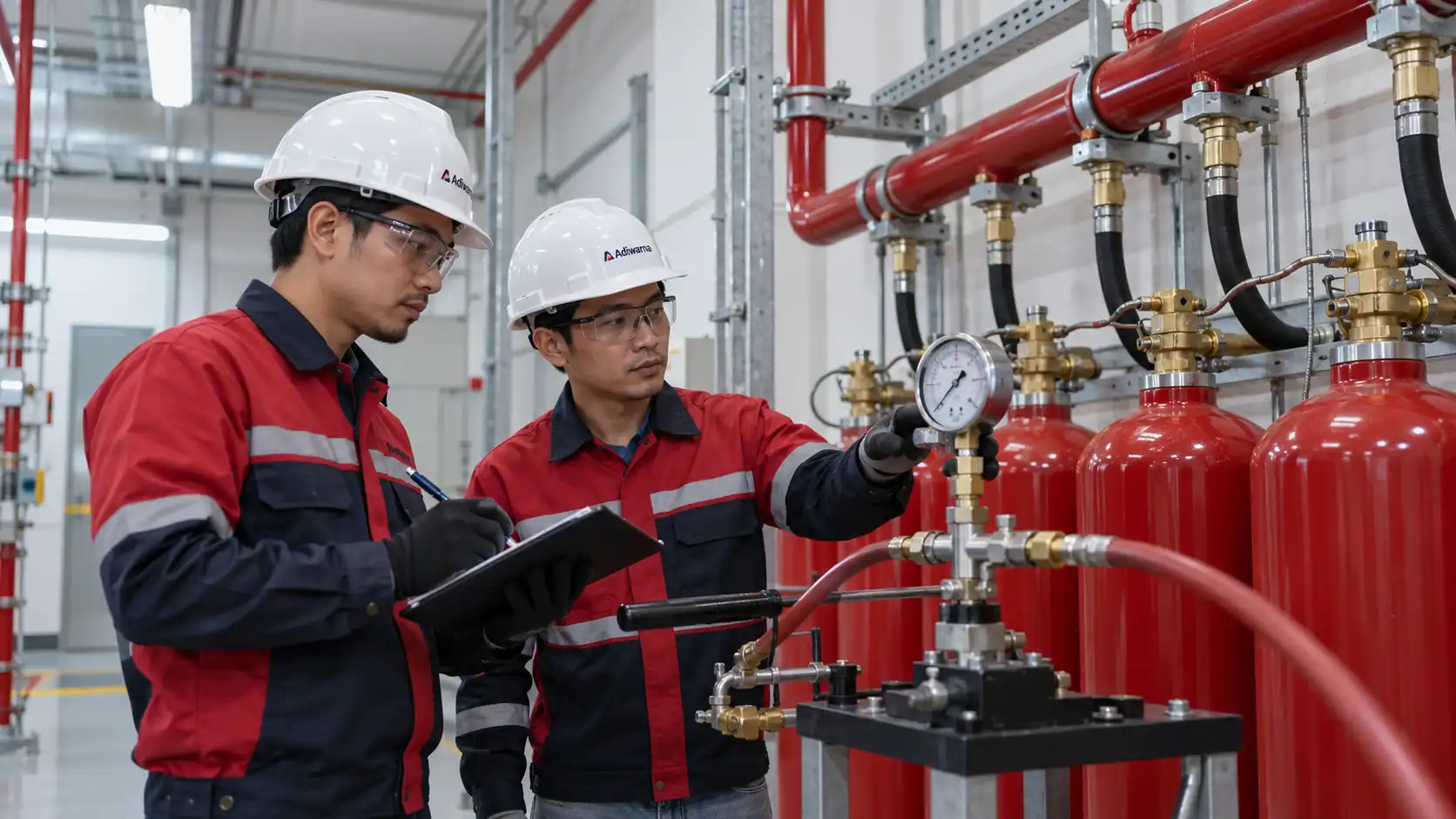


A battery room fire suppression system is an important part of fire protection for facilities that use batteries as either primary or backup power sources. Battery rooms are commonly found in data centers, UPS rooms, telecommunications facilities, power plants, industrial facilities, and Battery Energy Storage Systems or BESS.
The hazards are not limited to electrical short circuits or equipment faults. In lithium-ion batteries, internal failure can develop into thermal runaway, producing heat, gas, smoke, flames, and potentially propagating to neighboring cells or modules.
For this reason, battery-room protection should not begin with the question, “Which extinguishing agent should we use?” The design should integrate detection, alarms, shutdown, ventilation, gas monitoring, suppression, and emergency response as one coordinated safety strategy.
Quick Answer
A battery room fire suppression system is an automatic protection system designed to detect and control fire within battery storage areas. For lithium-ion batteries, the design should also address thermal runaway, gas release, propagation, and possible reignition. Effective protection typically combines fire detection, gas monitoring, fire alarms, shutdown functions, ventilation, and suppression based on a project-specific hazard assessment.
Why Is a Battery Room Fire Suppression System Necessary?
Battery rooms have different hazards from offices or ordinary storage rooms.
Potential sources of risk include:
- electrical faults;
- overcharging;
- overheating;
- mechanical damage;
- loose electrical connections;
- cooling-system failure;
- internal short circuits;
- battery degradation;
- thermal runaway;
- flammable gas release.
For stationary energy storage installations, NFPA 855:2026 is an important current reference for stationary ESS safety and includes requirements related to electrochemical ESS and lithium-metal or lithium-ion battery storage.
Therefore, selection of a battery room fire suppression system should begin with an understanding of the batteries and associated hazards rather than with the available suppression cylinders.
What Are the Main Fire Hazards in a Battery Room?
Battery-room risks vary depending on battery chemistry and system configuration.
Electrical Fire
Cables, terminals, chargers, rectifiers, UPS equipment, busbars, and electrical components can overheat or experience short circuits.
An electrical fire may become an ignition source that affects nearby batteries.
Thermal Runaway
Lithium-ion batteries can experience thermal runaway when internal reactions generate heat faster than the cell can dissipate it.
If the condition continues, gas can be released and heat may affect surrounding cells.
UL 9540A is used to evaluate thermal runaway fire propagation in energy storage systems and can provide information at the cell, module, unit, and installation levels.
Learn about UL 9540A from UL Solutions.
Gas and Explosion Hazards
Thermal runaway can release flammable gases.
In enclosed battery rooms or containers, gas accumulation should be evaluated because delayed ignition can create deflagration or explosion hazards.
Therefore, smoke detection alone may not address every possible failure scenario.
Battery Room Fire Suppression System and Thermal Runaway
A battery room fire suppression system for lithium-ion batteries should consider that extinguishing visible flames does not necessarily stop internal reactions within the battery cell.
The protection objective should first be defined, for example:
- controlling flames;
- providing cooling;
- limiting propagation;
- protecting adjacent equipment;
- reducing fire growth;
- supporting emergency response.
This distinction is important because a suppression system that performs well on conventional electrical fires may not provide the same level of control over internal battery thermal runaway.
For a deeper explanation of this mechanism, Adiwarna’s supporting article on Lithium Battery Thermal Runaway can be used within the same content cluster.
Main Components of a Battery Room Fire Suppression System
An effective battery-room protection strategy generally uses multiple safety layers.
| Component | Primary Function |
|---|---|
| Battery Management System | Monitors battery operating conditions |
| Smoke detector | Detects smoke and combustion particles |
| Heat detector | Identifies abnormal temperature conditions |
| Aspirating smoke detection | Provides early smoke warning |
| Off-gas detector | Detects selected gases released by batteries |
| Fire alarm control panel | Manages alarms and cause-and-effect logic |
| Emergency shutdown | Isolates selected systems or energy processes |
| Ventilation control | Manages airflow according to engineering logic |
| Fire suppression | Controls identified fire scenarios |
| Monitoring system | Provides status information to operators |
The fire alarm system can serve as an integration point for multiple detectors and safety devices.
Learn more through Adiwarna’s Fire Alarm System for Industrial Facilities.
Early Detection in a Battery Room Fire Suppression System

A battery room fire suppression system should ideally begin responding before visible flames develop.
Several technologies can provide early warning.
Smoke Detection
Smoke detectors identify combustion products once smoke begins to form.
For areas with significant airflow or facilities requiring very early warning, aspirating smoke detection may also be evaluated.
Heat Detection
Heat detectors can identify fixed temperature thresholds or rapid temperature increases depending on the detection technology used.
Battery Monitoring
A Battery Management System may monitor:
- temperature;
- voltage;
- current;
- state of charge;
- system faults;
- battery imbalance.
However, a BMS does not automatically replace a dedicated fire detection system.
Off-Gas Detection
Certain lithium-ion battery failure scenarios may release gases before visible flame develops.
Off-gas detection can therefore become part of an early-warning strategy when supported by the project hazard assessment.
Types of Battery Room Fire Suppression Systems
There is no single fire suppression technology that is automatically appropriate for every battery room.
System selection should consider:
- battery chemistry;
- room volume;
- ventilation;
- sensitive electrical equipment;
- fire scenarios;
- fire-test results;
- project standards;
- suppression objectives.
Clean Agent Battery Room Fire Suppression System
Clean agent suppression systems are commonly considered for areas containing sensitive electrical and electronic equipment because they do not leave significant residue.
Potential applications can include:
- UPS rooms;
- electrical rooms;
- control rooms;
- server rooms;
- battery support areas.
However, for lithium-ion battery installations, a clean agent should not automatically be assumed to stop internal thermal runaway.
The design should still consider:
- thermal propagation;
- cooling requirements;
- gas hazards;
- ventilation;
- battery configuration;
- detection strategy.
For more information about gaseous suppression, see Adiwarna’s guide to FM-200 Fire Suppression Systems.
Inert Gas for a Battery Room Fire Suppression System
Inert gas systems can suppress certain fire scenarios by reducing oxygen concentration to the system’s design level.
Their advantages can include:
- no significant residue;
- suitability for sensitive electrical equipment;
- centralized cylinder-bank configurations;
- integration with fire alarm systems.
However, proper design requires:
- engineering calculations;
- enclosure evaluation;
- pressure relief considerations;
- evacuation planning;
- safety analysis.
For lithium-ion battery rooms, inert gas should also not be considered a complete stand-alone solution for internal thermal runaway.
Water-Based Fire Protection for Battery Rooms
Water-based fire protection can provide significant heat absorption and cooling.
Systems that may be evaluated include:
- automatic sprinklers;
- water spray;
- deluge;
- water mist.
For certain BESS and battery installations, water-based protection should be evaluated against:
- fire-test data;
- battery layout;
- rack spacing;
- enclosure arrangement;
- drainage;
- access to the affected battery;
- electrical design considerations.
NFPA 855 is one important reference for stationary ESS and battery energy storage applications.
Does a Battery Room Fire Suppression System Always Use Gas?
No.
A battery room fire suppression system does not always need to use a clean agent or inert gas.
Selection depends on factors such as:
- battery chemistry;
- lithium-ion, lead-acid, or other battery technologies;
- expected fire scenario;
- cooling requirements;
- surrounding electrical equipment;
- enclosure design;
- ventilation;
- fire-test data;
- project standards;
- consultant or AHJ requirements.
Therefore, the assumption that every battery room should use gaseous suppression is not technically appropriate.
Battery Room Fire Suppression System for UPS Rooms
UPS rooms often combine battery banks with high-value electrical equipment.
Protection should consider:
- electrical fires;
- battery faults;
- chargers;
- rectifiers;
- cabling;
- heat accumulation;
- fire detection;
- automatic suppression.
In data center environments, UPS batteries, electrical panels, cables, and network infrastructure may coexist in closely controlled technical spaces.
Read Adiwarna’s guide to Fire Fighting Systems for High-Risk Industries.
Battery Room Fire Suppression System for BESS
In BESS installations, a battery room fire suppression system becomes more complex because the amount of stored energy and the number of cells can be significantly higher.
The protection strategy should consider:
- battery chemistry;
- rack configuration;
- container volume;
- thermal runaway;
- module-to-module propagation;
- off-gas release;
- fire spread;
- ventilation;
- explosion control;
- separation distances;
- emergency response.
NFPA 855:2026 includes requirements and supporting material addressing stationary ESS, electrochemical storage, lithium battery storage, and firefighting considerations.
For BESS projects, an internal supporting article on NFPA 855 BESS should be linked within the content cluster.
What Is the Relationship Between UL 9540A and a Battery Room Fire Suppression System?
UL 9540A is particularly relevant to lithium-ion BESS because the test method evaluates thermal runaway fire propagation.
Test data can help engineers understand:
- cell behavior;
- propagation potential;
- module response;
- gas release;
- flame spread;
- heat release;
- unit-level behavior;
- installation-level hazards.
Therefore, a contractor should review the UL 9540A report when applicable before selecting a fire protection strategy.
Learn about the UL 9540A test method.
Ventilation and Gas Detection in Battery Rooms
Ventilation can play an important role in battery-room safety.
However, the ventilation strategy should consider:
- gas type;
- room volume;
- airflow;
- normal HVAC;
- emergency exhaust;
- ignition sources;
- detector thresholds;
- cause-and-effect logic.
Ventilation should not automatically use the same sequence in every battery room.
The final control logic should be based on engineering analysis.
Cause-and-Effect for a Battery Room Fire Suppression System
A battery room fire suppression system should have a clearly defined cause-and-effect matrix so that detectors, alarms, shutdown, HVAC, ventilation, and suppression operate as one integrated safety system.
A simplified conceptual example is shown below.
| Condition | Potential Response |
| Battery warning | Operator notification |
| Off-gas detected | Early warning and preventive response |
| Smoke detected | Fire alarm activation |
| Confirmed fire | Emergency response actions |
| Shutdown command | Equipment isolation according to design |
| Suppression criteria met | Suppression-system discharge |
| System fault | Trouble notification |
The actual sequence should be developed for the specific project and should not simply be copied from another facility.
How to Select a Battery Room Fire Suppression System
Several steps should be completed before selecting the final suppression system.
Identify the Battery Chemistry
Determine whether the facility uses:
- lithium-ion;
- LiFePO4;
- lead-acid;
- nickel-based batteries;
- another battery chemistry.
Define the Protection Objective
The engineering team should determine whether the primary objective is:
- extinguishment;
- cooling;
- propagation control;
- exposure protection;
- early warning.
Review the Layout
Evaluate:
- battery racks;
- aisle spacing;
- room volume;
- ceiling height;
- HVAC;
- enclosures;
- evacuation routes.
Review Fire-Test Data
For lithium-ion BESS, UL 9540A data can provide important information about thermal propagation and fire behavior.
Define the Detection Strategy
Evaluate an appropriate combination of:
- smoke detection;
- heat detection;
- aspirating smoke detection;
- off-gas detection;
- BMS monitoring.
Perform Integrated Testing
Confirm that detectors, fire alarms, shutdown systems, ventilation, and suppression systems work according to the approved cause-and-effect sequence.
Common Mistakes When Selecting a Battery Room Fire Suppression System
Selecting Based on Price Alone
Initial price does not necessarily reflect the system’s ability to control the actual hazard.
Treating All Batteries the Same
Lead-acid and lithium-ion batteries do not have identical fire and gas hazards.
Selecting a Clean Agent Too Early
The suppression technology should not be determined before the hazards and protection objectives are understood.
Ignoring Thermal Runaway
For lithium-ion batteries, thermal runaway is one of the key hazards requiring specific engineering evaluation.
Failing to Integrate the Fire Alarm System
Suppression without appropriate detection and control logic may not produce an effective system response.
Skipping Integrated Testing
A system can be completely installed and still fail to perform as one coordinated protection system.
Battery Room Fire Suppression System Checklist
Use the following checklist during planning:
- Battery chemistry has been identified
- Battery capacity has been verified
- Room layout is available
- BMS data is available
- Fire hazard assessment has been completed
- Thermal runaway has been evaluated
- Relevant fire-test data has been reviewed
- Smoke detection has been evaluated
- Heat detection has been evaluated
- Off-gas detection has been evaluated
- Fire alarm integration has been designed
- Shutdown logic has been defined
- Ventilation strategy has been developed
- Suppression objectives have been defined
- Cause-and-effect matrix has been prepared
- Testing and commissioning have been completed
- Emergency response plan is available
- Maintenance schedule has been prepared
Choosing a Battery Room Fire Suppression Contractor
A contractor should provide more than cylinder, piping, and nozzle installation.
The engineering team should be capable of:
- reviewing battery data;
- understanding thermal runaway;
- evaluating NFPA 855 where applicable;
- reviewing UL 9540A reports;
- designing fire detection;
- integrating BMS and fire alarm systems;
- evaluating gas hazards;
- defining suppression objectives;
- developing cause-and-effect logic;
- performing integrated commissioning.
Adiwarna provides fire protection services for various high-risk facilities and can support projects from engineering through implementation and maintenance.
Learn more through Adiwarna’s Industrial Fire Protection Contractor page.
FAQ About Battery Room Fire Suppression Systems
What Is a Battery Room Fire Suppression System?
A battery room fire suppression system is an automatic fire protection system designed to control fires within battery storage areas and associated equipment.
The system may include detection, alarms, control panels, shutdown functions, ventilation interfaces, and suppression technology selected according to the battery type and identified hazards.
Does a Battery Room Fire Suppression System Have to Use Clean Agent?
No.
Clean agents may be appropriate for some electrical or sensitive-equipment environments, but battery chemistry, thermal runaway, cooling needs, and propagation risks should be evaluated before selecting the final system.
Can Lithium Batteries Experience Thermal Runaway?
Yes.
Lithium-ion batteries can experience thermal runaway due to internal failure, overheating, electrical abuse, mechanical damage, or other abnormal conditions.
UL 9540A is one test method used to evaluate thermal runaway fire propagation in ESS installations.
Is a Smoke Detector Enough for a Battery Room?
Not necessarily.
Depending on the hazard assessment, the design may combine smoke detection with heat detection, aspirating smoke detection, BMS monitoring, and off-gas detection.
Does a Battery Room Need Gas Detection?
The requirement depends on battery chemistry, room configuration, ventilation, and the identified gas hazards.
No single gas detector is automatically suitable for every battery room.
What Standards Apply to a Battery Room Fire Suppression System?
Applicable standards depend on the type of installation and project requirements.
For stationary energy storage systems, NFPA 855 is one important international reference. The current edition in 2026 is NFPA 855:2026.
How Much Does a Battery Room Fire Suppression System Cost?
Cost depends on factors such as:
- room area and volume;
- battery chemistry;
- number of racks;
- detector requirements;
- suppression technology;
- gas monitoring;
- control panels;
- system integration;
- piping;
- testing;
- commissioning.
An accurate quotation should therefore follow a technical site survey and engineering assessment.
Consult Adiwarna for a Battery Room Fire Suppression System
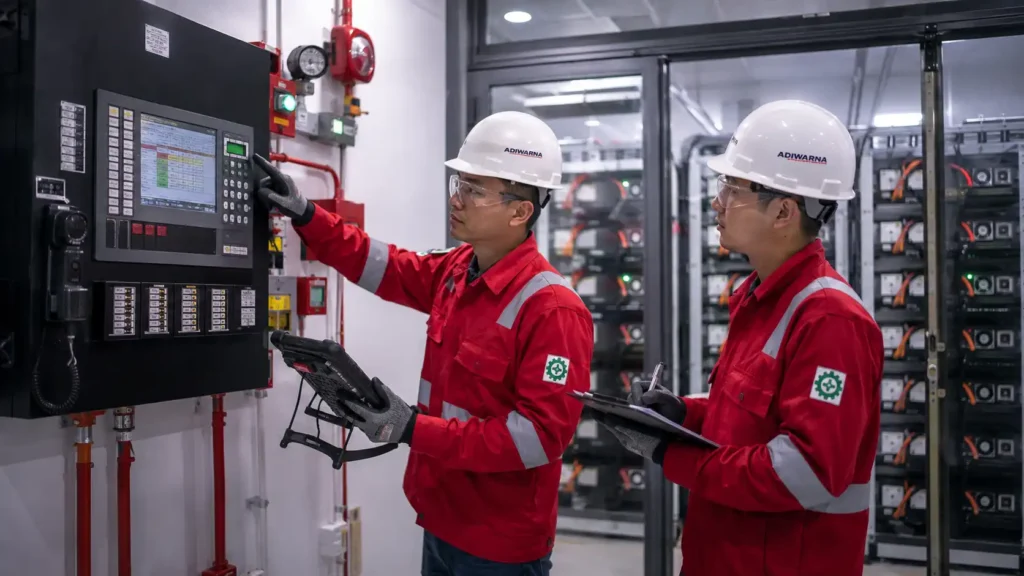
Planning a battery room fire suppression system should begin with battery data and hazard assessment rather than immediately selecting an extinguishing agent.
Thermal runaway, smoke, gas, electrical faults, ventilation, shutdown, fire alarms, and suppression should be considered as one integrated protection strategy.
PT Adiwarna Anugerah Abadi Tbk can support design and engineering, fire alarm systems, fire suppression, installation, testing and commissioning, and maintenance for facilities with specialized fire risks.
To begin an evaluation, contact the Adiwarna team and prepare information about battery chemistry, capacity, room layout, BMS, and relevant fire-test reports when available.
Conclusion
A battery room fire suppression system is one part of a broader safety strategy. In modern battery rooms, particularly those using lithium-ion batteries, protection should address thermal runaway, gas release, fire propagation, electrical hazards, and possible reignition.
Therefore, suppression-system selection should be based on battery chemistry, hazard assessment, fire-test data, layout, detection strategy, ventilation, and project standards.
With an integrated approach, a battery room fire suppression system can work together with fire alarms, monitoring, shutdown, and ventilation to provide protection that better matches the actual risks of the facility.