
Fire extinguisher periodic inspection and SNI certification is both a legal obligation and a fire safety management practice that cannot be ignored by building managers and industrial facilities. A portable fire extinguisher (APAR) that is not periodically inspected may fail when needed, turning a protective device into a hidden risk. This article guides you through APAR inspection per SNI and NFPA 10 standards.
Legal Basis for Periodic Fire Extinguisher Inspection in Indonesia
- Minister of Manpower Regulation No. Per-04/MEN/1980: governs requirements for fire extinguisher installation and maintenance at workplaces.
- SNI 19-3964: Indonesian national standard for fire extinguishers – covers specifications, testing, and labeling.
- Minister of Public Works Regulation No. 26/PRT/M/2008: technical requirements for fire protection systems in buildings including APAR placement and maintenance.
- NFPA 10: Standard for Portable Fire Extinguishers – international technical reference for inspection and maintenance.
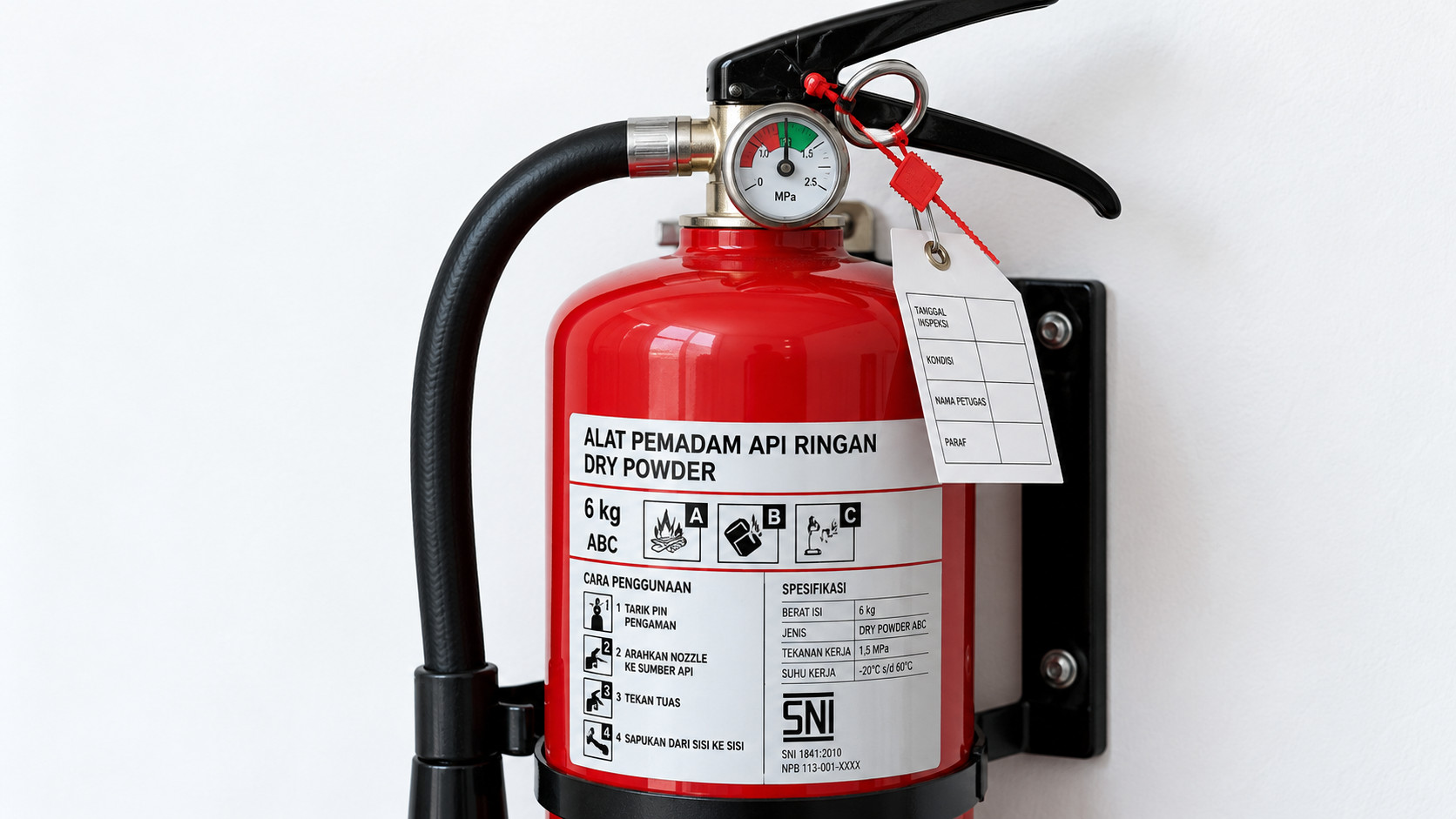
Types of Fire Extinguisher Inspection
NFPA 10 and Indonesian regulations define three levels of fire extinguisher inspection based on frequency and depth:
1. Quick Inspection – Monthly
Monthly quick inspections can be performed by basic-trained personnel (not necessarily certified technicians). The goal is to ensure the extinguisher is ready for use at all times.
2. Annual Maintenance – Every 12 Months
Annual maintenance must be performed by certified technicians with APAR inspection competency. This is more thorough than the monthly inspection and includes technical condition testing of all components.
3. Hydrostatic Testing – Per Material Schedule
Hydrostatic testing is a cylinder pressure test to ensure the structural integrity of the extinguisher tank. The schedule varies depending on extinguisher type and tank material.
Monthly Fire Extinguisher Inspection Checklist
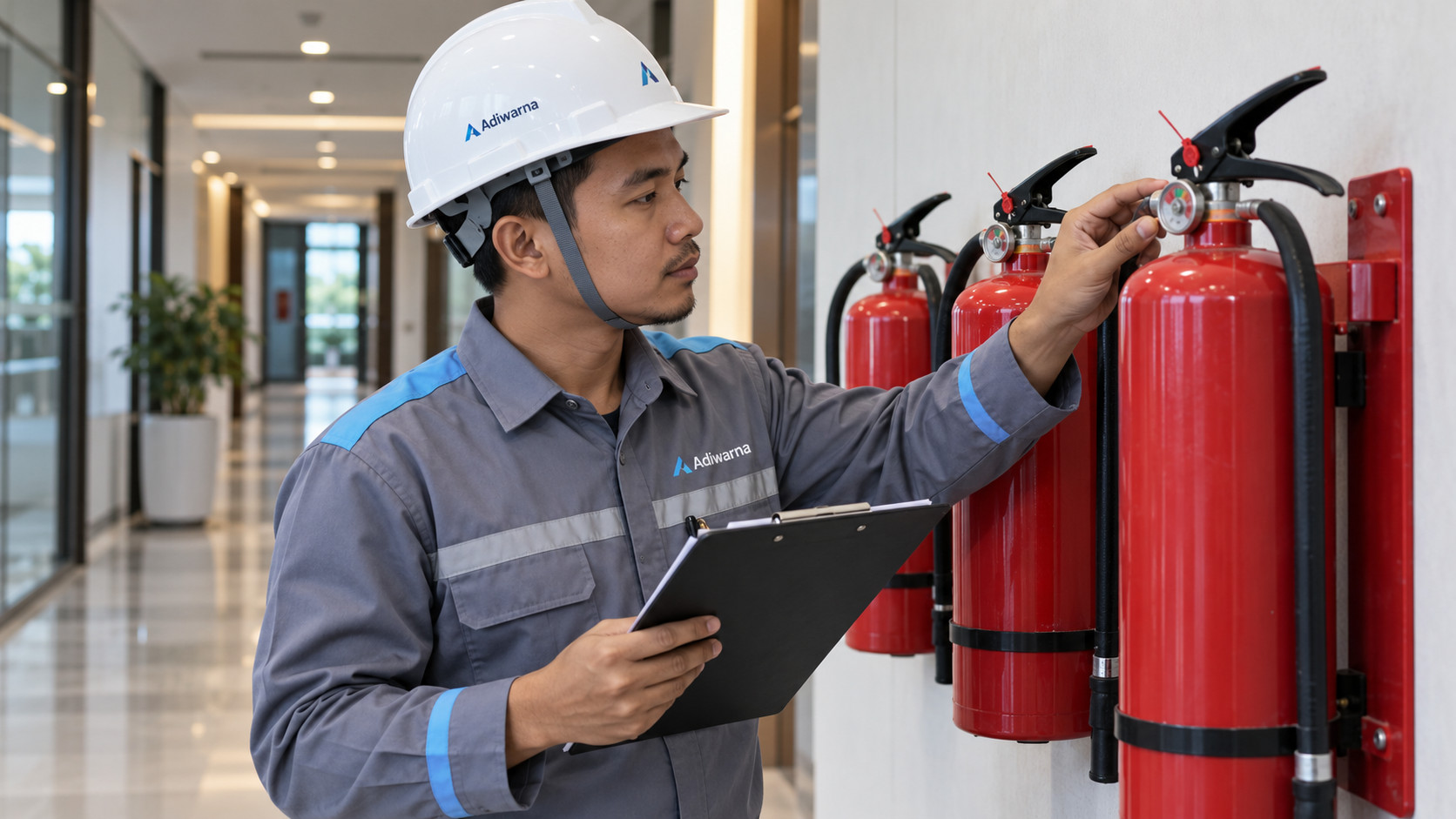
- Location and accessibility: extinguisher is in the designated location, clearly visible, and unobstructed.
- Identification label: label clearly visible with serial number, last inspection date, and identifier.
- Pressure gauge: gauge needle is in the green zone (normal pressure). If in red zone, recharging is needed.
- Physical condition: no rust, corrosion, deformation, or physical damage to tank or nozzle.
- Safety seal: safety pin and plastic seal are intact and undamaged.
- Nozzle and hose: not blocked, cracked, or damaged.
- Instruction label: clearly readable and facing forward.
Annual Fire Extinguisher Inspection – Full Procedure
- Document verification: review inspection card and ensure maintenance history is complete.
- Comprehensive visual inspection: inspect cylinder, nozzle, hose, gauge, pin, and seal in detail.
- Gauge pressure test: verify gauge functions correctly and shows appropriate pressure.
- Weight test: weigh the extinguisher and compare with the full weight on the label.
- Operating mechanism inspection: check handle, trigger, and locking mechanism for wear or damage.
- Agent condition test: for powder extinguishers, check that powder is not caked or clumped.
- Documentation: record all findings and recommendations on the inspection card.
- Tag attachment: attach a new inspection tag with date, technician name, and inspection result.
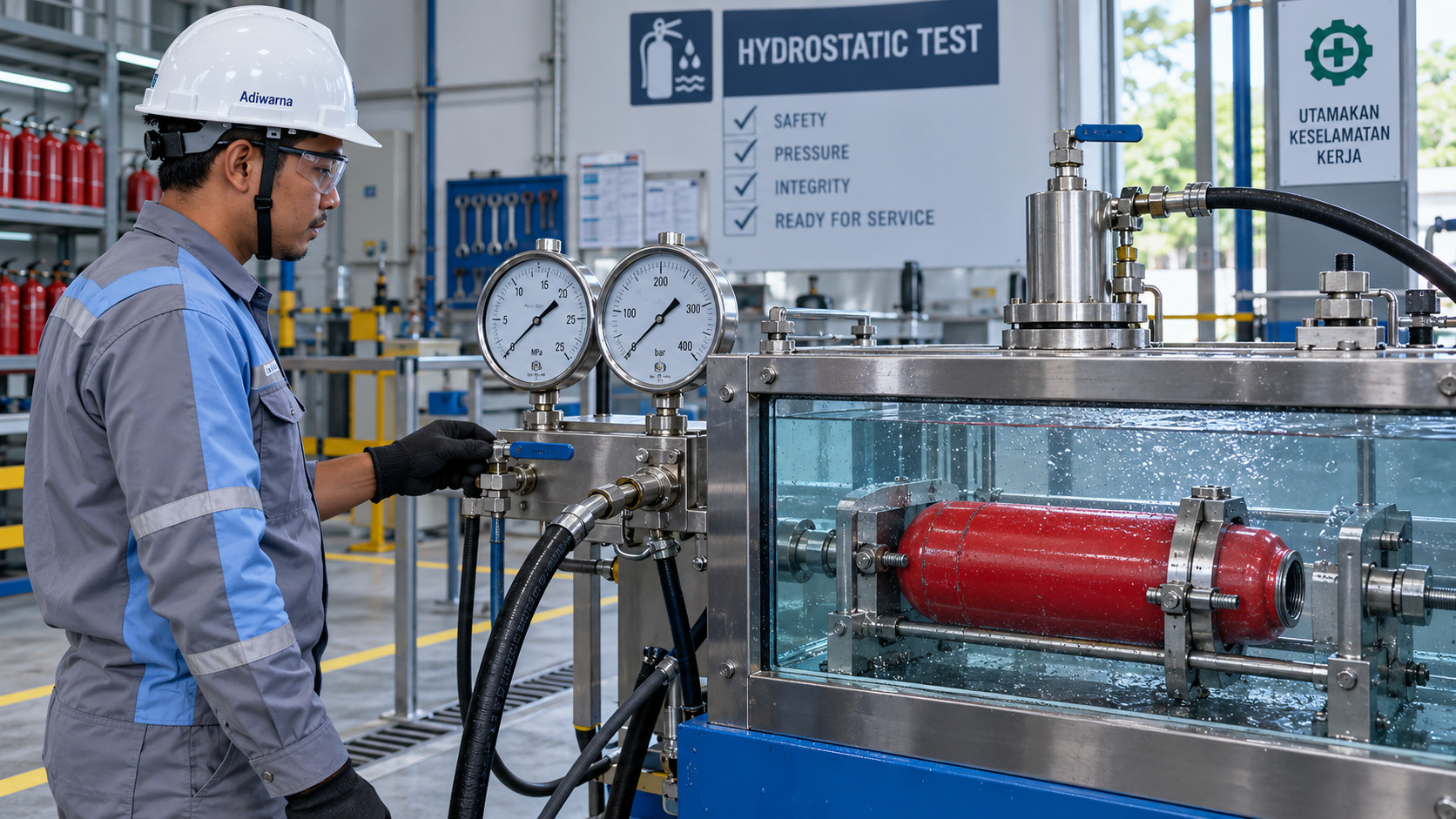
Fire Extinguisher Hydrostatic Testing Schedule
| APAR Type | Hydrostatic Test Interval | Standard Reference |
|---|---|---|
| CO2 Extinguisher | 5 years | NFPA 10 Table 8.3 |
| Dry Powder Extinguisher | 12 years | NFPA 10 Table 8.3 |
| Foam Extinguisher | 5 years | NFPA 10 Table 8.3 |
| Wet Chemical Extinguisher | 5 years | NFPA 10 Table 8.3 |
| Halon Extinguisher | 12 years | NFPA 10 Table 8.3 |
Extinguishers past their hydrostatic testing schedule must be tested immediately before further use. Extinguishers that fail hydrostatic testing must be disposed of and replaced.
SNI Certification for Fire Extinguishers
Fire extinguishers sold and used in Indonesia must have an SNI Product Use Certificate (SPPT SNI). This certification ensures the extinguisher meets quality, safety, and performance requirements specified in SNI 19-3964.
To verify that a purchased extinguisher is SNI-certified, check the SNI number and Product Certificate on the label and confirm with Indonesia National Standardization Agency (BSN) or the Product Certification Body (LSPro) that issued the certificate.
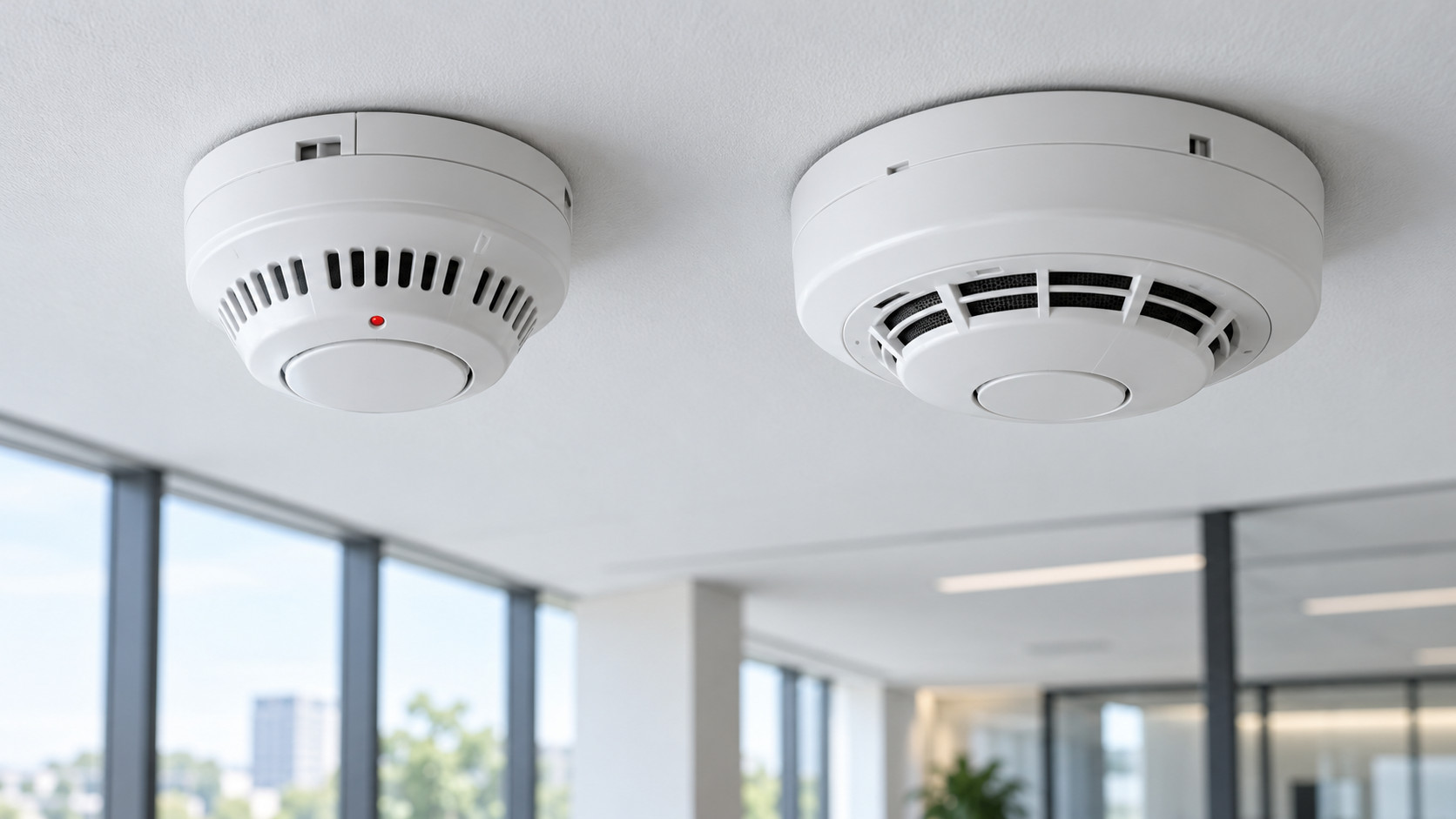
For more comprehensive fire protection, portable extinguishers should be complemented by early fire detection. Read our guide on sprinkler coverage area calculation per SNI to understand how portable extinguishers and sprinklers work together in a layered protection system.
FAQ: Fire Extinguisher Periodic Inspection and SNI Certification
Who is authorized to perform annual fire extinguisher inspection?
Annual inspection must be performed by certified technicians with fire extinguisher inspection competency. In Indonesia, these technicians typically hold certification from the Ministry of Manpower or recognized competency bodies. Monthly inspections can be performed by safety officers who have received basic training.
What happens if a fire extinguisher is not inspected periodically?
An uninspected extinguisher may become ineffective when needed due to pressure loss, caked agent, or damaged mechanical components. Additionally, using extinguishers without periodic inspection violates Ministerial Regulation Per-04/MEN/1980, which can result in penalties.
How long is a fire extinguisher service life?
Service life varies by type and maintenance condition, typically 5-12 years. Extinguishers that have exceeded their hydrostatic testing schedule or have structural damage must be replaced even if never used.
Conclusion
Periodic fire extinguisher inspection and SNI certification are not only regulatory obligations but safety investments protecting lives and property. By implementing monthly inspection checklists, annual inspection by certified technicians, and scheduled hydrostatic testing, you ensure fire extinguishers are always ready when fire occurs.
Need periodic fire extinguisher inspection and SNI certification services for your facility? Contact the Adiwarna Fire Protection Specialist team at our contact page for inspection scheduling, recharging, and certification compliant with Indonesian regulations and NFPA 10 standards.