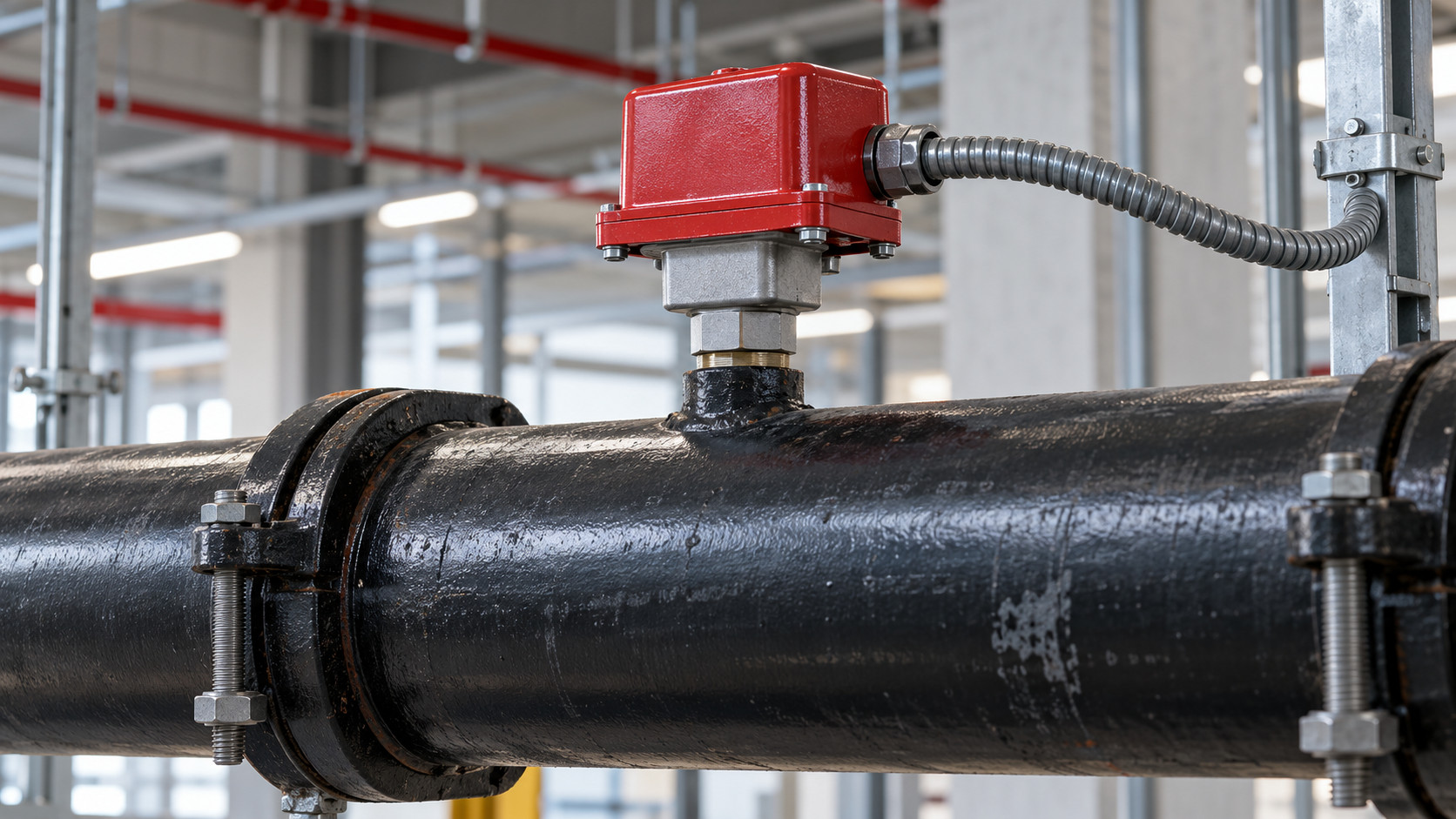

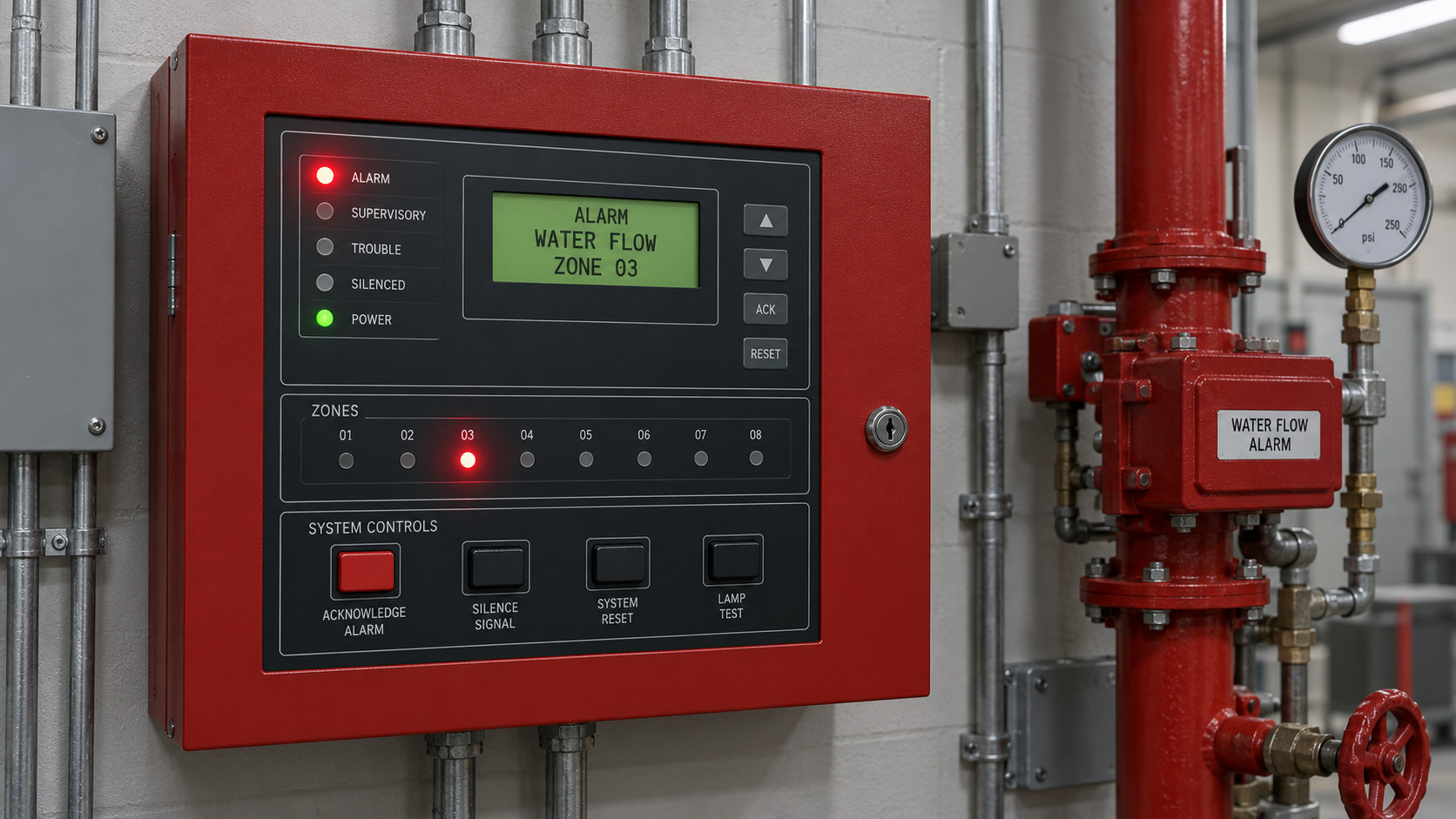
Flow switch sprinkler system testing procedure is critical for maintaining a functioning water flow detection component in fire protection. The flow switch detects water flow in sprinkler pipes when a sprinkler head activates and sends a signal to the FACP. Without a properly functioning flow switch, the alarm system will not respond even when sprinklers have activated.
Function and Role of Flow Switch in Sprinkler Systems
A flow switch (water flow indicator) is a switch installed on the main sprinkler system pipe. When water flows due to sprinkler head activation, the paddle inside the flow switch moves and closes an electrical contact. This signal is sent to the FACP to trigger alarms and notifications.
Key functions: (1) automatically detecting sprinkler head activation, (2) triggering alarms and monitoring notifications, (3) identifying the active sprinkler zone, and (4) distinguishing fire-related flow from minor leakage or testing.
Flow Switch Types in Sprinkler Systems
| Flow Switch Type | Mechanism | Application |
|---|---|---|
| Paddle/Vane Type | Paddle moves with water flow | Wet pipe systems |
| Piston Type | Piston by differential pressure | Large diameter pipes |
| Magnetic Reed Switch | Magnetic, no direct contact | Corrosive environments |
| Differential Pressure Type | Pressure differential measurement | Pre-action and deluge |
How a Flow Switch Works
In a wet pipe sprinkler system, a paddle-type flow switch operates as follows:
- The paddle is installed inside the pipe perpendicular to the water flow direction.
- Under normal conditions (no flow), the paddle is stationary and the electrical contact is open.
- When a sprinkler head activates, water flows through the pipe and pushes the paddle.
- Paddle movement closes the electrical contact and sends an alarm signal to the FACP.
- The FACP triggers alarms, monitoring station notifications, and other responses.
Flow switches include a time delay relay to prevent false alarms from temporary water flow. Standard delay is typically 30-90 seconds. The jockey pump function in sprinkler systems maintains pressure so the flow switch is not triggered by minor pressure drops.
Applicable Standards for Flow Switches
- NFPA 13: Standard for the Installation of Sprinkler Systems – specifies technical requirements and placement.
- NFPA 25: Standard for the Inspection, Testing, and Maintenance of Water-Based Fire Protection Systems – governs testing frequency.
- NFPA 72: National Fire Alarm and Signaling Code – governs integration with fire alarm systems.
- SNI 03-3989: Indonesian national standard for automatic sprinkler systems.

Flow Switch Selection Specifications
Key technical factors for specifying the right flow switch:
- Pipe diameter: match to the monitored zone main pipe diameter (DN25 to DN300).
- Max operating pressure: ensure rating exceeds system operating pressure.
- Body material: use stainless steel or corrosion-resistant material for corrosive environments.
- Signal output type: verify NO or NC contact compatibility with FACP requirements.
- Adjustable delay range: 30-90 seconds configurable delay to prevent false alarms.
NFPA 25 Periodic Flow Switch Testing
| Frequency | Action | Reference |
|---|---|---|
| Quarterly | Trip test via inspector test valve | NFPA 25 Ch. 5 |
| Annual | Physical inspection of switch and wiring | NFPA 25 Ch. 5 |
| 5-Year | Full flow test and internal inspection | NFPA 25 Ch. 5 |
| After false alarm | Cause investigation and delay calibration | NFPA 25 Ch. 5 |
Quarterly Testing Steps
- Coordinate with monitoring center: notify them that testing will be performed.
- Prepare the inspector test valve: locate the valve at the end of the zone being tested.
- Slowly open the valve: open until water flows at sprinkler head equivalent pressure.
- Wait for FACP response: alarm must trigger within 90 seconds per NFPA 25.
- Record all results: response time, valve condition, and flow switch condition.
- Close the inspector test valve and confirm system returns to normal.
- Notify the monitoring center that testing is complete.
Common Flow Switch Failure Causes
- Corrosion: paddle corrodes due to poor water quality or humid environment.
- Calcification: lime deposits reduce paddle mobility and sensitivity.
- Damaged wiring: cable damage from rodents, vibration, or environmental conditions.
- Incorrect delay setting: improper delay causes late alarms.
- Oxidized contacts: reduce signal reliability to the FACP.
FAQ: Flow Switch in Sprinkler Systems
What is the difference between a flow switch and a pressure switch?
A flow switch detects water flow (movement), while a pressure switch detects pressure changes. In sprinkler systems, flow switches detect sprinkler head activation; pressure switches typically activate fire pumps or monitor system pressure.
How often should flow switches be tested?
NFPA 25 requires minimum quarterly trip testing, annual physical inspection, and full flow testing every 5 years for standard wet pipe systems.
Must a failed flow switch be replaced immediately?
Yes. Flow switches that fail or do not respond within NFPA 25 time limits must be repaired or replaced immediately. A sprinkler system with a non-functioning flow switch is considered not ready for service.
Conclusion
The flow switch is an essential component linking the sprinkler system with the fire alarm system. Periodic testing per NFPA 25, mechanical and electrical maintenance, and rapid response to failures are key to keeping the system always ready when fire occurs.
Need flow switch inspection and testing services per NFPA 25? Contact the Adiwarna Fire Protection Specialist team at our contact page for your inspection and maintenance schedule.