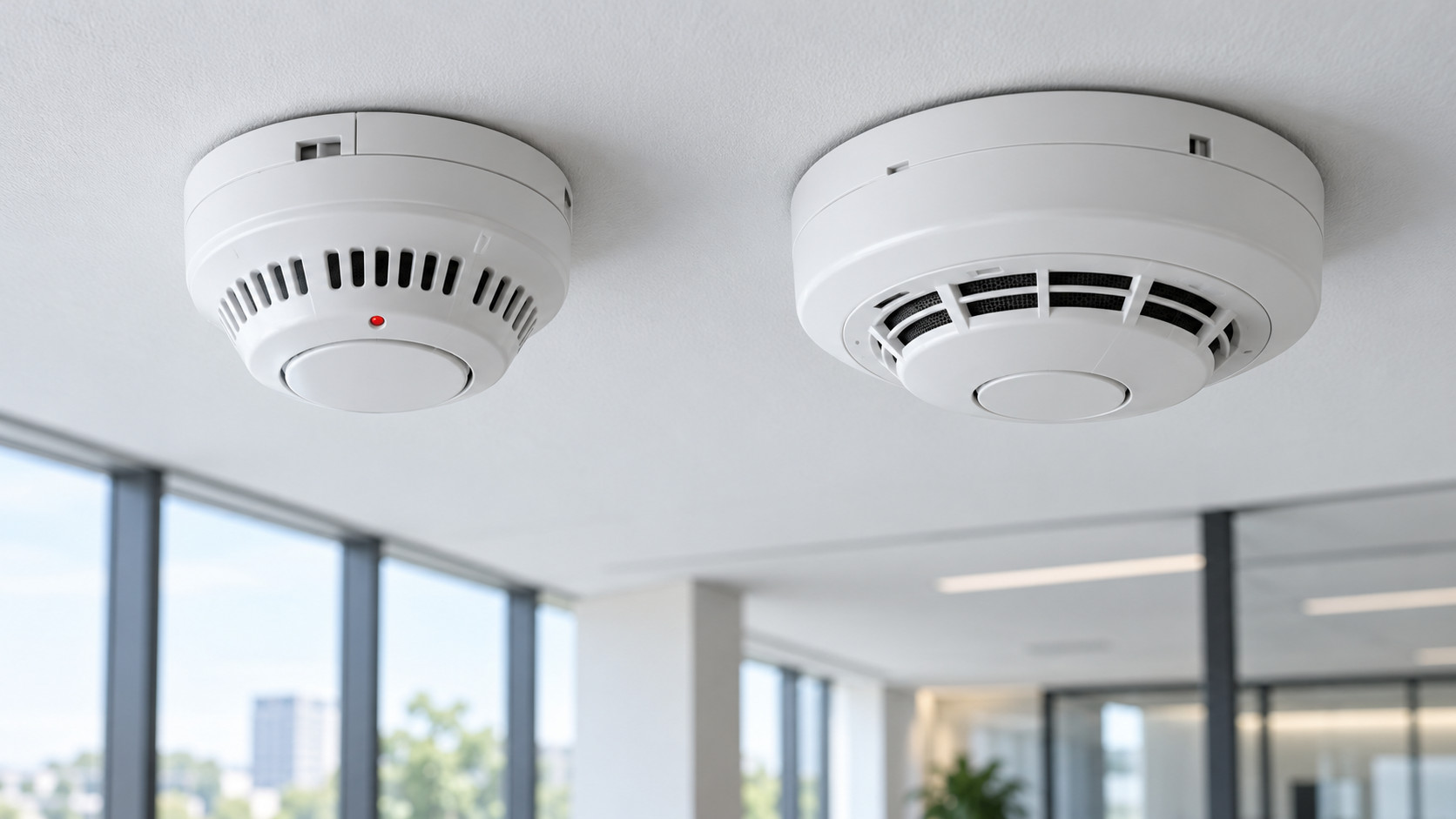

Ionization vs photoelectric smoke detector selection is a choice that often confuses fire protection system planners. Choosing the right type depends on the burning material type, room size, and risk level. This article explains the fundamental differences between the two technologies and provides a guide for selecting the most appropriate smoke detector for residential and industrial applications.
How Ionization Smoke Detectors Work
Ionization smoke detectors use a small radioactive americium-241 source to ionize air inside the detection chamber. When smoke enters, smoke particles absorb existing ions, reducing the electrical current between two electrodes. This current drop triggers the fire alarm.
This technology is highly effective at detecting fires that produce very small smoke particles, particularly fast-flaming fires such as paper, dry wood, or other flammable materials that produce light, transparent smoke.
How Photoelectric Smoke Detectors Work
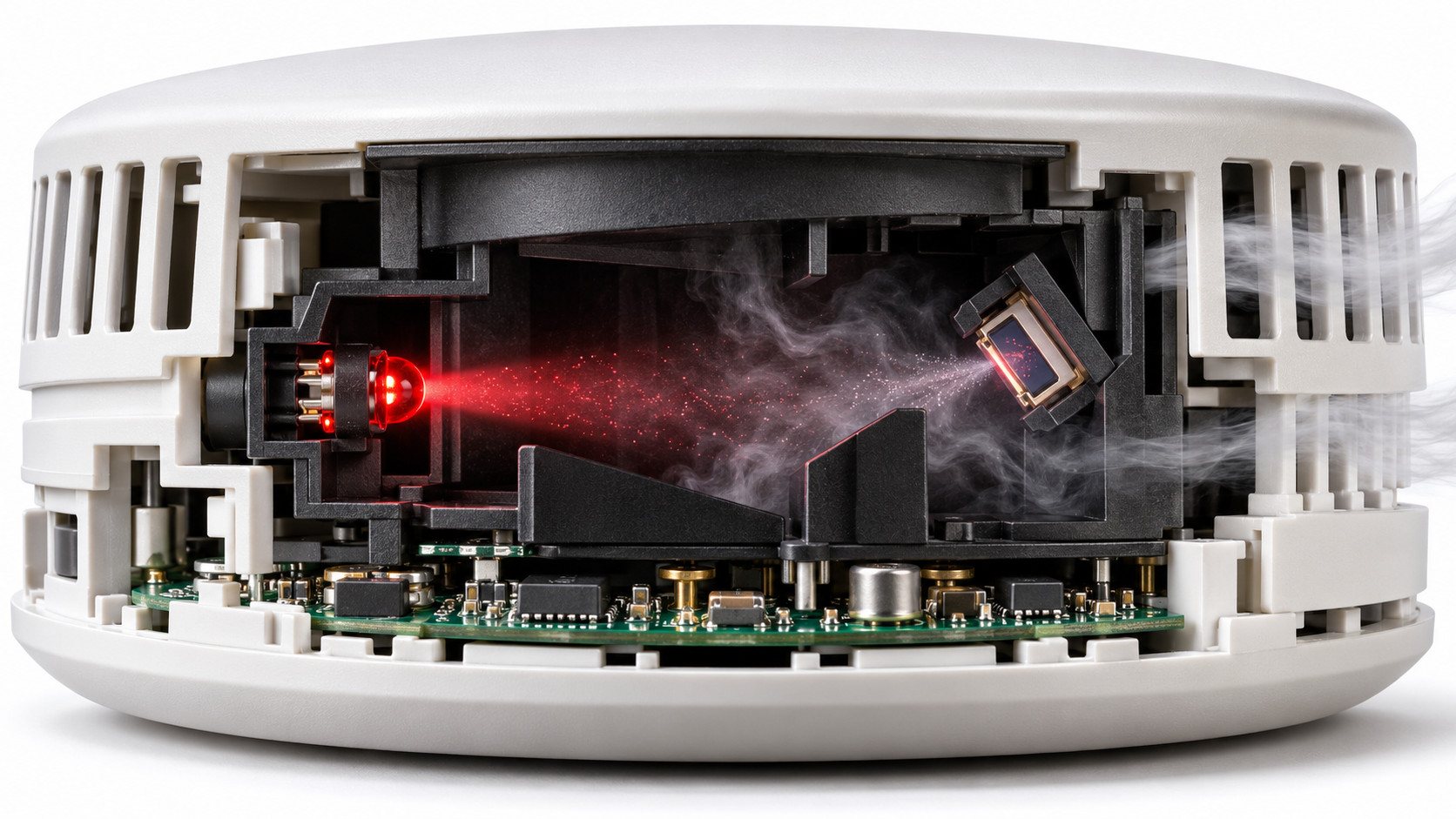
Photoelectric smoke detectors use an LED light source and a photodiode sensor placed at a specific angle. Under normal conditions, LED light does not reach the sensor. When smoke enters the detection chamber, smoke particles reflect light toward the photodiode sensor, activating the alarm.
This technology is highly effective at detecting smoldering fires (burning without flame) that produce larger, denser smoke particles. Examples include polyurethane foam, electrical cables, or plastic materials that melt slowly before igniting.
Ionization vs Photoelectric Comparison
Selecting the right smoke detector requires understanding the performance differences between the two technologies:
| Criterion | Ionization | Photoelectric |
|---|---|---|
| Best for fire type | Fast-flaming fires | Smoldering fires |
| Detected particles | Very small (0.01-0.3 micron) | Larger (0.3-10 micron) |
| Kitchen false alarms | Prone to false alarms | More stable |
| Unit cost | Relatively lower | Slightly higher |
| NFPA 72 2019 recommendation | Restricted in some countries | Recommended |
NFPA 72 2019 edition recommends photoelectric or dual-sensor detectors for most residential and commercial applications due to lower false alarm rates and more consistent performance against smoldering fires.
When to Choose Ionization Smoke Detectors?
Ionization smoke detectors remain relevant in certain conditions:
- Areas storing fast-burning materials such as paper, dry wood shavings, or volatile chemicals.
- Rooms with high ventilation where smoke quickly dilutes before reaching photoelectric detectors.
- Projects with limited budgets where combination with sprinkler systems provides additional protection.
- Areas where false alarms from cooking steam or water vapor are not a significant concern.

When to Choose Photoelectric Smoke Detectors?
Photoelectric smoke detectors are recommended for most modern commercial and industrial applications:
- Rooms with plastic, rubber, or electrical cable materials that may smolder before igniting.
- Commercial kitchens, laundries, and areas with normal steam or smoke that can trigger ionization false alarms.
- Hotels, apartments, and commercial residences where false alarms can cause unnecessary evacuations.
- Data centers and server rooms where early smoldering detection is critical to protect electronic equipment.
Advanced Options: Dual-Sensor Detectors and VESDA
For high-risk areas or where detection accuracy is critical, two advanced technologies are available:
Dual-Sensor Detectors (Combined)
Dual-sensor detectors combine ionization and photoelectric technologies in one unit. These detectors provide protection against both fire types while reducing false alarms since both sensors must trigger to activate the alarm.
Aspirating Smoke Detection (ASD) / VESDA
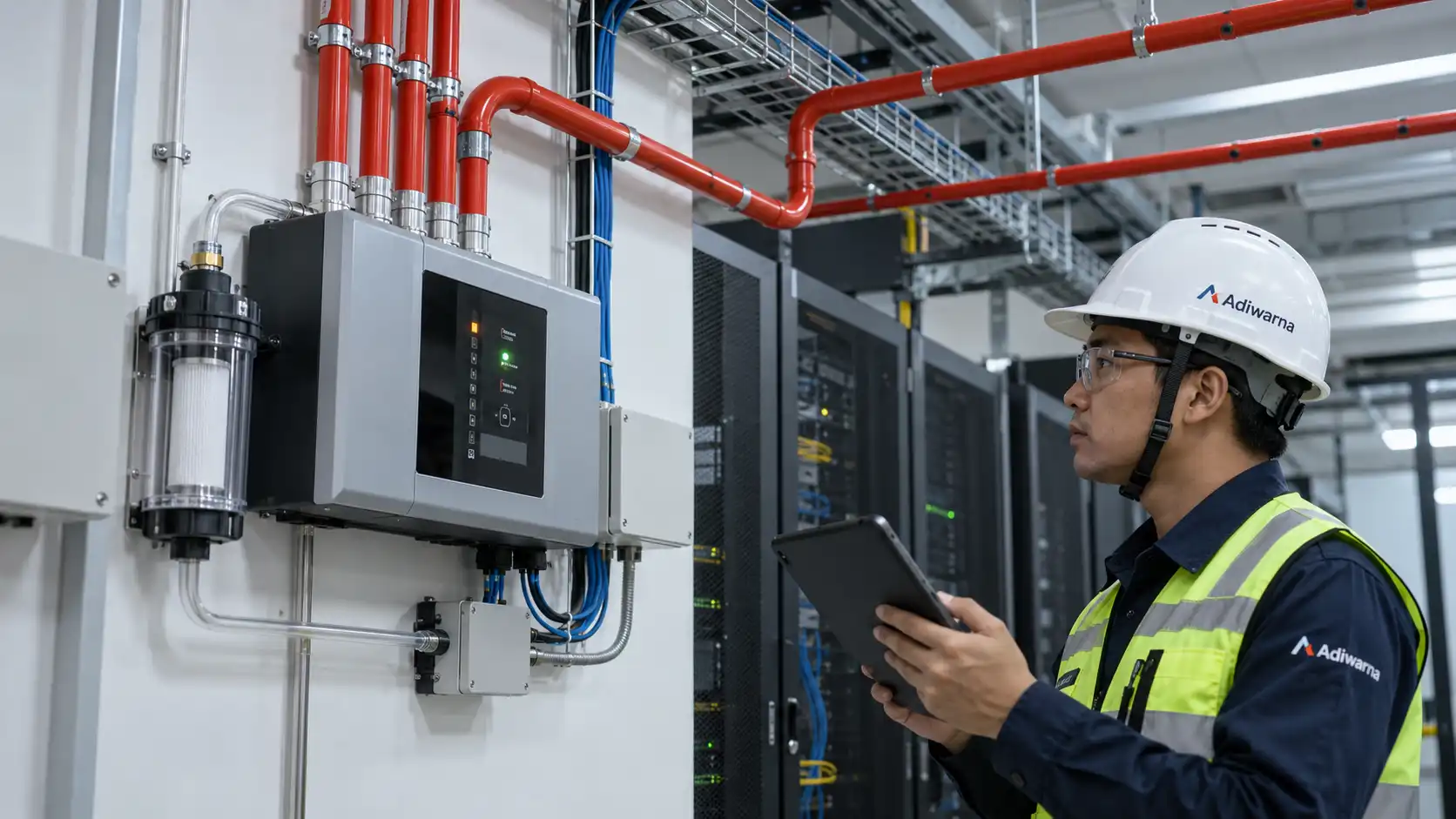
Very Early Smoke Detection Apparatus (VESDA) systems actively sample air from rooms through a pipe network to a central analysis unit. These systems can detect very low smoke concentrations long before conventional detectors respond. This technology is ideal for data centers, museums, and important archives.
Adiwarna Fire Protection Specialist also provides sprinkler system design services that integrate with smoke detection systems. Proper integration between detection and suppression enables faster response and reduces property damage.
Standards Governing Smoke Detector Selection
Smoke detector selection must comply with the following standards:
- NFPA 72 National Fire Alarm and Signaling Code: requirements for installation, location, and detector type selection.
- SNI 03-3985: Indonesian national standard for automatic fire alarm systems.
- ISO 7240: international standard for fire detection systems.
- Minister of Public Works Regulation No. 26/PRT/M/2008: technical requirements for fire protection systems in buildings.
For technical guidance on suppression systems that complement smoke detection, read our article on gas agent concentration calculation. Proper combination of detection and suppression is key to overall fire protection system reliability.
FAQ: Ionization vs Photoelectric Smoke Detectors
Which is better, ionization or photoelectric?
There is no single answer. Ionization is better for fast-flaming fires; photoelectric is better for smoldering fires. NFPA 72 2019 recommends photoelectric for most residential and commercial applications due to a lower false alarm profile.
Are ionization detectors dangerous due to radioactive material?
The amount of americium-241 radioactive material in ionization detectors is very small and safe for use. However, used detectors must be disposed of through special procedures in accordance with environmental regulations in Indonesia.
Can two types of detectors be installed in one zone?
Yes, combining both detector types in one zone is permitted and even recommended for areas with fire risks from multiple sources. The alarm panel must be configured to respond to each detector type appropriately.
Conclusion
The choice between ionization vs photoelectric smoke detectors should be based on the type of fire risk in each area, not just cost. Photoelectric suits most modern applications due to better smoldering performance and a lower false alarm profile. Consult your smoke detection system needs with the Adiwarna Fire Protection Specialist team.
Need consultation on smoke detector selection for your project? Contact the Adiwarna Fire Protection Specialist team at our contact page for a free technical analysis and recommendations compliant with SNI and NFPA 72 standards.