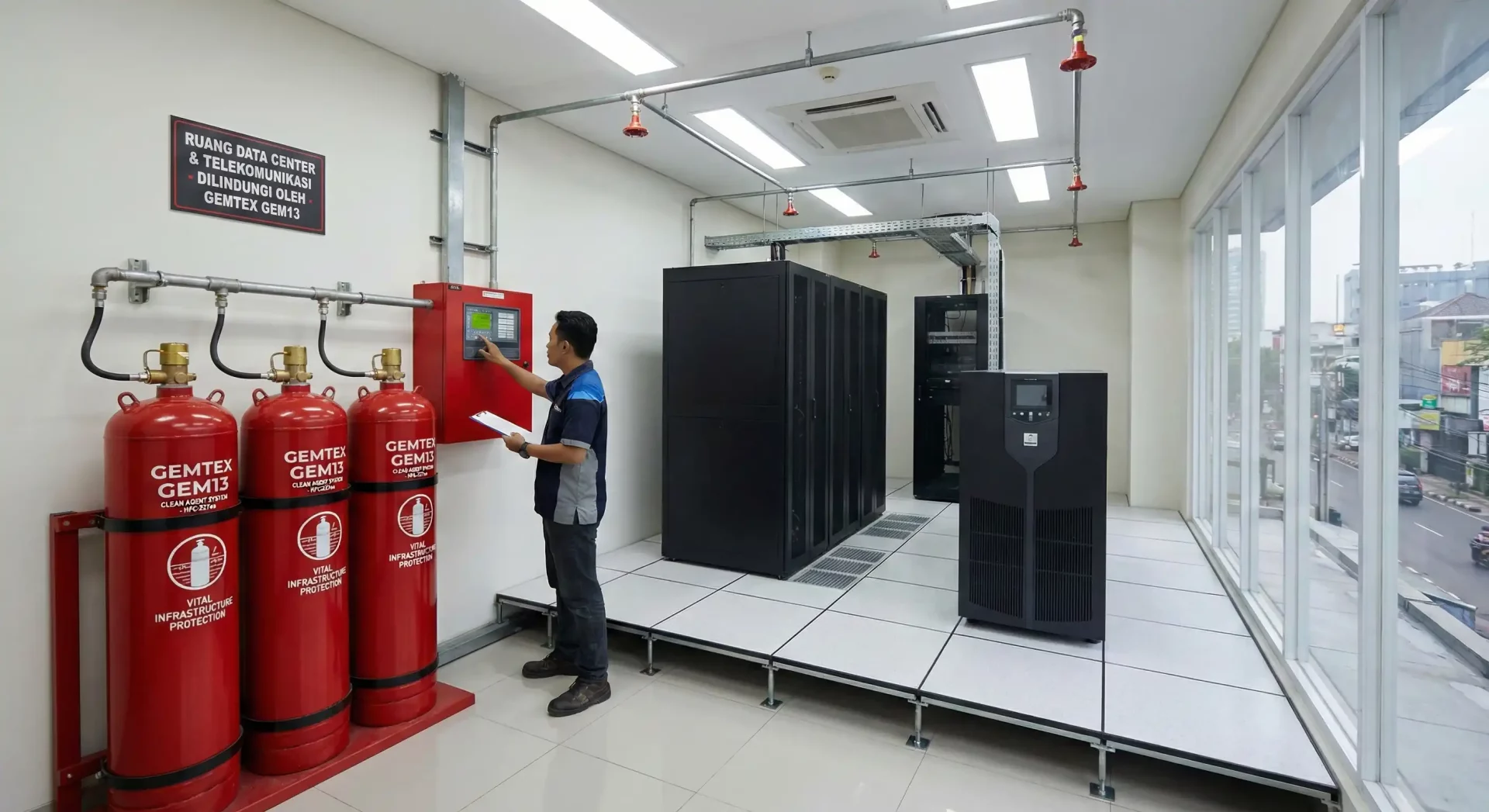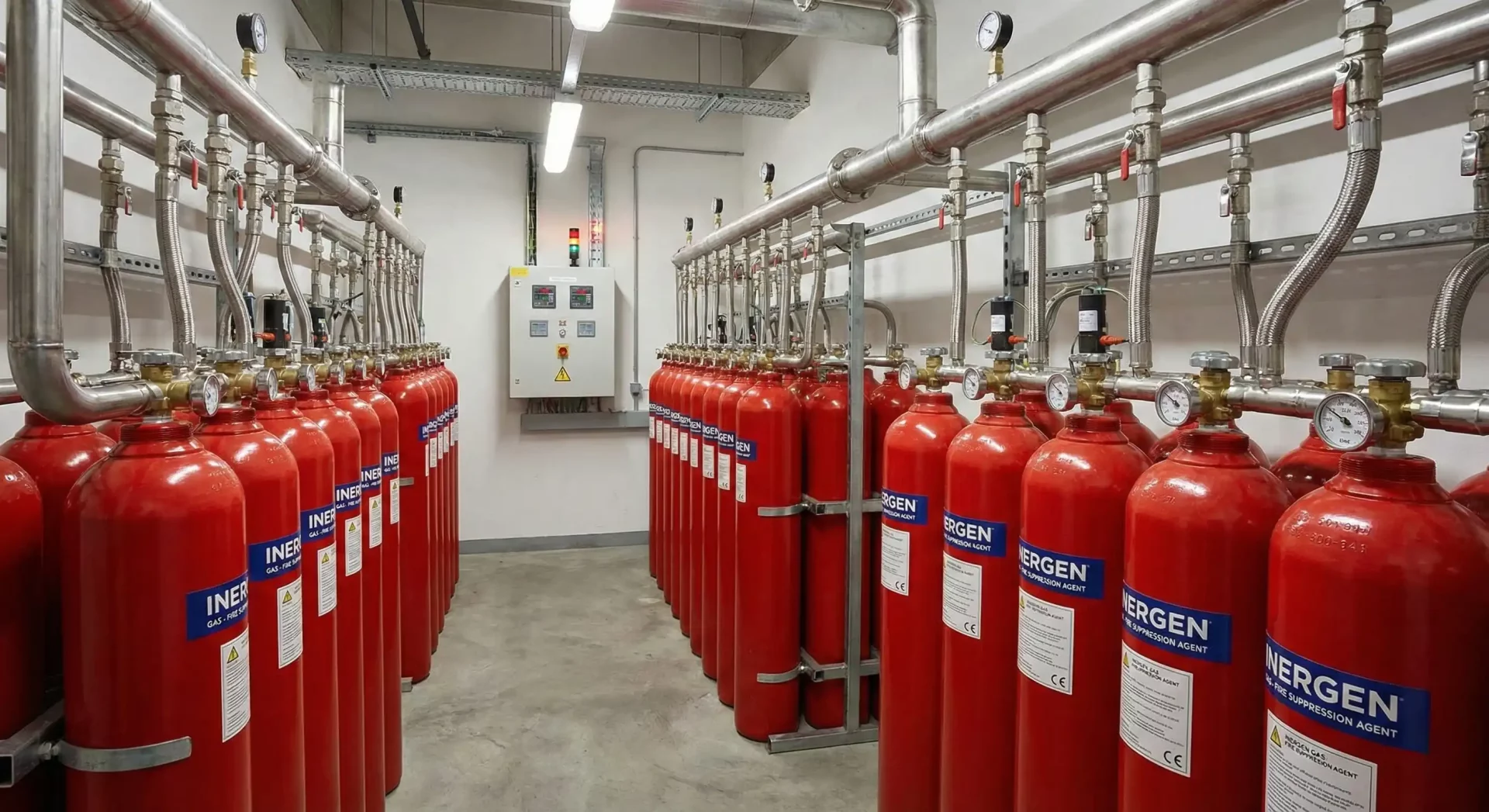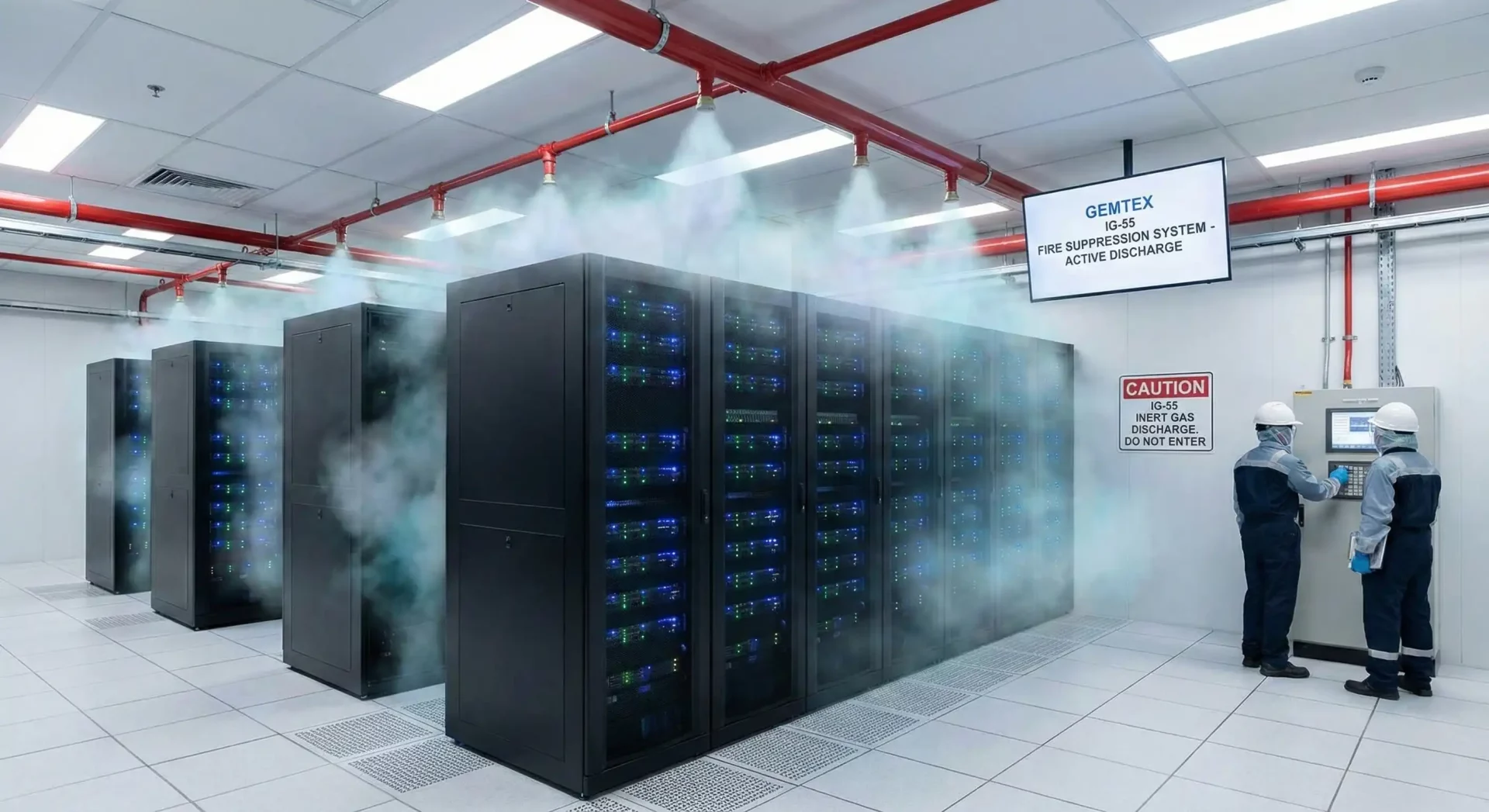
In modern fire protection strategies, Inergen is recognized as one of the safest and most reliable gas suppression agents available. Unlike water-based systems, Inergen is specifically designed to extinguish fires without damaging sensitive equipment or leaving any residue.
This makes it an ideal solution for facilities with high-value assets such as data centers, server rooms, laboratories, control rooms, and industrial environments.
What Is Inergen?
Inergen is an inert gas mixture composed of:
- Nitrogen (approximately 52%)
- Argon (approximately 40%)
- Carbon dioxide (approximately 8%)
The system works by reducing the oxygen concentration in a protected area to a level that will not support combustion, while remaining safe for human exposure during evacuation.
Because it consists of naturally occurring atmospheric gases, Inergen has zero ozone depletion potential (ODP) and no global warming impact when released.
How Does an Inergen System Work?
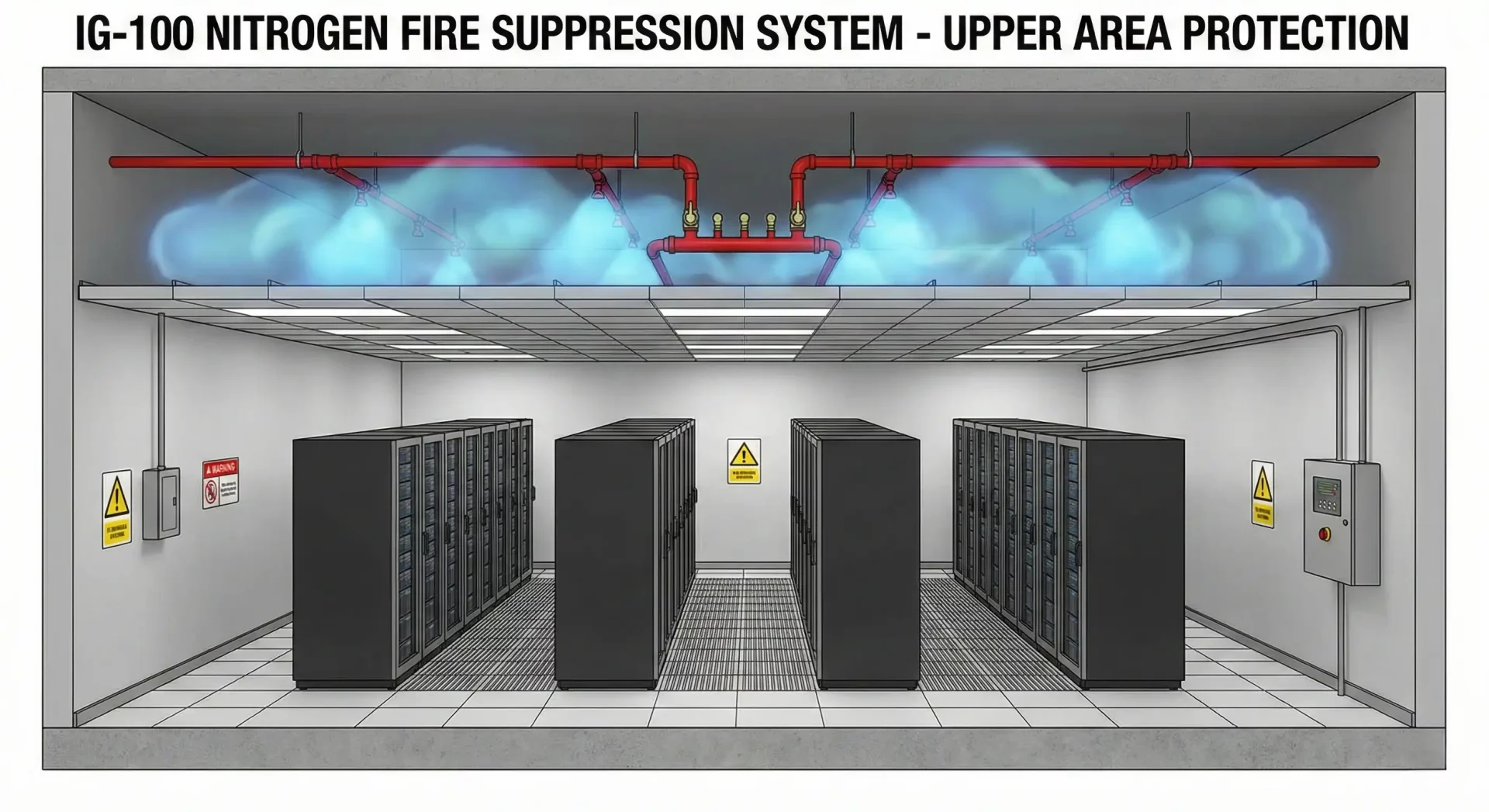
The operating principle of Inergen is oxygen reduction.
The sequence typically includes:
- Smoke or heat detection through fire detectors
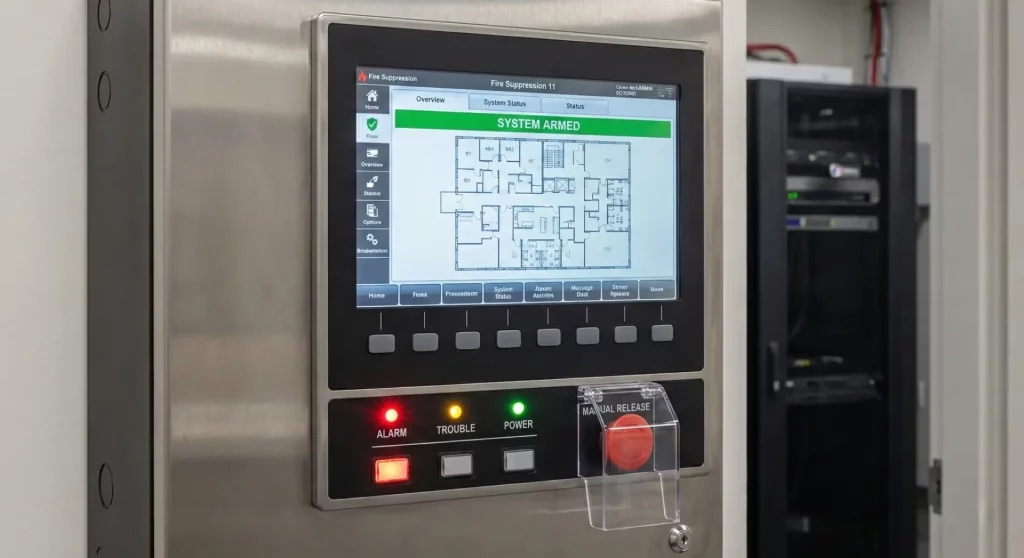
- Signal activation via the fire control panel
- Release of Inergen gas through discharge nozzles
- Reduction of oxygen levels to approximately 12–15%
- Fire suppression due to insufficient oxygen for combustion
Unlike pure CO₂ systems, Inert gas includes a small percentage of carbon dioxide to stimulate the human respiratory response, helping occupants breathe more effectively during evacuation.
Why Choose Inergen Over Other Suppression Agents?
1. No Residue
Inert gas leaves no residue, making it safe for servers, electrical panels, and electronic equipment.
2. Environmentally Friendly
It has zero ozone depletion potential and no harmful chemical by-products.
3. Safe for Occupied Spaces
When properly designed, it allows safe evacuation without immediate health hazards.
4. Non-Corrosive
It does not cause corrosion or secondary damage to sensitive components.
Applications of Inergen Systems

Inert gas is commonly installed in:
- Data centers
- Server rooms
- Electrical control rooms
- Power plants
- Laboratories
- Archives and document storage facilities
In such environments, water-based suppression systems may cause more damage than the fire itself.
Main Components of an Inergen System
A complete Inert gas fire suppression system typically includes:
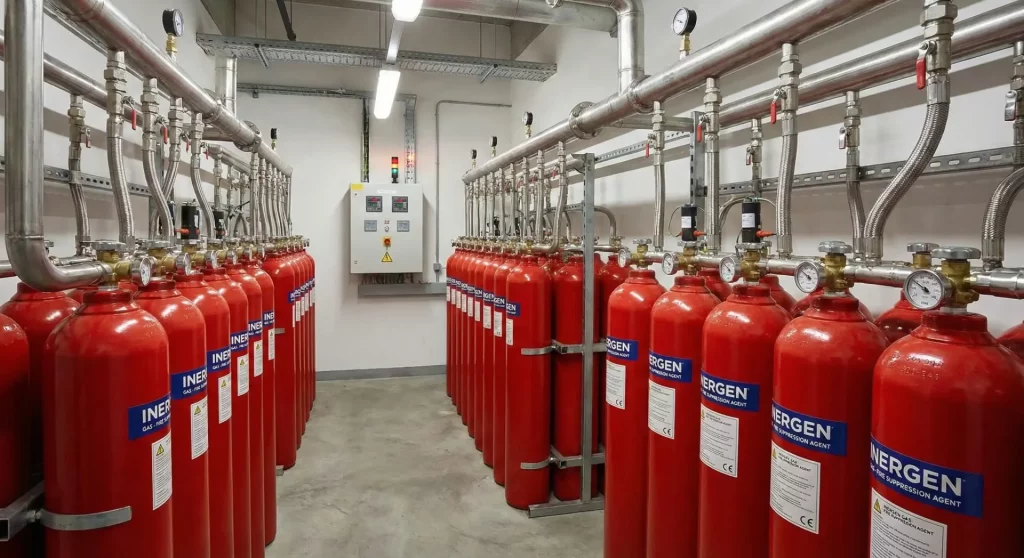
- High-pressure gas cylinders
- Distribution piping network
- Discharge nozzles
- Fire detection system
- Control panel
- Alarm and delay timer system
System design must account for room volume and enclosure integrity to ensure effective concentration levels.
Key Design Considerations

Proper system engineering requires:
- Accurate room volume calculations
- Enclosure integrity testing (door fan test)
- Compliance with NFPA or local fire standards
- Ventilation and pressure relief planning
- Integration with fire alarm systems
Without proper design calculations, the gas concentration may not reach the required extinguishing level.
Common Installation Mistakes
- Skipping room integrity testing
- Inadequate pressure calculation
- Improper piping layout
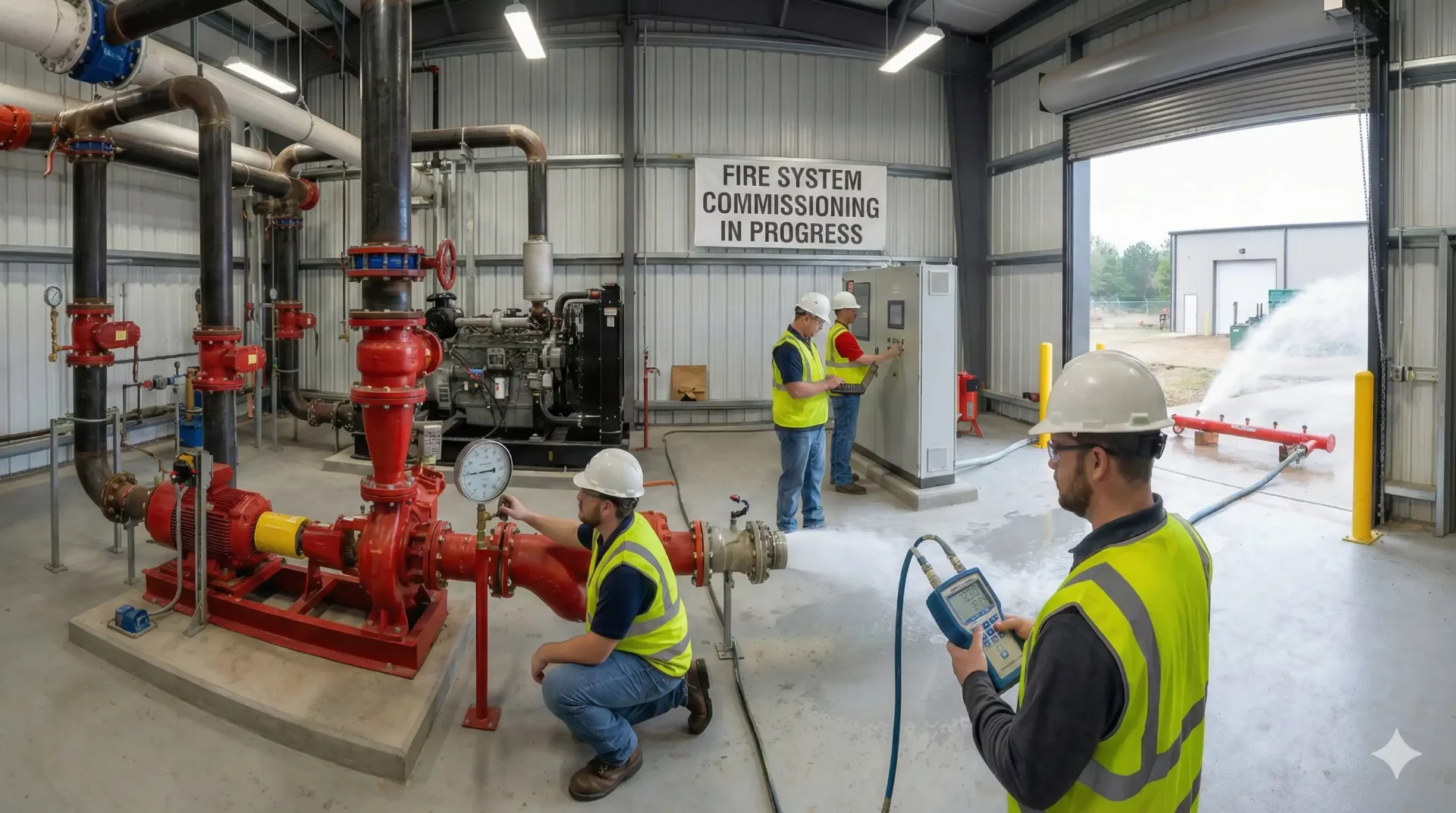
- Failure to conduct commissioning tests
- Poor integration with alarm systems
Gas suppression systems demand high precision in engineering and execution.
Maintenance and Inspection Requirements
Routine maintenance includes:
- Cylinder pressure checks
- Valve and actuator inspections
- Control panel functional testing
- Alarm system verification
- Room integrity re-testing
Regular inspections ensure readiness and regulatory compliance.
Inergen Solutions by Adiwarna
Adiwarna Anugerah Abadi provides comprehensive Inergen fire suppression services, including:
- Fire risk assessment
- Engineering design
- Certified material supply
- Professional installation
- Testing & commissioning
- Preventive maintenance programs
We ensure every Inert gas system is designed according to international standards and tailored to your facility’s specific protection needs.
? https://www.adiwarna.co.id
? Contact our team for professional consultation on Inert gas fire suppression systems.
Conclusion
Inert gas is a highly reliable, environmentally responsible, and equipment-safe fire suppression solution. It is particularly well-suited for protecting mission-critical facilities where downtime and equipment damage must be minimized.
Investing in a properly engineered Inergen system is a strategic decision that protects assets, operations, and lives.